 Bug FAQ
Yellow-bearded Hammertail
Efferia pogonias · Order: Diptera · Family: Asilidae
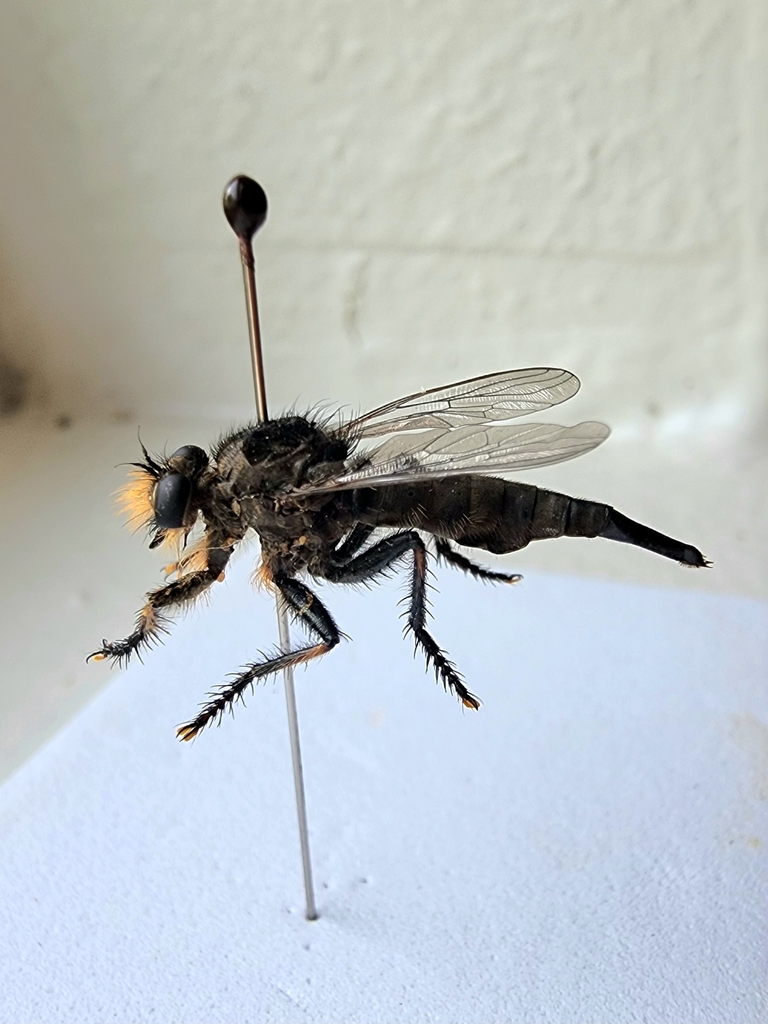
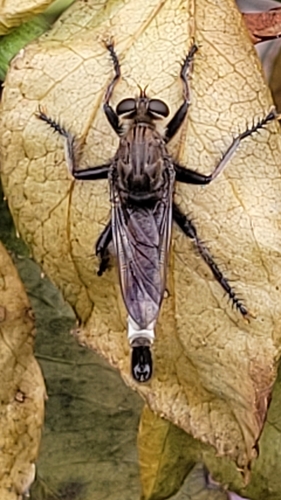
The yellow-bearded hammertail is a dark brown robber fly about 16 to 30 mm long with a prominent yellow facial beard. It lives in open, dry, sandy places across the eastern United States from Maine to Georgia and west to Minnesota and Texas, and is most active from May through October, especially in September. Females lay their eggs in soil and the adults hunt by waiting on the ground or low vegetation and then dart out to catch prey.
Source: Wikipedia
How to recognize it
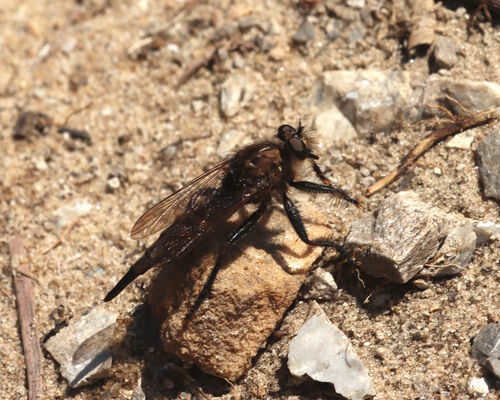
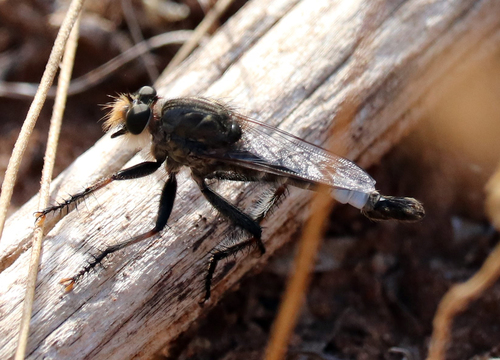
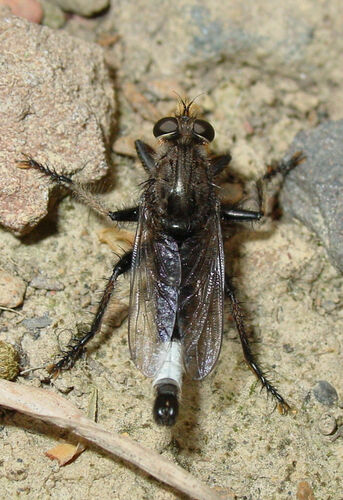
The body is deep dark brown, the wings are darkened, the legs are very dark and may have a reddish tint on the tibiae. A conspicuous yellowish setal “beard” (mystax) covers the face.
Source: Wikipedia
Size
Adults measure between 16 and 30 mm (about 0.6 to 1.2 in) in length.
Source: Wikipedia
Where it lives
They prefer open, dry, sandy habitats inland.
Source: Wikipedia
What it eats
Like other Efferia flies, they are ambush predators that wait on soil or low plants and then fly out to capture prey.
Source: Wikipedia
Life cycle
Females deposit their eggs in the soil.
Source: Wikipedia
When you see it
Adults are on the wing from May through October, with peak activity in the fall, especially September.
Source: Wikipedia
Where it comes from
The species is native to the eastern United States, ranging from Maine south to Georgia and west at least to Minnesota and Texas.
Source: Wikipedia
Where it is found in the US
Recorded in 22 of 51 states and DC. Most records: New York, New Hampshire, Ohio, Arkansas, Texas, Georgia, Wisconsin, Connecticut.
Darker = more records. Counts are museum and citizen-science records, not population size.
Source: GBIF
Months it is reported in the US
Source: GBIF
More photos
Questions people ask
When are yellow-bearded hammertails active?
They are active from May to October, with the highest numbers in September.
Source: Wikipedia
Where can I find this species?
Look for them in open, dry, sandy areas across the eastern United States, from Maine to Georgia and west to Minnesota and Texas.
Source: Wikipedia
What do they look like?
They are dark brown with dark wings and legs, often with a reddish tint on the tibiae, and have a bright yellow facial beard.
Source: Wikipedia
How do they catch their food?
They wait motionless on the ground or low vegetation and then quickly fly out to seize passing insects.
Source: Wikipedia
Same family (Asilidae)

Sources
- Wikipedia: https://en.wikipedia.org/wiki/Efferia_pogonias
Look it up elsewhere: GBIF · iNaturalist · BugGuide · ITIS · Wikipedia
Text written 2026-10-27 from the sources above and checked sentence by sentence against them. Data fetched 2026-10-27.