 Bug FAQ
Golden-tailed Beebandit
Mallophora fautrix · Order: Diptera · Family: Asilidae
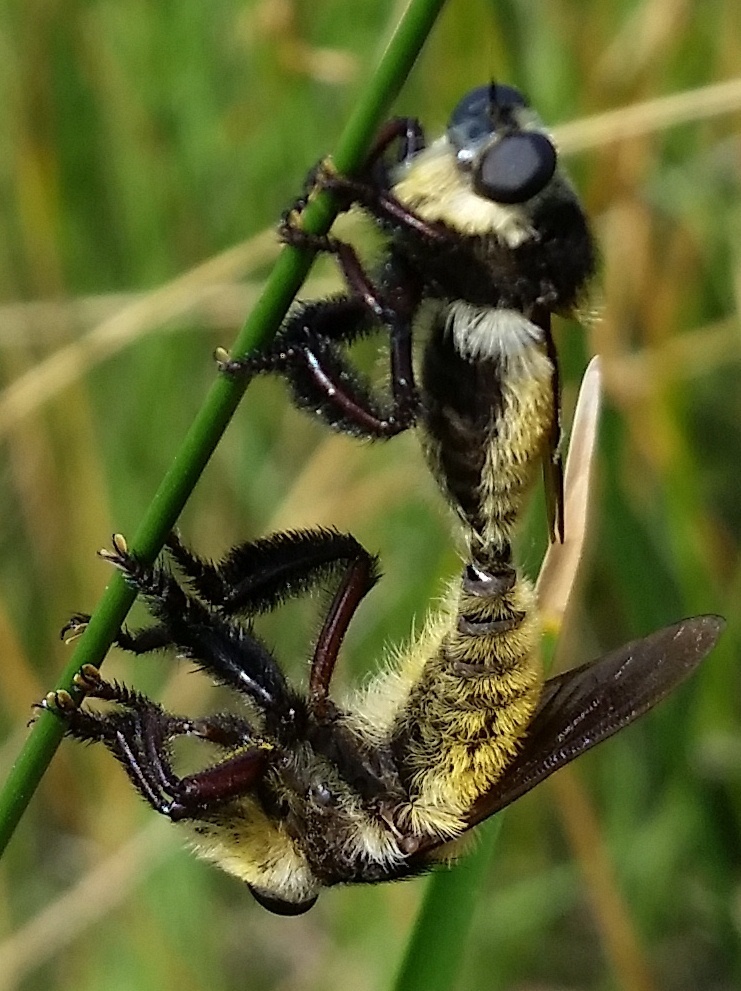
Adults are 15 to 20 mm long and look like bumble-bee workers with black, white and yellow hairs. They wait on perches and catch honey bees, wasps and similar-sized insects. They live in Mexico and the southwestern United States, laying eggs in the ground.
Source: Wikipedia
Size
Adults measure about 15 to 20 mm (0.59 to 0.79 in) in length.
Source: Wikipedia
Life cycle
Females lay eggs in the ground.
Source: Wikipedia
Where it comes from
Its range includes Mexico and the southwestern United States, and it is the only Mallophora species in California.
Source: Wikipedia
Lookalikes
Its hair pattern makes it resemble workers of the bumble bee Bombus sonorus.
Source: Wikipedia
Where it is found in the US
Recorded in 10 of 51 states and DC. Most records: California, Texas, New Mexico, Arizona, Oklahoma, Nevada, Louisiana, Utah.
Darker = more records. Counts are museum and citizen-science records, not population size.
Source: GBIF
Months it is reported in the US
Source: GBIF
More photos


Questions people ask
What does the golden-tailed beebandit look like?
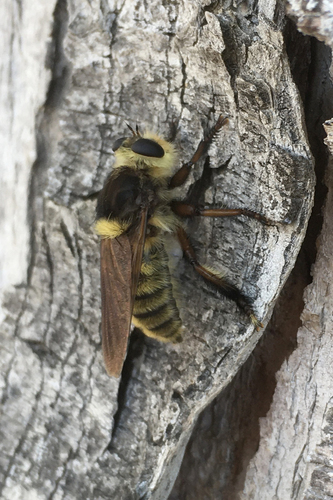
It is 15 to 20 mm long and covered in black, white and yellow hairs that look like a bumble-bee worker.
Source: Wikipedia
Where can I find this bug?
It occurs in Mexico and the southwestern United States, including California.
Source: Wikipedia
What does it eat?
It catches and eats honey bees, wasps and other similarly sized insects.
Source: Wikipedia
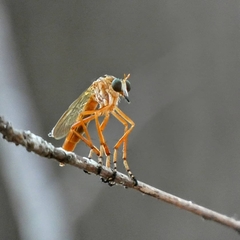
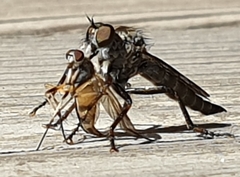
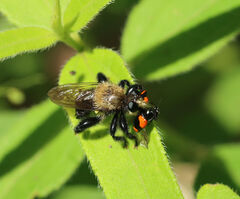
Same family (Asilidae)

Sources
- Wikipedia: https://en.wikipedia.org/wiki/Mallophora_fautrix
Look it up elsewhere: GBIF · iNaturalist · BugGuide · Wikipedia
Text written 2026-10-22 from the sources above and checked sentence by sentence against them. Data fetched 2026-10-22.