 Bug FAQ
Yellow-banded Bumble Bee
Bombus terricola · Order: Hymenoptera · Family: Apidae
Also called: Yellow-banded Bumblebee
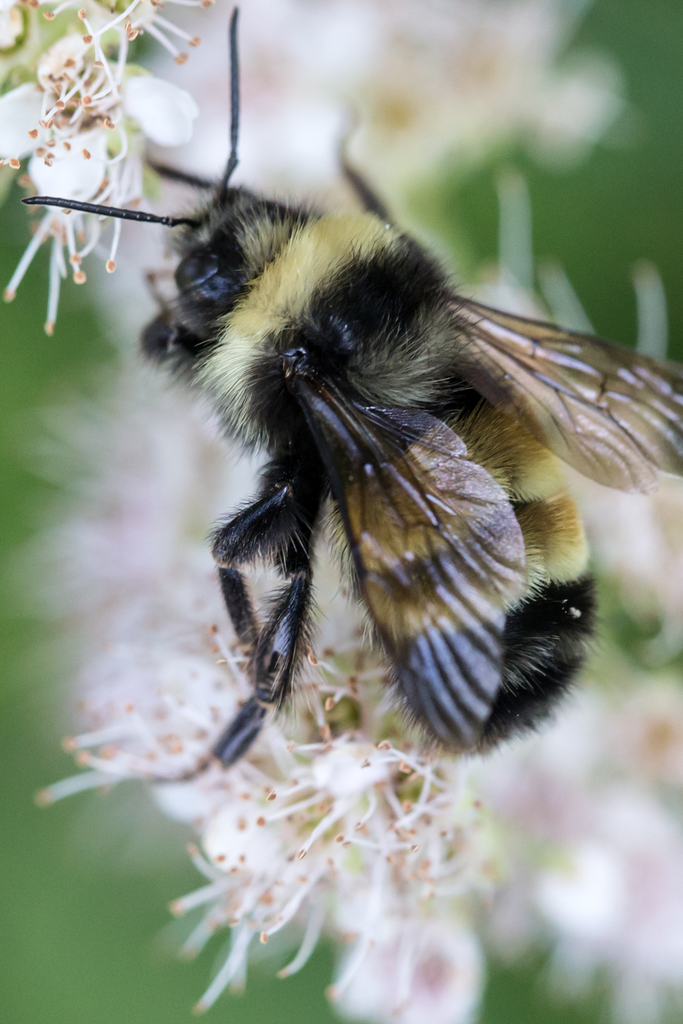
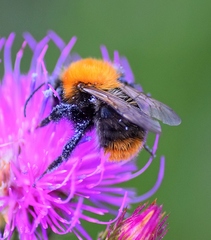
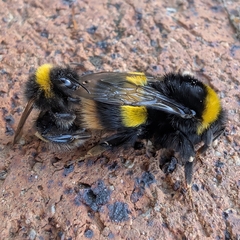
Yellow-banded bumble bees are medium-sized insects; queens are about 18 mm long while workers range from 9 to 14 mm. They are black with yellow-tan markings, especially a band of short yellow-brown hairs on the fifth abdominal segment and yellowish-brown on the front thorax and several abdominal segments. These bees live in many habitats, from urban gardens to alpine meadows, and are native to southern Canada and the eastern and Midwestern United States.
Source: Wikipedia
How to recognize it
They have black bodies with yellow-tan coloration and a distinctive fringe of short yellow-brown hairs on the fifth abdominal segment. The front half of the thorax and abdominal segments 2-4 and 6 are yellowish-brown, while the rest of the body is black.
Source: Wikipedia
Size
Queens grow to about 18 mm (0.7 in) in length. Workers are smaller, measuring between 9 and 14 mm (0.35-0.55 in).
Source: Wikipedia
Is it a pest in the house?
They are beneficial pollinators of many crops and are found in urban and agricultural settings.
Source: Wikipedia
How to get rid of it
Their numbers have dropped since the 1990s, likely because of habitat loss and parasites.
Source: Wikipedia
Where it lives
They occupy a wide range of places, including urban areas, meadows, grasslands, wetlands, woodlands, farmlands, and even alpine meadows to lowland tropical forests.
Source: Wikipedia
What it eats
Foragers can tell which flowers have already been visited or lack nectar and pollen.
Source: Wikipedia
Life cycle
Colonies develop in three stages, starting with a solitary queen that produces the first workers by laying diploid eggs.
Source: Wikipedia
Where it comes from
Their native range covers southern Canada and the eastern and Midwestern United States.
Source: Wikipedia
Lookalikes
They can be confused with Bombus occidentalis, which is now considered a separate species. They closely resemble Bombus affinis, and B. affinis can sometimes take over their nests unnoticed.
Source: Wikipedia
Where it is found in the US
Recorded in 40 of 51 states and DC. Most records: Michigan, Minnesota, Vermont, New York, New Hampshire, Maine, Wisconsin, Massachusetts.
Darker = more records. Counts are museum and citizen-science records, not population size.
Source: GBIF
Status: native in North America; native in Canada; native in United States. Source: iNaturalist
Months it is reported in the US
Source: GBIF
More photos


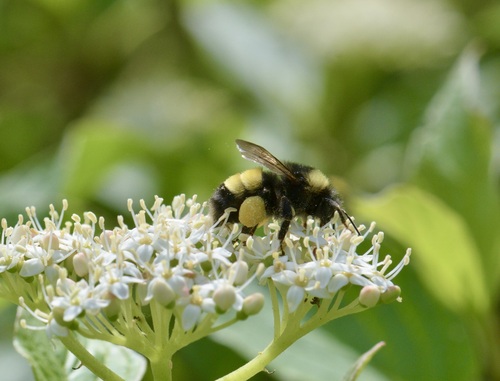
Questions people ask
How can I tell this bumble bee apart from similar species?
Look for the short yellow-brown hair fringe on the fifth abdominal segment and the yellowish-brown front thorax; compare with Bombus occidentalis and Bombus affinis for differences.
Source: Wikipedia
Same family (Apidae)


Sources
- Wikipedia: https://en.wikipedia.org/wiki/Bombus_terricola
Look it up elsewhere: GBIF · iNaturalist · BugGuide · ITIS · Wikipedia
Text written 2026-10-22 from the sources above and checked sentence by sentence against them. Data fetched 2026-10-22.