 Bug FAQ
Buff-tailed Bumble Bee
Bombus terrestris · Order: Hymenoptera · Family: Apidae
Also called: Buff-tailed Humble-bee, Large Earth Humble-bee, Two-banded Bumble Bee
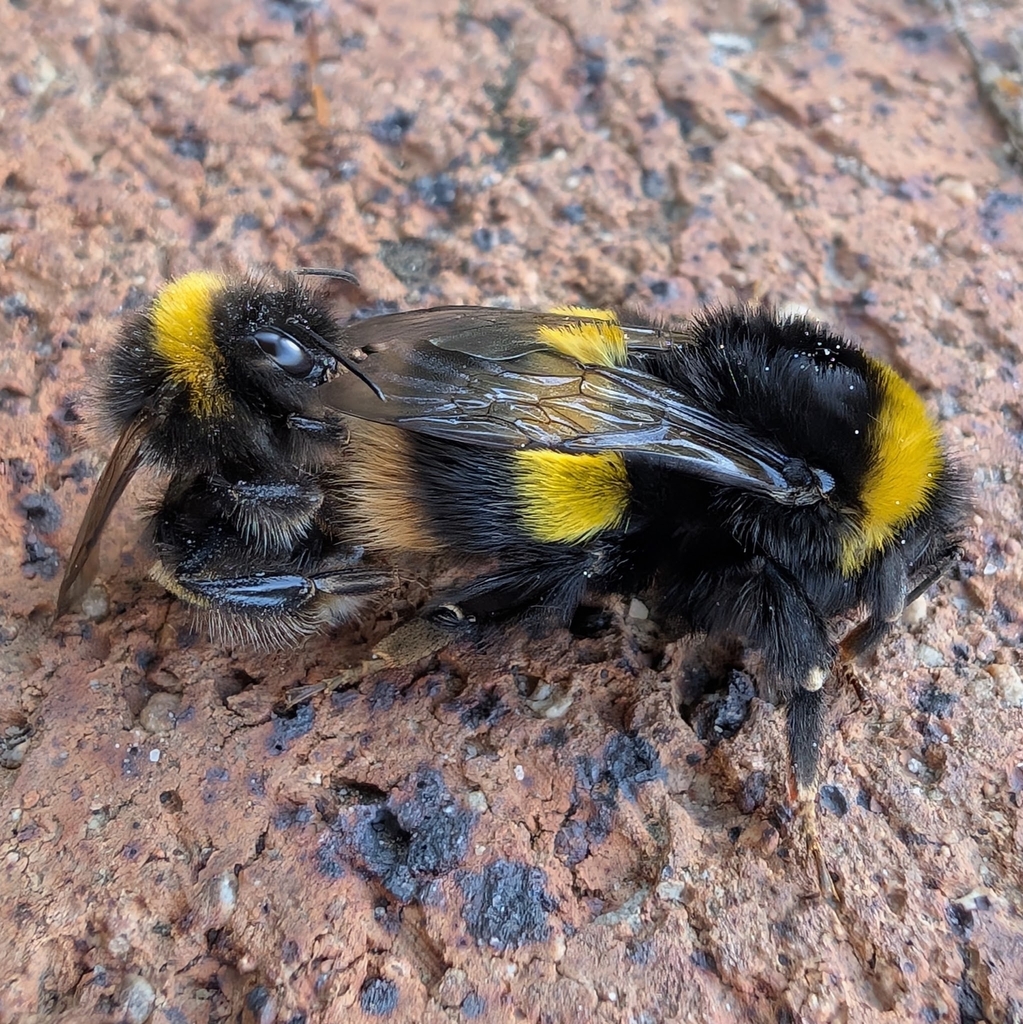
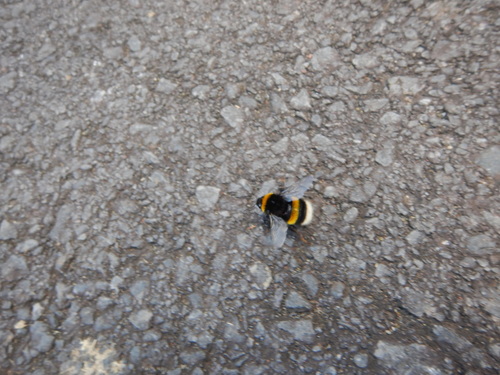
The buff-tailed bumblebee queen is 20 to 22 mm long, males are 14 to 16 mm and workers 11 to 17 mm. Queens have a white tip on the abdomen and workers end their abdomens in white, while their yellow bands are darker than those of the similar white-tailed bumblebee. They nest underground, often in abandoned rodent burrows, and are most common across temperate Europe.
Source: Wikipedia
How to recognize it
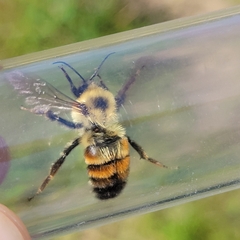
Queens show a buff-white tip on the abdomen; workers also end with white on the abdomen.
Source: Wikipedia
Size
Queens measure 20 to 22 mm, males 14 to 16 mm, and workers 11 to 17 mm in length.
Source: Wikipedia
Is it a pest in the house?
Nests are typically underground in abandoned rodent burrows.
Source: Wikipedia
Where it lives
Nests are usually underground, such as in abandoned rodent dens.
Source: Wikipedia
What it eats
Workers collect nectar and pollen to feed the colony and its larvae.
Source: Wikipedia
Life cycle
A solitary queen mates, overwinters in a nest, and in spring lays a small batch of fertilized eggs that become females.
Source: Wikipedia
When you see it
The queen stays in the nest over winter and begins laying eggs in the spring.
Source: Wikipedia
Where it comes from
The species is one of the most numerous bumblebees in Europe and prefers temperate climates.
Source: Wikipedia
Lookalikes
Workers look like those of the white-tailed bumblebee (B. lucorum) but have darker yellow bands.
Source: Wikipedia
Where it is found in the US
Recorded in 4 of 51 states and DC. Most records: New Hampshire, Colorado, Iowa, Alaska.
Darker = more records. Counts are museum and citizen-science records, not population size.
Source: GBIF
Status: introduced in North America; introduced in United States; introduced in Canada. Source: iNaturalist
More photos
Questions people ask
How can I tell a buff-tailed bumblebee apart from similar species?
Look for the white tip on the queen’s abdomen and the white-ended abdomen of workers; their yellow bands are darker than those of the white-tailed bumblebee.
Source: Wikipedia
Where does this bumblebee build its nest?
It nests underground, often in abandoned rodent burrows.
Source: Wikipedia
What do buff-tailed bumblebees eat?
Workers forage for nectar and pollen to feed the colony and its larvae.
Source: Wikipedia
When are buff-tailed bumblebees active?
The queen overwinters in the nest and starts laying eggs in the spring.
Source: Wikipedia
Same family (Apidae)


Sources
- Wikipedia: https://en.wikipedia.org/wiki/Bombus_terrestris
Look it up elsewhere: GBIF · iNaturalist · BugGuide · ITIS · Wikipedia
Text written 2026-10-22 from the sources above and checked sentence by sentence against them. Data fetched 2026-10-22.