 Bug FAQ
Common Eastern Bumble Bee
Bombus impatiens · Order: Hymenoptera · Family: Apidae
Also called: Common Eastern Bumblebee
Source: UC IPM
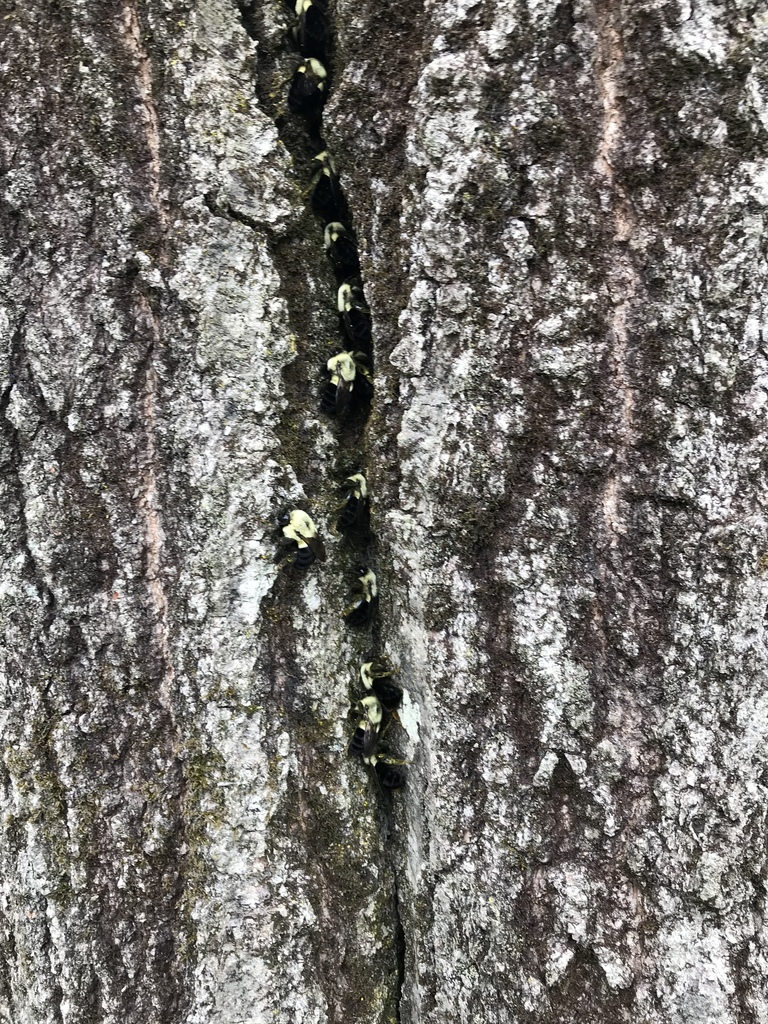
Workers are 8.5 to 16 mm long, males 12 to 18 mm, and queens are larger than both. They live in suburban, urban, open fields and woods, nesting underground, and are native to eastern North America.
Source: Wikipedia
How to recognize it
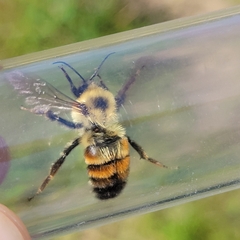
Males have a yellow face and head.
Source: Wikipedia
Size
Queens have larger bodies than males or workers. Workers measure 8.5 to 16 mm and males 12 to 18 mm in length.
Source: Wikipedia
Does it bite or sting?
Stings usually cause only temporary pain, but a small portion of people are allergic. The body tries to flush venom by releasing fluid from the blood.
Source: UC IPM
How to get rid of it
Avoid strongly scented products when entering areas with bee activity. If a sting causes severe symptoms or occurs near the neck or mouth, seek medical help right away.
Source: UC IPM
Where it lives
They thrive in suburban and urban areas. Nests are built underground in open fields and woods.
Source: Wikipedia
What it eats
Adults collect pollen and nectar from flowers. Colony members mainly eat honey made from that pollen and nectar because it is more nutritious.
Source: Wikipedia
Life cycle
New queens leave their winter shelters in mid-April and start colonies in May. Workers appear in early June, and males and new queens show up in August and September.
Source: Wikipedia
When you see it
Workers emerge in early June; males and young queens appear in August-September.
Source: Wikipedia
Where it comes from
They are native to eastern North America.
Source: Wikipedia
Lookalikes
They look similar to several other Bombus species such as B. bimaculatus and B. perplexus.
Source: Wikipedia
Where it is found in the US
Recorded in 48 of 51 states and DC. Most records: New York, Pennsylvania, Massachusetts, Minnesota, Illinois, Ohio, Vermont, Wisconsin.
Darker = more records. Counts are museum and citizen-science records, not population size.
Source: GBIF
Months it is reported in the US
Source: GBIF
More photos
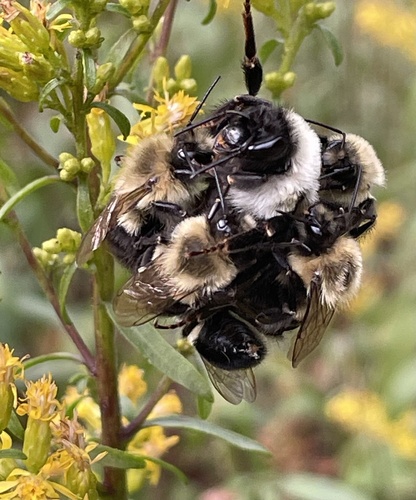
Questions people ask
Do Eastern Bumble Bees sting?
Yes, they can sting, but it usually only causes temporary pain; a few people may be allergic.
Source: UC IPM
When are they most active?
Queens start colonies in May, workers appear in June, and males and new queens are seen in August and September.
Source: Wikipedia
How can I avoid being stung?
Do not wear heavily scented products in areas where bees are active and stay calm around them.
Source: UC IPM
Are they harmful to pets?
They can sting pets the same way they sting humans, causing temporary pain; allergic reactions are rare.
Source: UC IPM
Same family (Apidae)


Sources
- UC IPM: https://ipm.ucanr.edu/PMG/PESTNOTES/pn7449.html
- Wikipedia: https://en.wikipedia.org/wiki/Bombus_impatiens
Look it up elsewhere: GBIF · iNaturalist · BugGuide · ITIS · Wikipedia
Text written 2026-10-22 from the sources above and checked sentence by sentence against them. Data fetched 2026-10-22.