 Bug FAQ
Artichoke Plume Moth
Platyptilia carduidactylus · Order: Lepidoptera · Family: Pterophoridae
Source: Wikipedia
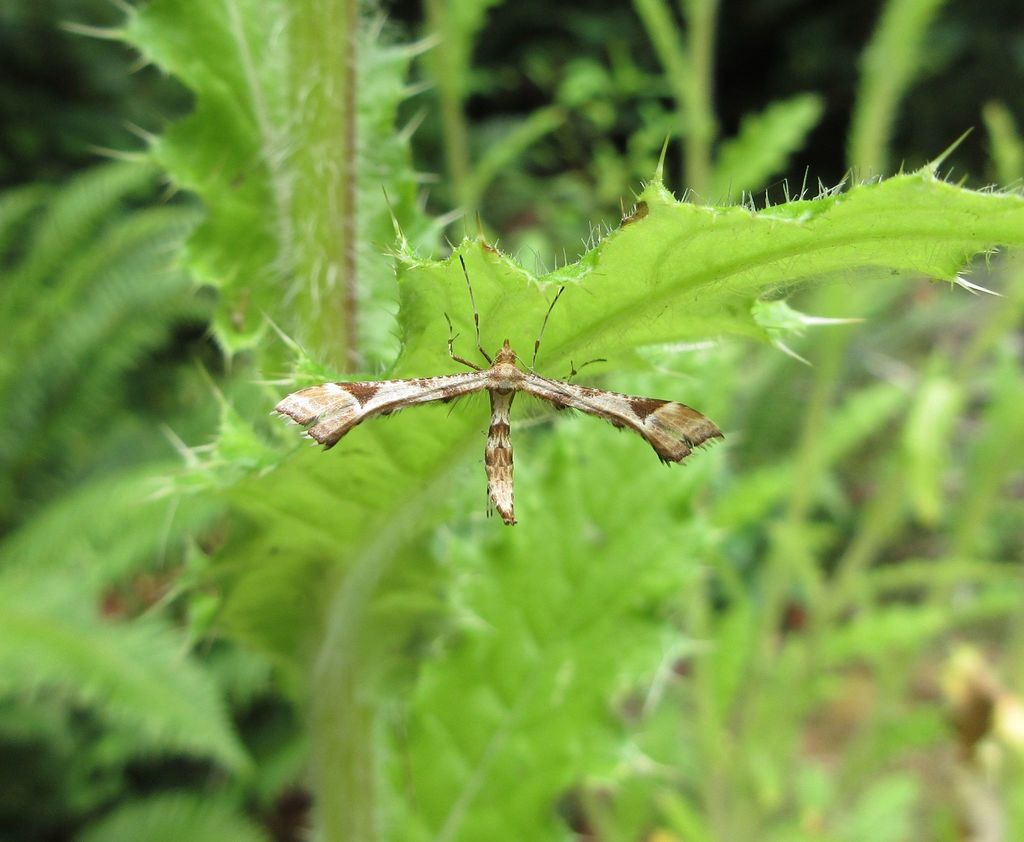
The artichoke plume moth (Platyptilia carduidactylus) is a small moth with a wingspan of about 2 to 3 cm. Its caterpillars feed on artichoke and related plants and can cause considerable damage to those crops.
Source: Wikipedia
How to recognize it
It was first described by Riley in 1869 and belongs to the plume moth family.
Source: Wikipedia
Size
The adult’s wingspan ranges from 19 to 32 mm.
Source: Wikipedia
Is it a pest in the house?
The species is considered a pest of cultivated artichoke (Cynara scolymus).
Source: Wikipedia
Where it lives
It occurs in New Zealand and across North America, from Mexico up through the United States.
Source: Wikipedia
What it eats
Larvae feed on plants such as Arctium, Carduus, Cirsium, Cynara and Silybum.
Source: Wikipedia
Life cycle
Females lay eggs on the underside of artichoke leaves. The emerging caterpillars can cause considerable damage to the host plant.
Source: Wikipedia
When you see it
Adults are on the wing from May to September in the northern part of their range and in July in Mexico.
Source: Wikipedia
Where it comes from
Its range includes New Zealand and North America, extending from Mexico northward into the United States.
Source: Wikipedia
Where it is found in the US
Recorded in 41 of 51 states and DC. Most records: California, Washington, Texas, Oregon, Ohio, Illinois, New York, Colorado.
Darker = more records. Counts are museum and citizen-science records, not population size.
Source: GBIF
Status: native in North America; native in Canada; native in United States. Source: iNaturalist
Months it is reported in the US
Source: GBIF
More photos
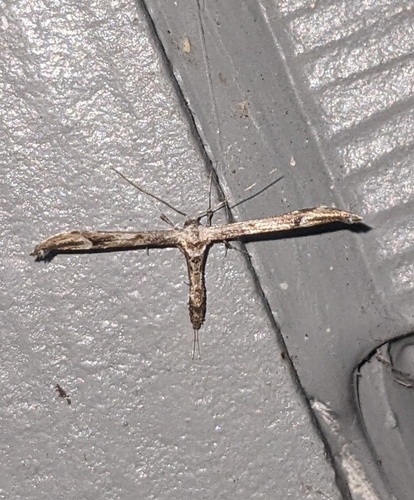
Questions people ask
What does the artichoke plume moth look like?
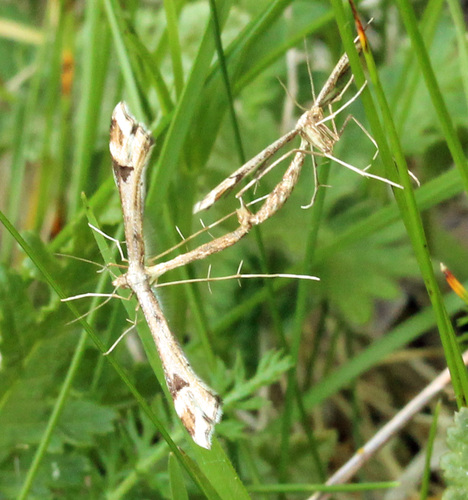
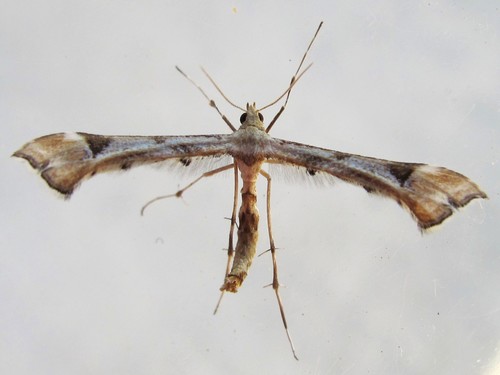
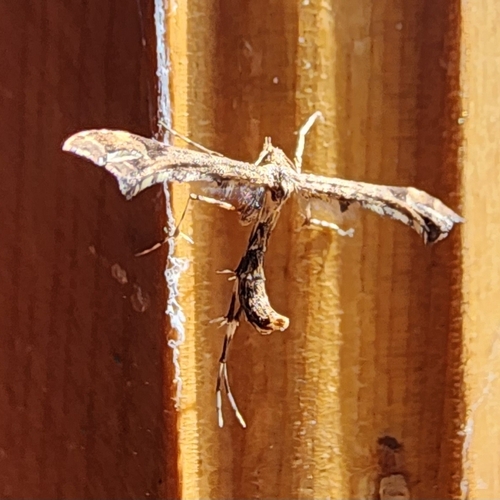
It is a small plume moth with a wingspan of about 2 to 3 cm, described by Riley in 1869.
Source: Wikipedia
When are adult artichoke plume moths active?
Adults fly from May through September in the north and in July further south.
Source: Wikipedia
What plants do the larvae feed on?
The caterpillars eat Arctium, Carduus, Cirsium, Cynara and Silybum species.
Source: Wikipedia
Does the artichoke plume moth damage crops?
Yes, its larvae are pests of artichoke (Cynara scolymus) and can cause considerable damage.
Source: Wikipedia
Same family (Pterophoridae)
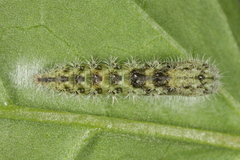 Morning-glory Plume MothEmmelina monodactylaDamages trees, gardens or crops
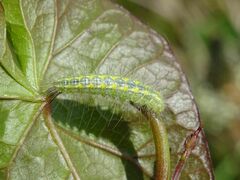 White Plume MothPterophorus pentadactylaDamages trees, gardens or crops
 Brown Silver-linePetrophora chlorosata
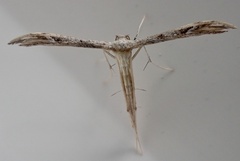 Belfrage's Plume MothPselnophorus belfragei
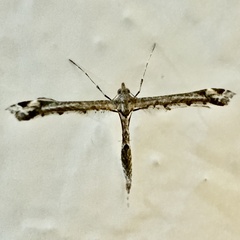 Sage Plume MothAnstenoptilia marmarodactyla
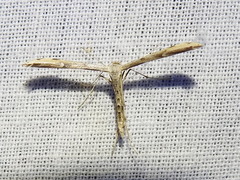 Ragweed Plume MothAdaina ambrosiaeDamages trees, gardens or crops
Sources
- Wikipedia: https://en.wikipedia.org/wiki/Platyptilia_carduidactyla
Look it up elsewhere: GBIF · iNaturalist · BugGuide · Wikipedia
Text written 2026-10-24 from the sources above and checked sentence by sentence against them. Data fetched 2026-10-24.