 Bug FAQ
Xysticus cristatus
Xysticus cristatus · Order: Araneae · Family: Thomisidae
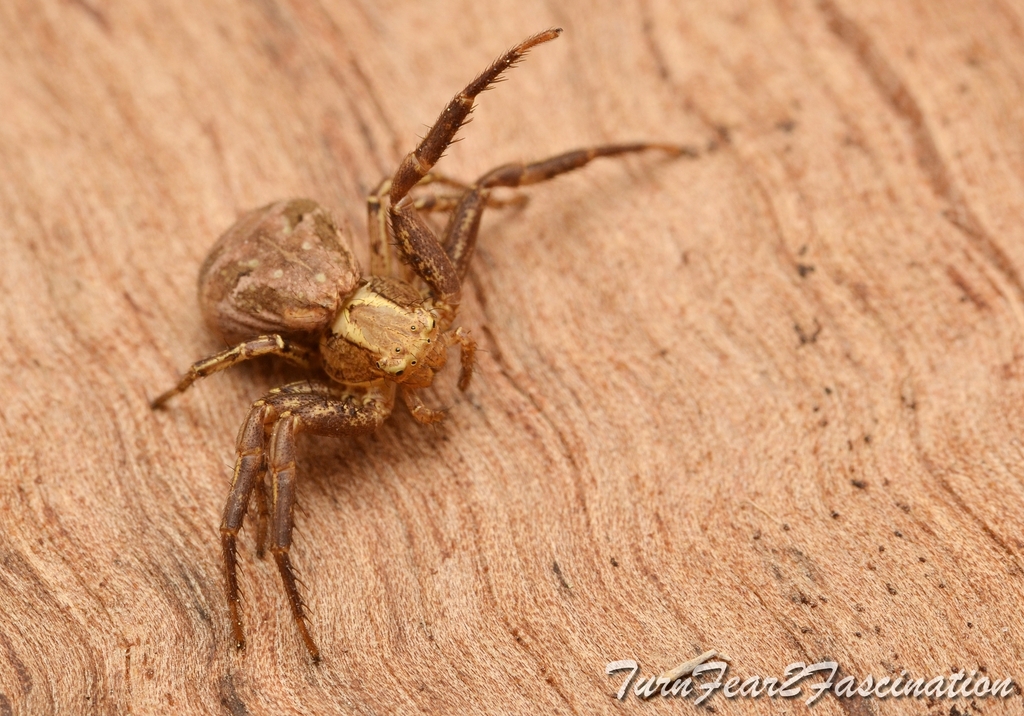
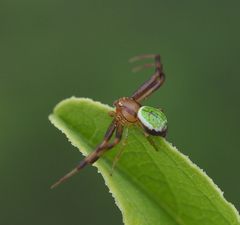
The common crab spider Xysticus cristatus is a small European spider, females 6 to 8 mm and males 3 to 5 mm long. It lives on low vegetation and the ground, avoids shaded woodland, and can be found in many open habitats. It hunts by ambush, waiting with spread fore-legs to catch flying insects such as bees and butterflies.
Source: Wikipedia
How to recognize it
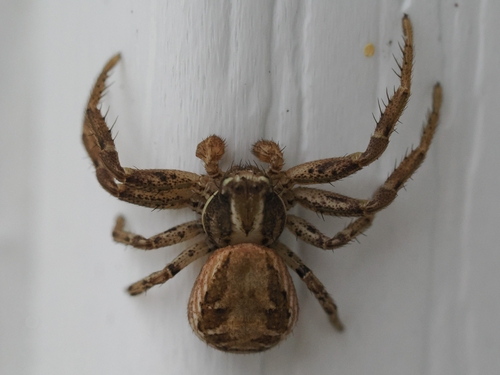
Its body colour ranges from light cream to dark brown or grey, with males being darker and showing contrasting patterns. Both sexes have a broad whitish stripe on the carapace that contains a brown triangle pointing backward and ends with a sharp black spot.
Source: Wikipedia
Where it lives
It is usually found on low vegetation and the ground. The spider dislikes shade, avoids closed-canopy woodlands, but otherwise occurs in almost any open habitat.
Source: Wikipedia
What it eats
It is an ambush predator that sits still with its fore-legs spread, waiting for insects to stumble into them. It catches a variety of flying insects, including bees and butterflies, from flowerheads or the ground.
Source: Wikipedia
Life cycle
Spiderlings disperse by ballooning mainly from July to September. After mating the female builds a flat white egg sac on plants and guards it until the spiderlings hatch.
Source: Wikipedia
When you see it
Adults are active from February to December, with males most common in May and June.
Source: Wikipedia
Where it comes from
Xysticus cristatus is a European crab spider.
Source: Wikipedia
Where it is found in the US
Recorded in 2 of 51 states and DC. Most records: Washington, Oregon.
Darker = more records. Counts are museum and citizen-science records, not population size.
Source: GBIF
Months it is reported in the US
Source: GBIF
More photos

Questions people ask
How can I identify Xysticus cristatus?
Look for a small crab spider about 3 to 8 mm long, with a light-cream to dark-brown body, a broad whitish median band on the carapace that contains a brown triangle and ends in a sharp black spot; males are darker with contrasting markings.
Source: Wikipedia
Where might I find this spider in my garden?
It prefers low vegetation and ground surfaces in open, sunny areas and avoids shaded woodland, so check sunny patches, grass, and flowerheads.
Source: Wikipedia
What does this spider eat?
It waits motionless with its fore-legs spread and grabs passing insects, especially flying ones like bees and butterflies.
Source: Wikipedia
Same family (Thomisidae)

Sources
- Wikipedia: https://en.wikipedia.org/wiki/Xysticus_cristatus
Look it up elsewhere: GBIF · iNaturalist · BugGuide · ITIS · Wikipedia
Text written 2026-10-27 from the sources above and checked sentence by sentence against them. Data fetched 2026-10-27.