 Bug FAQ
Triangle Crab Spider
Ebrechtella tricuspidata · Order: Araneae · Family: Thomisidae
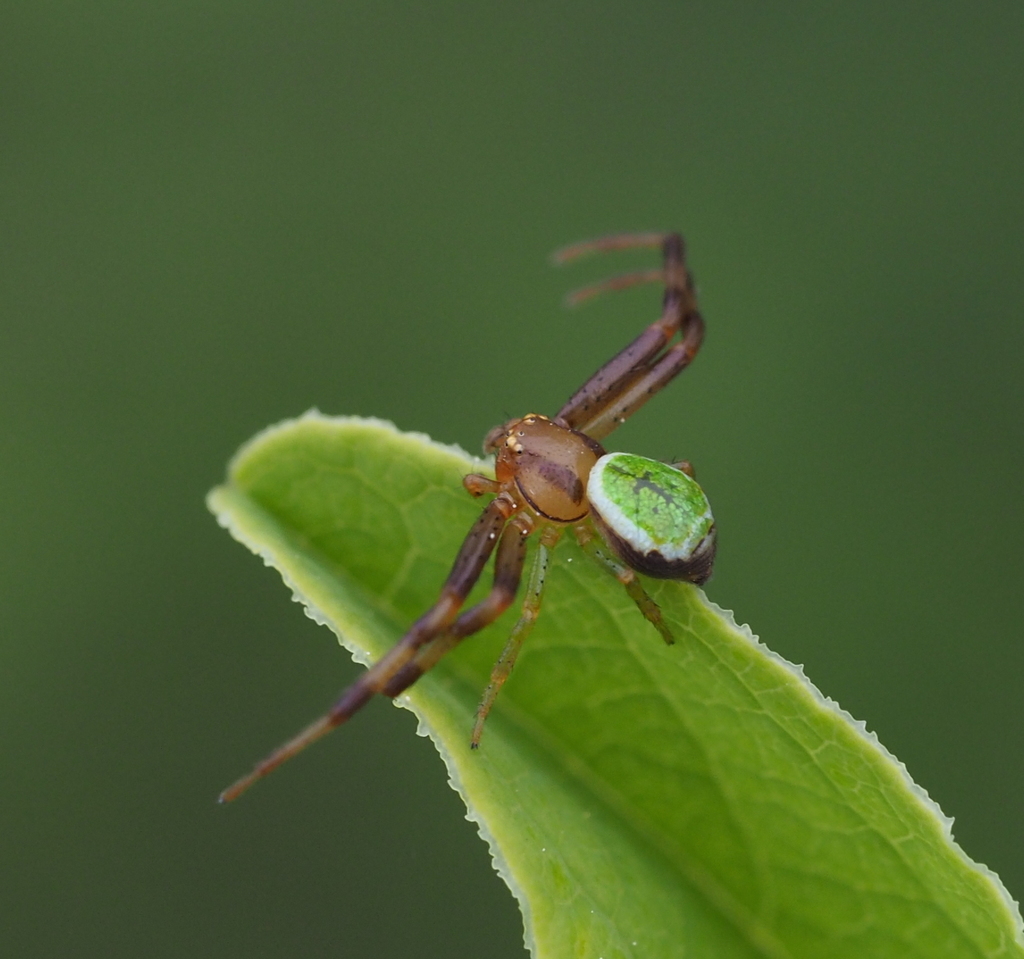
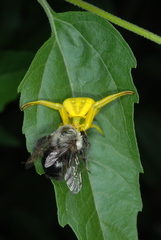
Female Triangle Crab Spiders are about 5 to 6 mm long, while males are smaller at 2.5 to 3.5 mm. Females are light green with reddish bands on the abdomen and green legs; males are light brown with a bright stripe on the cephalothorax, pale-green abdomen and dark brown markings. They live in dry meadows and sunny forest edges across the Palearctic region and hunt camouflaged prey on flowers and foliage.
Source: Wikipedia
How to recognize it
Females have a light-green cephalothorax, often with two broad reddish bands on the abdomen and green legs. Males show a light brown cephalothorax with a bright central stripe, the first two leg pairs are also light brown, and the abdomen is pale green with dark brown side markings.
Source: Wikipedia
Size
Females reach 5 to 6 mm in body length; males are smaller at 2.5 to 3.5 mm.
Source: Wikipedia
Where it lives
They are found in dry meadows and sunny forest edges, waiting on flowers and foliage for prey.
Source: Wikipedia
What it eats
They hunt insects that are camouflaged on flowers and foliage.
Source: Wikipedia
Life cycle
Adults of both sexes are present in May and June.
Source: Wikipedia
When you see it
You can see adults during May and June.
Source: Wikipedia
More photos


Same family (Thomisidae)


Sources
- Wikipedia: https://en.wikipedia.org/wiki/Ebrechtella_tricuspidata
Look it up elsewhere: GBIF · iNaturalist · BugGuide · ITIS · Wikipedia
Text written 2026-10-22 from the sources above and checked sentence by sentence against them. Data fetched 2026-10-22.