 Bug FAQ
Goldenrod Crab Spider
Misumena vatia · Order: Araneae · Family: Thomisidae
Also called: Crab spider, Goldenrod Spider, Whitedeath Crab Spider, flower crab spider
Source: Wikipedia

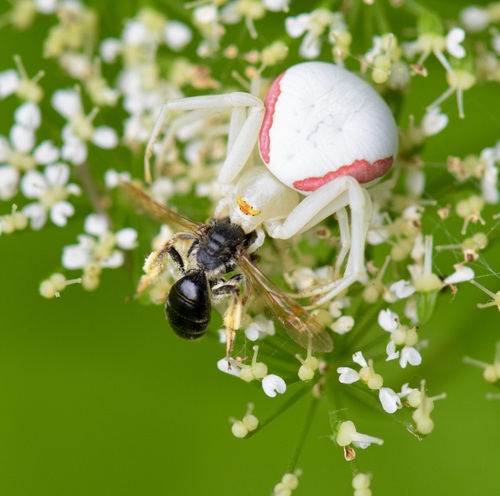
Females are 6 to 10 mm long and usually yellow, white, pale green or pink, while males are only 3 to 5 mm. They hide on flowering plants such as goldenrod and milkweed, waiting camouflaged to catch insects. They bite insects with venom that is harmless to humans.
Source: Wikipedia
How to recognize it
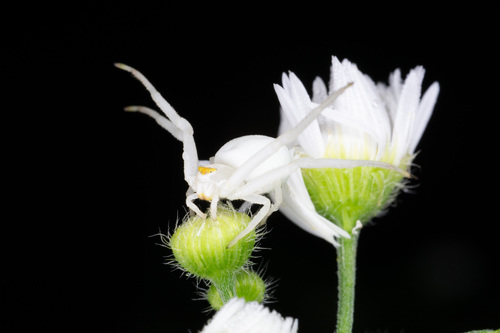
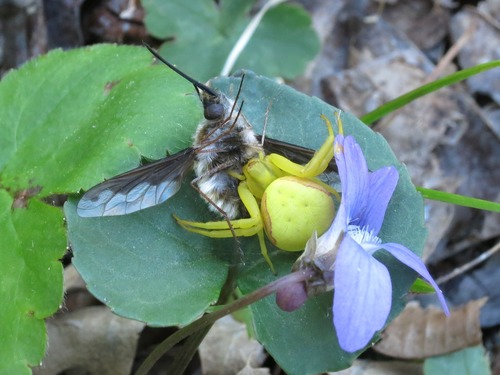
They are typically yellow or white, sometimes with pale green or pink patterns.
Source: Wikipedia
Size
Females grow up to 10 mm, most are 6 to 9 mm; males are 3 to 5 mm.
Source: Wikipedia
Where it lives
They are commonly found on goldenrod, milkweed and other flowering plants, waiting camouflaged.
Source: Wikipedia
What it eats
They eat common insects, often larger than themselves, using venom to immobilize prey.
Source: Wikipedia
Life cycle
Both sexes molt several times; females molt more to reach larger size. After mating, females guard their egg sacs until the spiderlings hatch and then die.
Source: Wikipedia
Where it comes from
They occur in Europe and North America.
Source: Wikipedia
Lookalikes
Other similar species in Misumenoides and Misumenops occur mainly south of their range, with some in North America.
Source: Wikipedia
Where it is found in the US
Recorded in 39 of 51 states and DC. Most records: Washington, Oregon, California, Vermont, Maine, Minnesota, Wisconsin, Michigan.
Darker = more records. Counts are museum and citizen-science records, not population size.
Source: GBIF
Status: native in North America; native in United States; native in Canada. Source: iNaturalist
Months it is reported in the US
Source: GBIF
More photos
Questions people ask
Do goldenrod crab spiders bite humans?
No, their fangs are too small to penetrate human skin and their venom is harmless to us.
Source: Wikipedia
What do they look like?
They are usually yellow or white, sometimes pale green or pink, and females are larger than males.
Source: Wikipedia
Where can I find them?
They hide camouflaged on flowering plants like goldenrod and milkweed in Europe and North America.
Source: Wikipedia
Are they dangerous to pets?
They are not dangerous; their venom does not affect larger animals.
Source: Wikipedia
Same family (Thomisidae)


Sources
- Wikipedia: https://en.wikipedia.org/wiki/Misumena_vatia
Look it up elsewhere: GBIF · iNaturalist · BugGuide · ITIS · Wikipedia
Text written 2026-10-22 from the sources above and checked sentence by sentence against them. Data fetched 2026-10-22.