 Bug FAQ
Wood's Jewel Scarab
Chrysina woodi · Order: Coleoptera · Family: Scarabaeidae
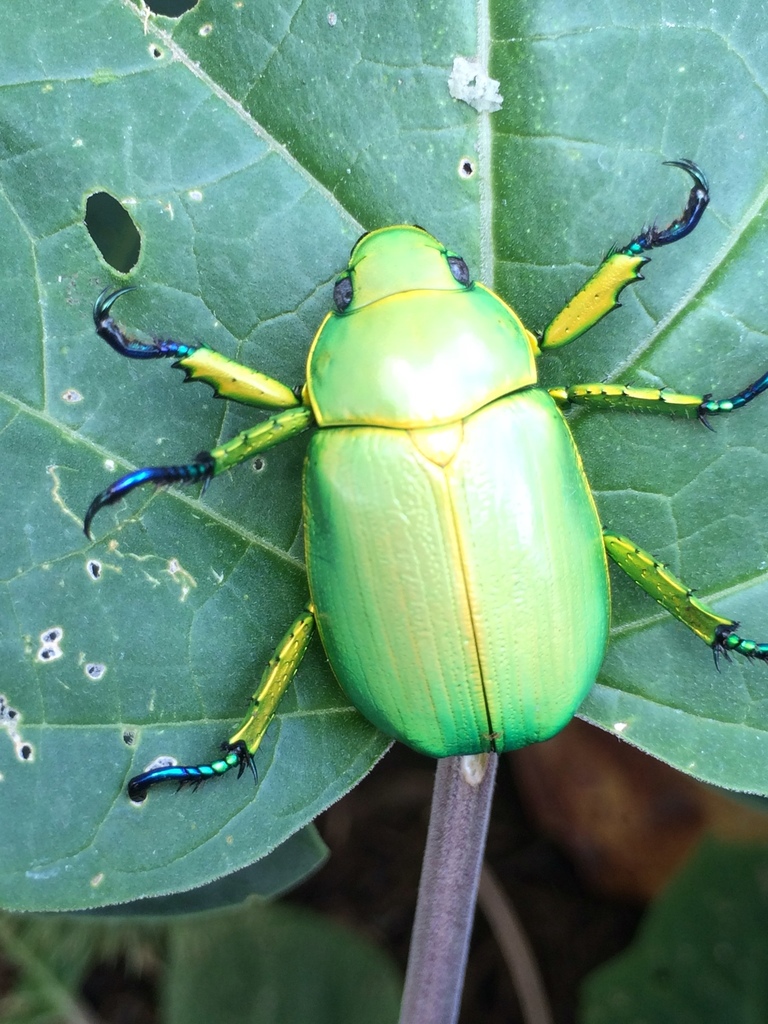
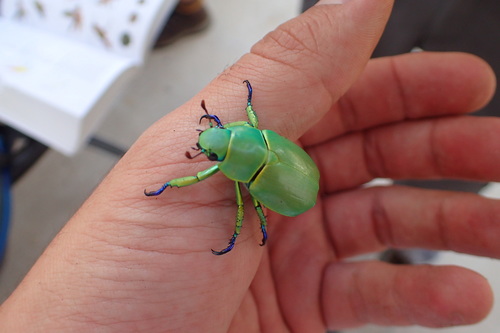
Wood's jewel scarab is a bright-green beetle about 25 to 35 mm long. It lives in Chihuahua, Mexico and the U.S. states of New Mexico and Texas, where adults mainly eat Texas black walnut.
Source: Wikipedia
Size
Adults measure between 25 and 35 mm (1.0 to 1.4 in) in length.
Source: Wikipedia
Where it lives
It inhabits the regions of Chihuahua, New Mexico and Texas.
Source: Wikipedia
What it eats
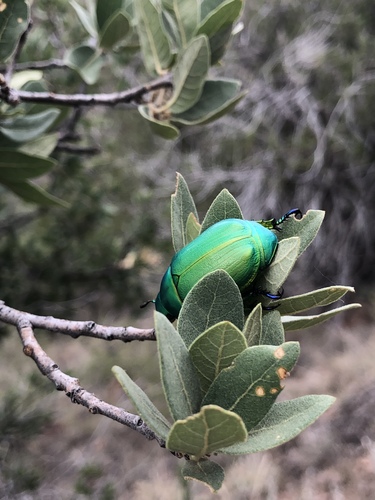
Adults have been recorded feeding mainly on Texas black walnut (Juglans microcarpa) and occasionally on a few other plants.
Source: Wikipedia
Where it comes from
Its native range includes Chihuahua in Mexico and the U.S. states of New Mexico and Texas.
Source: Wikipedia
Lookalikes
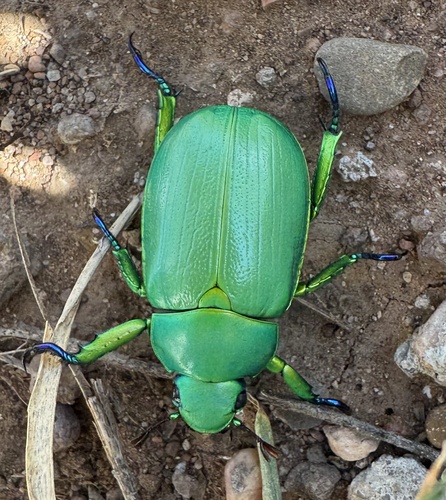
It looks similar to Chrysina beyeri, but C. woodi has green legs with blue tarsi, whereas C. beyeri has entirely blue-purple legs and tarsi.
Source: Wikipedia
Where it is found in the US
Recorded in 2 of 51 states and DC. Most records: Texas, New Mexico.
Darker = more records. Counts are museum and citizen-science records, not population size.
Source: GBIF
Months it is reported in the US
Source: GBIF
More photos
Questions people ask
What plants does Wood's jewel scarab eat?
Adults feed mostly on Texas black walnut and have been seen on a few other plant species.
Source: Wikipedia
How can I tell Wood's jewel scarab apart from similar beetles?
Look at the leg colors: this species has green legs and blue tarsi, while the similar C. beyeri has all blue-purple legs and tarsi.
Source: Wikipedia
Same family (Scarabaeidae)
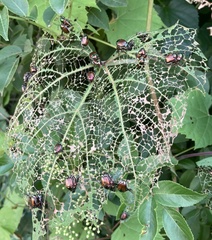 Japanese BeetlePopillia japonicaDamages trees, gardens or crops
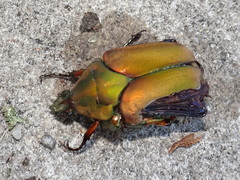 Common Green June BeetleCotinis nitidaDamages trees, gardens or crops
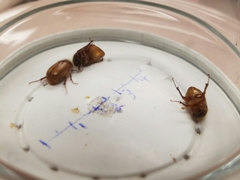 Phyllophaga crinitaDamages trees, gardens or crops
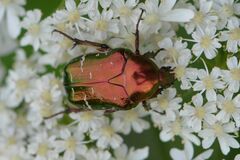 European Rose ChaferCetonia aurata
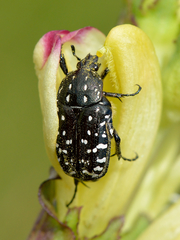 Mediterranean Spotted ChaferOxythyrea funestaDamages trees, gardens or crops
 Oriental BeetleExomala orientalisDamages trees, gardens or crops
Sources
- Wikipedia: https://en.wikipedia.org/wiki/Chrysina_woodi
Look it up elsewhere: GBIF · iNaturalist · BugGuide · ITIS · Wikipedia
Text written 2026-10-26 from the sources above and checked sentence by sentence against them. Data fetched 2026-10-26.