 Bug FAQ
Common Green June Beetle
Cotinis nitida · Order: Coleoptera · Family: Scarabaeidae
Also called: Green June Beetle, June beetle
Source: Wikipedia

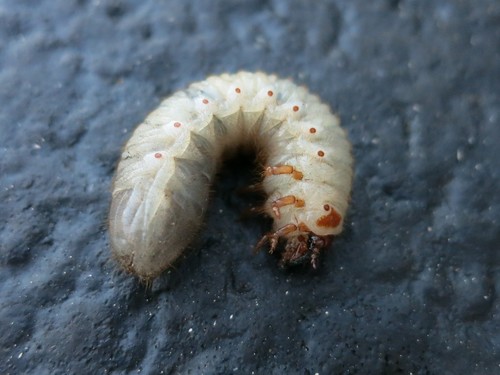
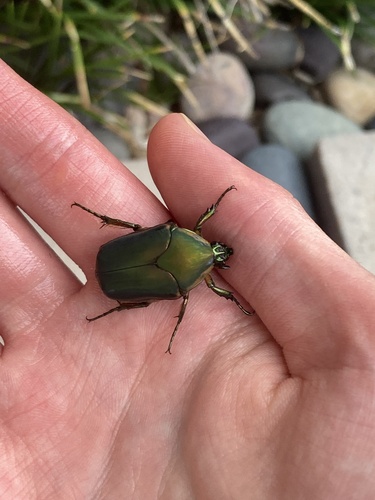
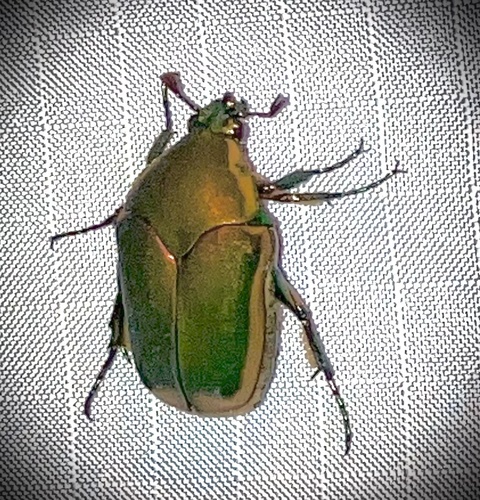
Adults are 15 to 22 mm long, metallic green on top with bright green underside and gold sides. Larvae live in soil and can harm lawns and plant roots, while adults eat a variety of fruits.
Source: Wikipedia
Size
Adults measure 15 to 22 mm in length and about 12 mm wide.
Source: Wikipedia
Is it a pest in the house?
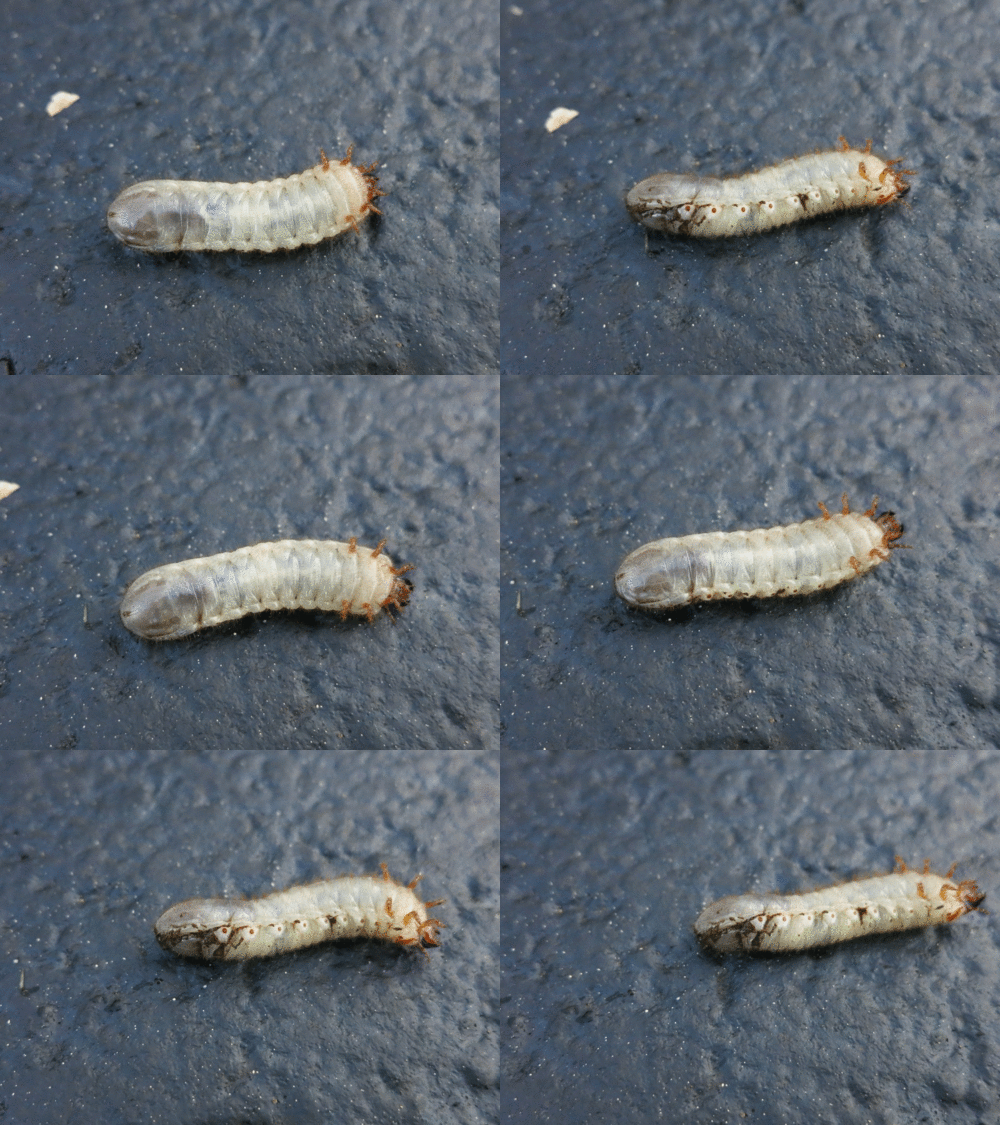
Larvae are considered pests because they can damage lawns and turf grasses. The insect causes more damage in its larval stage than as an adult beetle.
Source: Wikipedia
How to get rid of it
Covering crops with pesticide can prevent large damage from this beetle. Natural predators help keep the grub population in check.
Source: Wikipedia
Where it lives
They are found on lawns, fields and forests where host plants grow. Their range extends from New Brunswick to Georgia and west to California, with possible overlap in Texas.
Source: Wikipedia
What it eats
Larvae consume humus and mold and can damage plant root systems.
Source: Wikipedia
Life cycle
The complete life cycle takes about one year. After three larval stages lasting nearly nine months, they pupate before emerging as adults.
Source: Wikipedia
When you see it
Adults are active in daylight and start appearing in June after about 18 days of pupation.
Source: Wikipedia
Where it comes from
The species occurs across the eastern United States and Canada, most abundant in the South.
Source: Wikipedia
Lookalikes
It can be confused with the southwestern figeater beetle, which is less destructive. It differs from common brown May or June beetles by its larger size and vivid colour.
Source: Wikipedia
Where it is found in the US
Recorded in 38 of 51 states and DC. Most records: Texas, North Carolina, Virginia, Maryland, Pennsylvania, Illinois, Tennessee, Georgia.
Darker = more records. Counts are museum and citizen-science records, not population size.
Source: GBIF
Status: native in North America; native in United States. Source: iNaturalist
Months it is reported in the US
Source: GBIF
More photos
Questions people ask
How can I prevent damage to my lawn?
Control the larvae with natural predators or apply appropriate pesticide to the soil.
Source: Wikipedia
When do the adults appear?
Adults emerge in June after about 18 days of pupation and are active during daylight.
Source: Wikipedia
Same family (Scarabaeidae)
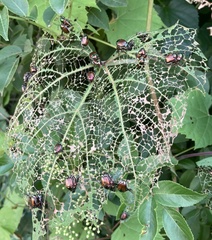 Japanese BeetlePopillia japonicaDamages trees, gardens or crops
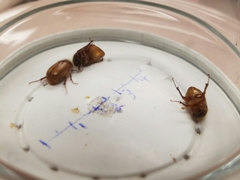 Phyllophaga crinitaPhyllophaga crinitaDamages trees, gardens or crops
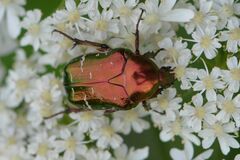 European Rose ChaferCetonia aurata
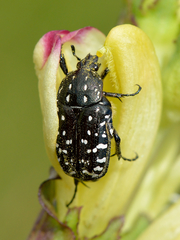 Mediterranean Spotted ChaferOxythyrea funestaDamages trees, gardens or crops
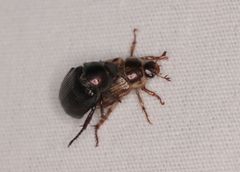 Oriental BeetleExomala orientalisDamages trees, gardens or crops
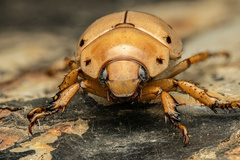 Grapevine BeetlePelidnota punctataDamages trees, gardens or crops
Sources
- Wikipedia: https://en.wikipedia.org/wiki/Cotinis_nitida
Look it up elsewhere: GBIF · iNaturalist · BugGuide · ITIS · Wikipedia
Text written 2026-10-23 from the sources above and checked sentence by sentence against them. Data fetched 2026-10-22.