 Bug FAQ
Phyllophaga crinita
Phyllophaga crinita · Order: Coleoptera · Family: Scarabaeidae
Source: animaldiversity.org, Utah State Extension
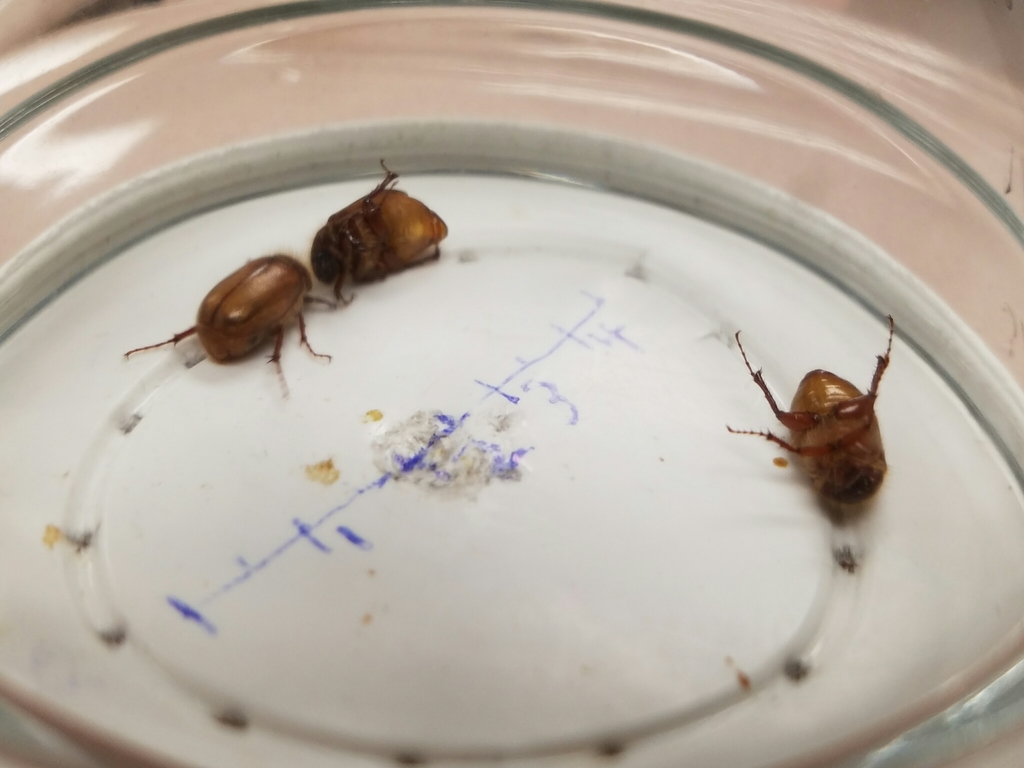
Adult beetles feed on tree foliage but cause little plant health damage, while the larvae are a serious threat to lawns and crops. Control can be achieved with entomopathogenic nematodes, Beauveria fungal spores, or preventive insecticides applied in spring.
Source: animaldiversity.org, Utah State Extension
How to recognize it
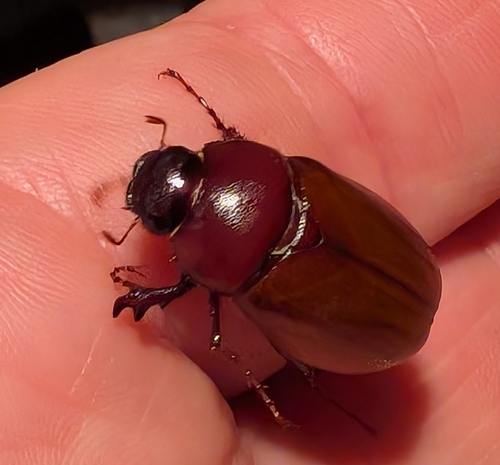
Adults are 1.3 to 1.7 cm long, heavy-bodied, reddish-brown beetles with six legs and two pairs of wings. Adults vary from light to dark brown and measure about ½ to 1 inch. Larvae are C-shaped, 0.3 to 2.5 cm long, cream-colored with a grayish rear and a yellow-brown head bearing three pairs of legs.
Source: animaldiversity.org, Utah State Extension
Size
Adults range from 1.3 to 1.7 cm (about ½ to 1 inch) in length. Larvae are 0.3 to 2.5 cm (about 1/8 to 1 inch) long.
Source: animaldiversity.org, Utah State Extension
Is it a pest in the house?
Adults have little economic impact, but larvae are a major threat to lawns and crops. Larval feeding on roots turns turf yellow and brown.
Source: animaldiversity.org, Utah State Extension
How to get rid of it
Apply biopesticides with entomopathogenic nematodes or Beauveria fungal spores to suppress larvae. Use a preventive insecticide, such as a neonicotinoid or anthranilic diamide, in spring.
Source: Utah State Extension
Where it lives
It lives in grasslands and lawns with Bermuda grass, St. Augustine grass or tall fescue, and in corn and sorghum fields. The grubs live in the soil under that grass.
Source: animaldiversity.org
What it eats
Adults eat the foliage of broadleaf and coniferous trees, causing visible defoliation.
Source: animaldiversity.org
Where it comes from
In the US it has been reported in Texas, Louisiana, Mississippi, Alabama, Iowa and Missouri, and in northern Mexico. Most reports come from Texas and Tamaulipas.
Source: animaldiversity.org
Where it is found in the US
Recorded in 9 of 51 states and DC. Most records: Texas, Oklahoma, New Mexico, Louisiana, Kansas, Florida, Mississippi, Arizona.
Darker = more records. Counts are museum and citizen-science records, not population size.
Source: GBIF
Status: native in North America; native in United States. Source: iNaturalist
Months it is reported in the US
Source: GBIF
More photos
Questions people ask
How do I control Phyllophaga crinita larvae?
Treat the soil with entomopathogenic nematodes or Beauveria fungal spores, and apply a spring preventive insecticide like a neonicotinoid or anthranilic diamide.
Source: Utah State Extension
What damage do the larvae cause?
The larvae chew on grass, tree, and shrub roots, turning lawns yellow and brown and threatening crops.
Source: animaldiversity.org, Utah State Extension
Do adult Phyllophaga crinita beetles harm my garden plants?
Adults feed on tree foliage and can cause noticeable defoliation, but they do not seriously harm plant health.
Source: animaldiversity.org
Where is Phyllophaga crinita found?
In the US it is mostly found in Texas, and has also been reported in Louisiana, Mississippi, Alabama, Iowa and Missouri.
Source: animaldiversity.org
Same family (Scarabaeidae)
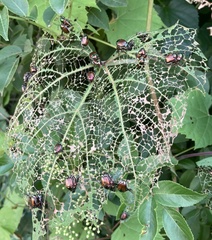 Japanese BeetlePopillia japonicaDamages trees, gardens or crops
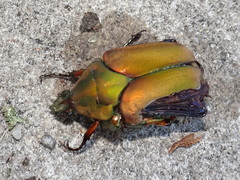 Common Green June BeetleCotinis nitidaDamages trees, gardens or crops
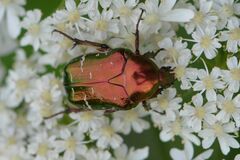 European Rose ChaferCetonia aurata
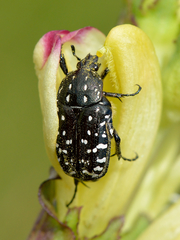 Mediterranean Spotted ChaferOxythyrea funestaDamages trees, gardens or crops
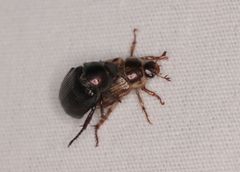 Oriental BeetleExomala orientalisDamages trees, gardens or crops
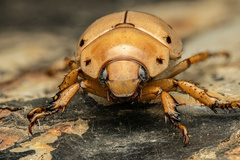 Grapevine BeetlePelidnota punctataDamages trees, gardens or crops
Sources
- animaldiversity.org: https://animaldiversity.org/accounts/Phyllophaga_crinita
- Utah State Extension: https://extension.usu.edu/planthealth/ipm/notes_orn/list-turf/ar_may-june-beetles
Look it up elsewhere: GBIF · iNaturalist · BugGuide · ITIS · Wikipedia
Text written 2026-10-23 from the sources above and checked sentence by sentence against them. Data fetched 2026-10-23.