 Bug FAQ
European Rose Chafer
Cetonia aurata · Order: Coleoptera · Family: Scarabaeidae
Also called: Common Rose Chafer, Rose Chafer
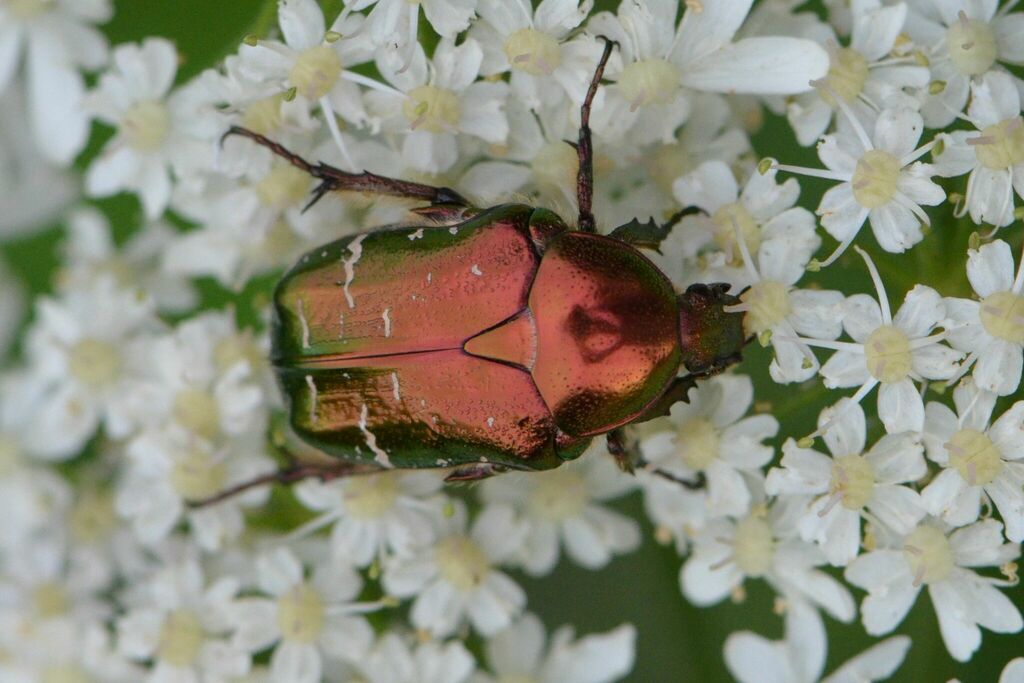
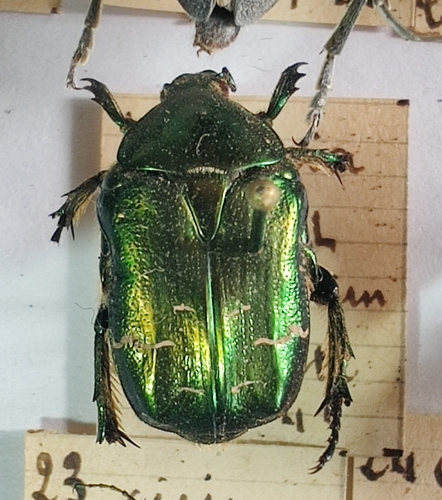
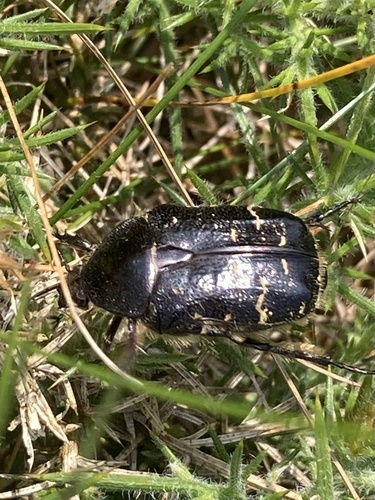
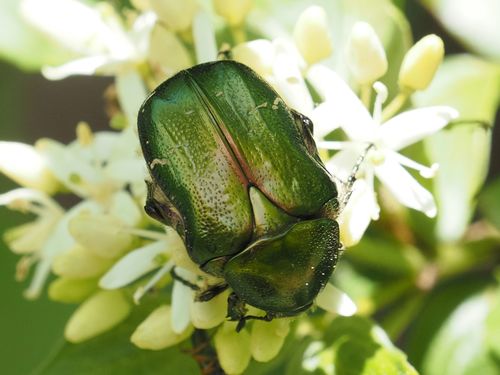
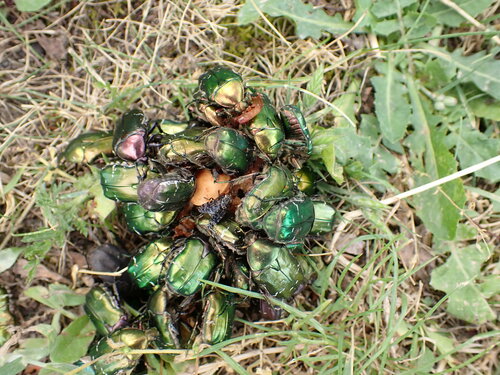
The European rose chafer is about 20 mm long and shines with metallic green colors, sometimes showing bronze, copper, violet, blue-black or grey on its back. Adults feed on pollen, nectar and flower parts, especially roses, and they help break down dead material.
Source: Wikipedia
How to recognize it
It has a metallic green surface and a V-shaped scutellum; the underside is coppery.
Source: Wikipedia
Size
The beetle measures about 20 mm (¾ in) in length.
Source: Wikipedia
What it eats
Adults eat pollen, nectar and flower parts, especially from roses. They are beneficial detritivores that help break down dead organic matter.
Source: Wikipedia
Life cycle
The species completes its development over two years. Pupation occurs in June or July.
Source: Wikipedia
When you see it
Adults are active on warm sunny days from May through June or July, and sometimes as late as September.
Source: Wikipedia
More photos
Questions people ask
What do European rose chafers eat?
They feed on pollen, nectar and flower parts, especially roses, and also act as detritivores.
Source: Wikipedia
When can I see European rose chafers?
They are most common on warm sunny days from May to June or July, sometimes later in September.
Source: Wikipedia
How can I tell a rose chafer apart from a noble chafer?
Look at the scutellum: the rose chafer has an isosceles (V-shaped) scutellum, while the noble chafer’s is an equilateral triangle.
Source: Wikipedia
Same family (Scarabaeidae)
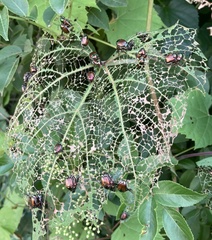 Japanese BeetlePopillia japonicaDamages trees, gardens or crops
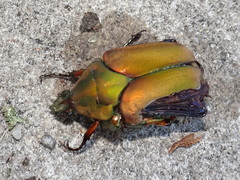 Common Green June BeetleCotinis nitidaDamages trees, gardens or crops
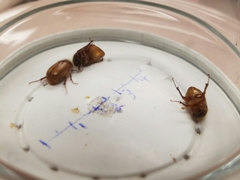 Phyllophaga crinitaPhyllophaga crinitaDamages trees, gardens or crops
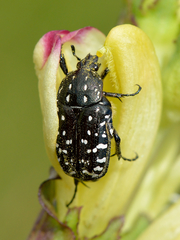 Mediterranean Spotted ChaferOxythyrea funestaDamages trees, gardens or crops
 Oriental BeetleExomala orientalisDamages trees, gardens or crops
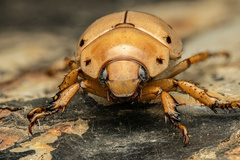 Grapevine BeetlePelidnota punctataDamages trees, gardens or crops
Sources
- Wikipedia: https://en.wikipedia.org/wiki/Cetonia_aurata
Look it up elsewhere: GBIF · iNaturalist · BugGuide · Wikipedia
Text written 2026-10-22 from the sources above and checked sentence by sentence against them. Data fetched 2026-10-22.