 Bug FAQ
Wide-banded tiger beetle
Neocicindela latecincta · Order: Coleoptera · Family: Carabidae
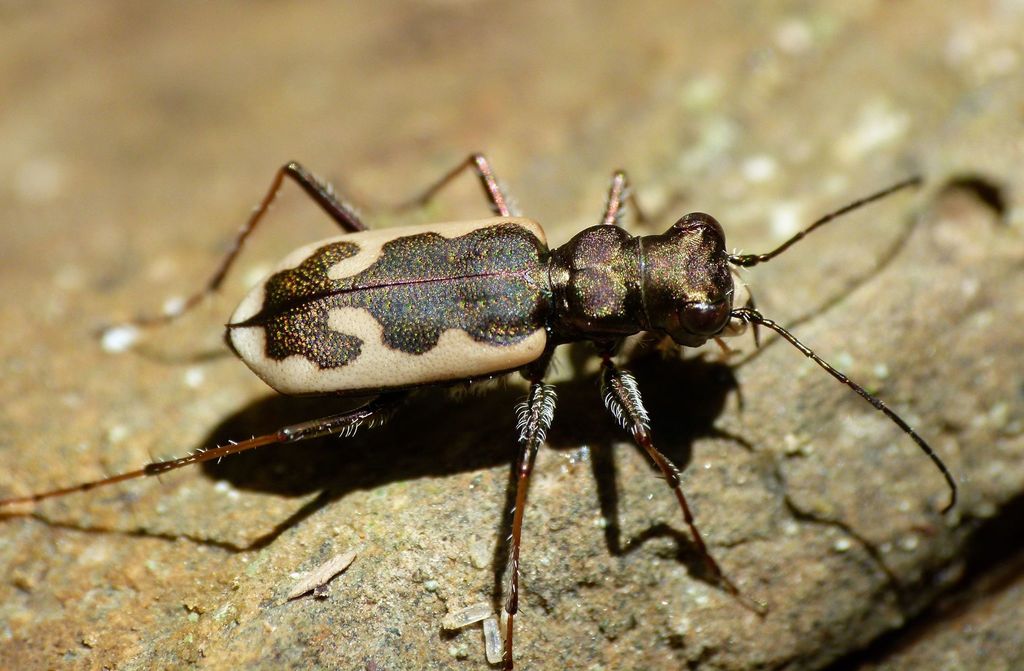
Adults measure about 11 to 13.3 mm in length, which is unusually small for tiger beetles. The head and pronotum are dark brown, the elytra have a dark central area with a light-yellow wavy edge, and the dark parts shine with a green metallic lustre.
Source: Wikipedia
How to recognize it
The head and pronotum are dark brown. Dark areas of the head, pronotum and elytra show a green metallic sheen.
Source: Wikipedia
Size
Adults are 11 to 13.3 mm long, which is small for tiger beetles.
Source: Wikipedia
Where it lives
It has been found near the Taieri River and its estuary and on clay banks in the Otago region.
Source: Wikipedia
What it eats
Māori have traditionally used its larvae as bait for fishing.
Source: Wikipedia
More photos
Questions people ask
What do they look like?
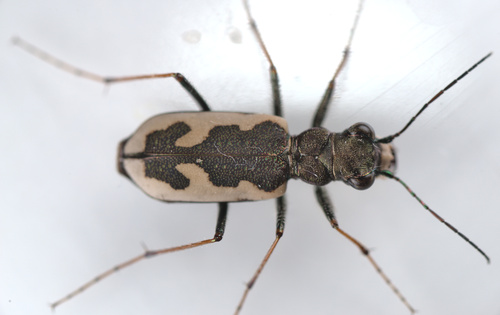
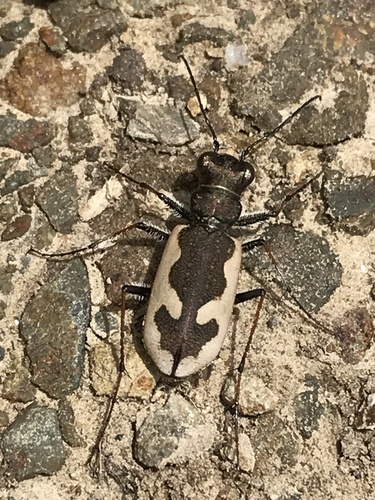
They have a dark brown head and pronotum, dark-centered elytra with a light-yellow wavy edge, and a green metallic shine on the dark parts.
Source: Wikipedia
Where are they found?
They occur near the Taieri River, its estuary, and on clay banks in Otago, and are native only to the South Island of New Zealand.
Source: Wikipedia
How have people used these beetles?
Their larvae have been used as popular fishing bait by Māori.
Source: Wikipedia
Same family (Carabidae)


Sources
- Wikipedia: https://en.wikipedia.org/wiki/Neocicindela_latecincta
Look it up elsewhere: GBIF · iNaturalist · BugGuide · Wikipedia
Text written 2026-10-23 from the sources above and checked sentence by sentence against them. Data fetched 2026-10-23.