 Bug FAQ
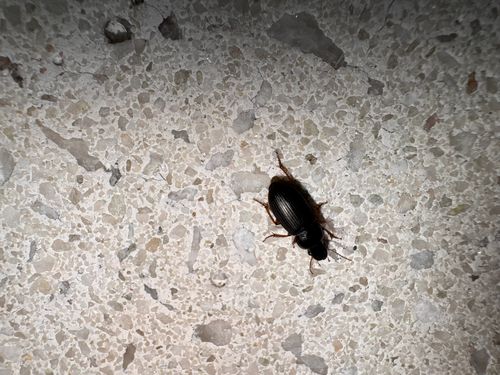
Strawberry Seed Beetle
Harpalus rufipes · Order: Coleoptera · Family: Carabidae
Also called: Strawberry Harp Ground Beetle
Source: Wikipedia
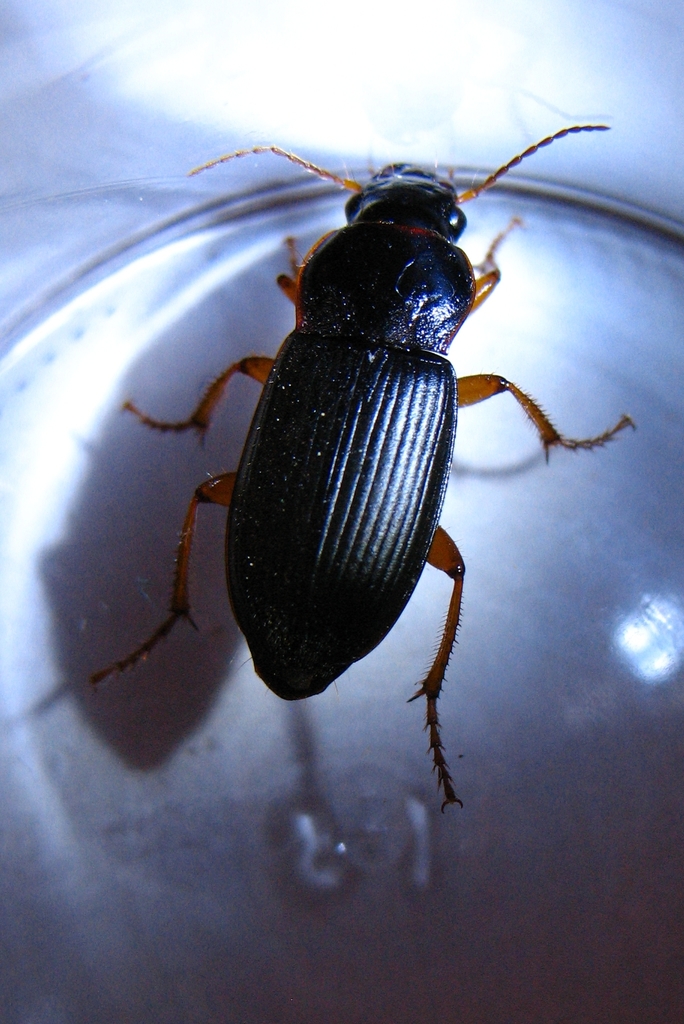
The beetle’s name means “red-footed” and it lives on the ground as a member of the Harpalinae subfamily. It is native to Europe and is sometimes released to help control other seed-eating pests, but it also eats strawberry seeds.
Source: Wikipedia
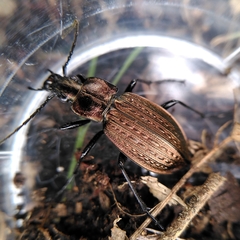
How to recognize it
The species name rufipes comes from Latin for “red-footed”.
Source: Wikipedia
Where it lives
It is a ground beetle in the subfamily Harpalinae. People use it as a biological control agent against seed-eating pests such as aphids and slugs.
Source: Wikipedia
What it eats
As a predator it feeds on seed-eating pests and also on strawberry seeds.
Source: Wikipedia
Where it comes from
It originates from Europe.
Source: Wikipedia
Where it is found in the US
Recorded in 9 of 51 states and DC. Most records: Massachusetts, Vermont, Maine, New York, New Hampshire, Connecticut, Illinois, Pennsylvania.
Darker = more records. Counts are museum and citizen-science records, not population size.
Source: GBIF
Status: introduced in North America; introduced in Canada; introduced in United States. Source: iNaturalist
Months it is reported in the US
Source: GBIF
More photos
Questions people ask
What does the strawberry seed beetle eat?
It preys on seed-eating pests like aphids and slugs and also consumes strawberry seeds.
Source: Wikipedia
Same family (Carabidae)


Sources
- Wikipedia: https://en.wikipedia.org/wiki/Harpalus_rufipes
Look it up elsewhere: GBIF · iNaturalist · BugGuide · ITIS · Wikipedia
Text written 2026-10-23 from the sources above and checked sentence by sentence against them. Data fetched 2026-10-22.