 Bug FAQ
Big-headed Ground Beetle
Scarites subterraneus · Order: Coleoptera · Family: Carabidae
Also called: Tunneling Large Pedunculate Beetle
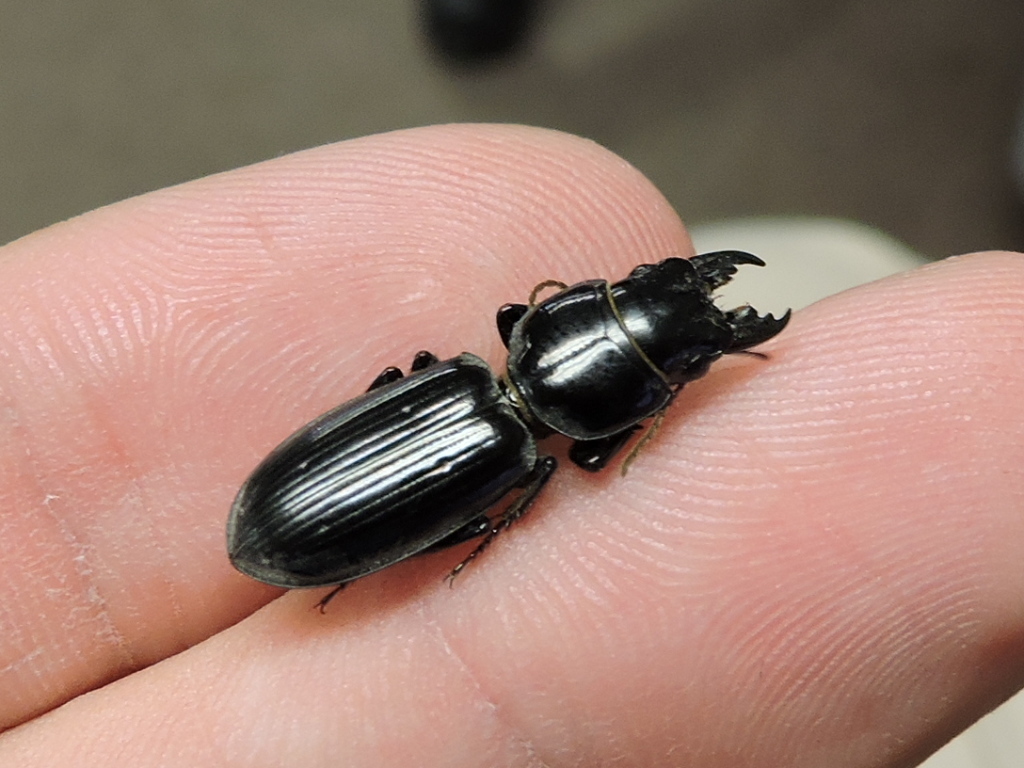
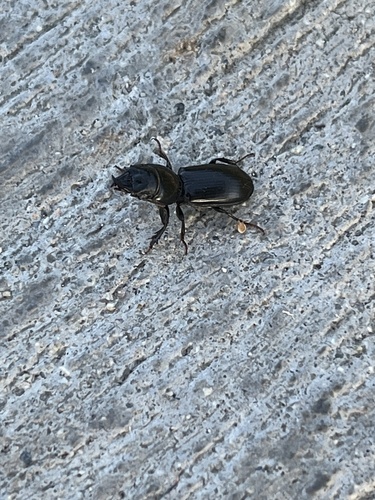
Adults are 15 to 30 mm long and have large two-toothed mandibles and striated wing covers. They live under logs, rocks, soil and leaf litter in forests and meadows across the Caribbean, Central America and North America. They are carnivorous, eating other insects and will take mealworms in captivity, and are most active in spring and summer.
Source: Wikipedia
How to recognize it
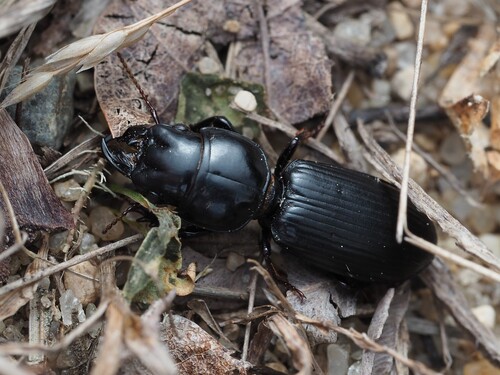
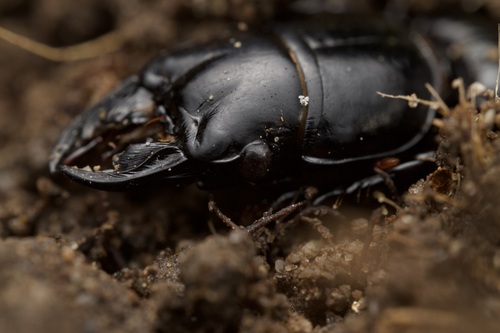
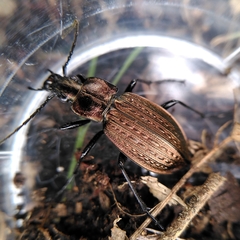
They have large mandibles with two teeth for catching prey. Their elytra show noticeable streaks.
Source: Wikipedia
Size
Adults measure between 15 and 30 mm in length.
Source: Wikipedia
Where it lives
They spend much of their time burrowing under logs, rocks, soil and leaf litter. They are found in forests and meadows.
Source: Wikipedia
What it eats
They are carnivores that hunt other insects. In captivity they will eat mealworms.
Source: Wikipedia
When you see it
Adults are most active during spring and summer.
Source: Wikipedia
Where it comes from
Their range includes the Caribbean, Central America and North America.
Source: Wikipedia
Where it is found in the US
Recorded in 44 of 51 states and DC. Most records: Texas, Kansas, Pennsylvania, Ohio, Virginia, Maryland, Kentucky, Alabama.
Darker = more records. Counts are museum and citizen-science records, not population size.
Source: GBIF
Status: native in North America; native in United States; native in Canada. Source: iNaturalist
Months it is reported in the US
Source: GBIF
More photos
Questions people ask
Same family (Carabidae)

Sources
- Wikipedia: https://en.wikipedia.org/wiki/Scarites_subterraneus
Look it up elsewhere: GBIF · iNaturalist · BugGuide · ITIS · Wikipedia
Text written 2026-10-22 from the sources above and checked sentence by sentence against them. Data fetched 2026-10-22.