 Bug FAQ
Bronzed Tiger Beetle
Cicindela repanda · Order: Coleoptera · Family: Carabidae
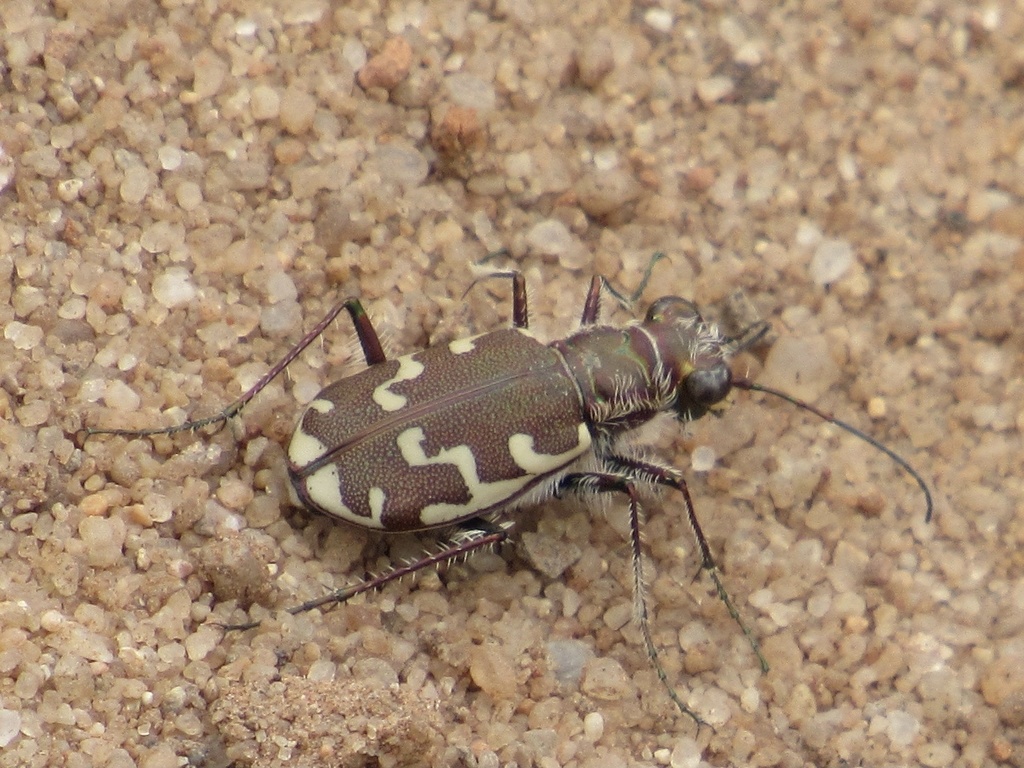
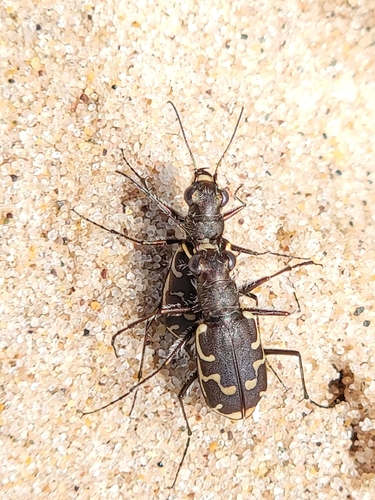
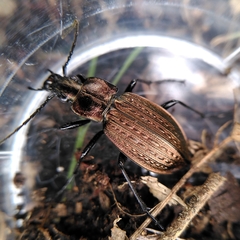
The bronzed tiger beetle is a small, 10 to 13 mm beetle with a coppery, hairy pronotum and a single-toothed labrum; it lives on sandy or gravelly soils near lakes and ponds across the United States and Canada. Adults appear in spring and summer, emerging from hibernation in April, and they feed on a variety of small insects and other arthropods.
Source: Wikipedia
Size
Adults measure about 10 to 13 mm in length.
Source: Wikipedia
Where it lives
It prefers sand, gravel, or clay soils and is commonly seen along lake edges and interdunal pond margins.
Source: Wikipedia
What it eats
Adults hunt and eat many insects and other small arthropods, and they may also take some fruit.
Source: Wikipedia
Life cycle
The beetle completes its development over two years, with larvae pupating in the fall and adults emerging in summer, then overwintering as larvae or adults depending on the season.
Source: Wikipedia
When you see it
Adults are most visible in spring and summer, emerging from hibernation in April and peaking a few weeks later.
Source: Wikipedia
Where it comes from
It is widespread and very common throughout the United States and Canada.
Source: Wikipedia
Lookalikes
Cicindela formosa and Cicindela scutellaris look similar and share the same spring-fall activity pattern.
Source: Wikipedia
Where it is found in the US
Recorded in 48 of 51 states and DC. Most records: Oklahoma, Ohio, Colorado, Maryland, Vermont, New Hampshire, Texas, Connecticut.
Darker = more records. Counts are museum and citizen-science records, not population size.
Source: GBIF
Status: native in North America; native in United States; native in Canada. Source: iNaturalist
Months it is reported in the US
Source: GBIF
More photos
Questions people ask
When can I expect to see them?
Adults appear in spring and summer, with numbers peaking a few weeks after they emerge from hibernation in April.
Source: Wikipedia
Where do they live?
They are found on sandy, gravelly, or clay soils near lakes and ponds across the U.S. and Canada.
Source: Wikipedia
Same family (Carabidae)


Sources
- Wikipedia: https://en.wikipedia.org/wiki/Cicindela_repanda
Look it up elsewhere: GBIF · iNaturalist · BugGuide · ITIS · Wikipedia
Text written 2026-10-22 from the sources above and checked sentence by sentence against them. Data fetched 2026-10-22.