 Bug FAQ
White-veined Arctic
Oeneis bore · Order: Lepidoptera · Family: Nymphalidae
Also called: Arctic Grayling
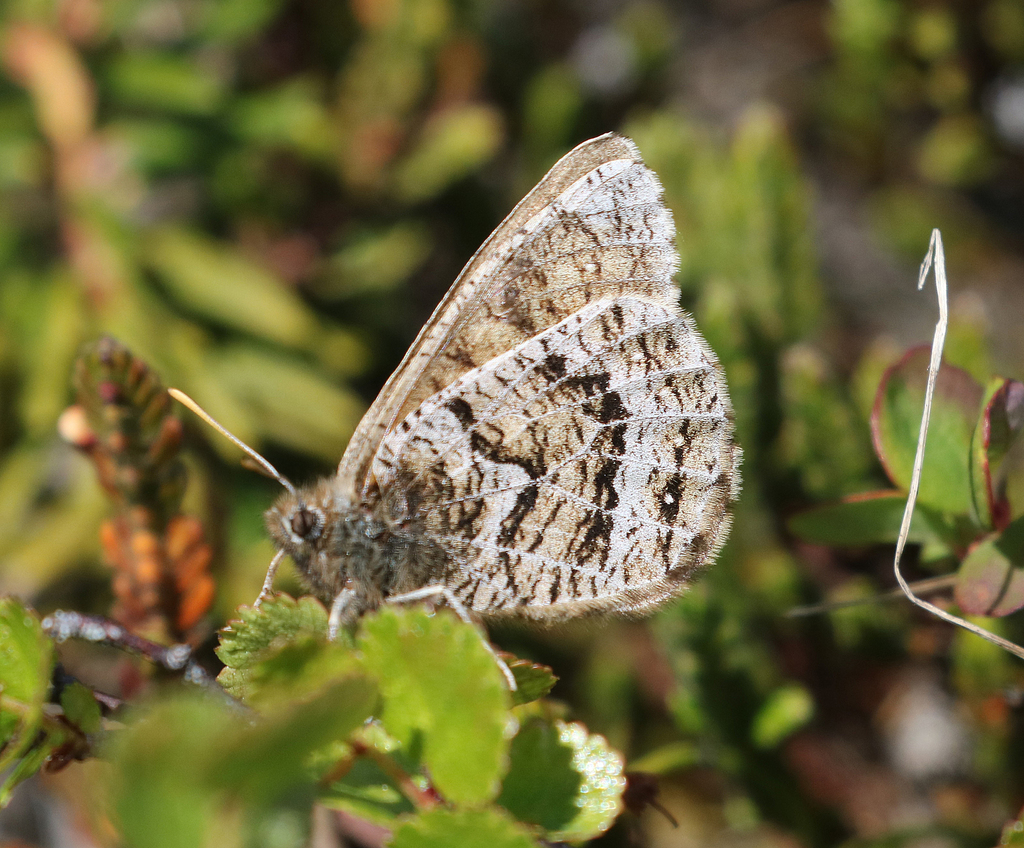
The white-veined Arctic has a wingspan of about 37 to 49 mm and the upper side of the wings is a dull grey-brown, with females often tawny and males showing a dark grey spot in the middle of the forewing. It lives on grassy alpine slopes, tundra, taiga and sub-arctic bogs across Lapland, northern Russia and much of Arctic Canada, also reaching the Gaspé Peninsula, western Alberta and the Rocky Mountain states of the USA. The caterpillars feed on sedges such as Carex misandra and lay eggs on dead grass leaves like Festuca species.
Source: Wikipedia
Size
Wingspan ranges from 37 to 49 mm.
Source: Wikipedia
Where it lives
Found on grassy alpine slopes, tundra, taiga and sub-arctic bogs.
Source: Wikipedia
What it eats
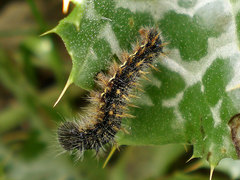
Larvae eat sedges such as Carex misandra and eggs are laid on dead leaves of grasses like Festuca mibra, Festuca brachyphylla and Festuca vivipara.
Source: Wikipedia
Life cycle
It is a butterfly in the Satyrinae subfamily found in North America and Asia.
Source: Wikipedia
Where it comes from
It also lives in Lapland and northern Russia.
Source: Wikipedia
Lookalikes
Similar species are the Melissa Arctic (O. mellisa) and the Polixenes Arctic (O. polixenes).
Source: Wikipedia
Where it is found in the US
Recorded in 9 of 51 states and DC. Most records: Alaska, Colorado, Montana, Wyoming, Maine, Utah, Kansas, California.
Darker = more records. Counts are museum and citizen-science records, not population size.
Source: GBIF
Status: native in North America; native in Canada; native in United States. Source: iNaturalist
Months it is reported in the US
Source: GBIF
More photos

Questions people ask
What does the white-veined Arctic look like?
Males have a dark grey spot on the forewing centre, females are often tawny, and the dorsal side is a dull grey-brown.
Source: Wikipedia
Where does the white-veined Arctic live?
It inhabits grassy alpine slopes, tundra, taiga and sub-arctic bogs across Lapland, northern Russia, Arctic Canada and parts of the United States such as the Rocky Mountain states.
Source: Wikipedia
What does the white-veined Arctic eat?
The larvae feed on sedges like Carex misandra and lay eggs on dead leaves of Festuca grasses.
Source: Wikipedia
Same family (Nymphalidae)





Sources
- Wikipedia: https://en.wikipedia.org/wiki/Oeneis_bore
Look it up elsewhere: GBIF · iNaturalist · BugGuide · ITIS · Wikipedia
Text written 2026-10-23 from the sources above and checked sentence by sentence against them. Data fetched 2026-10-23.