 Bug FAQ
Speckled Wood
Pararge aegeria · Order: Lepidoptera · Family: Nymphalidae
Also called: Speckled Wood Butterfly
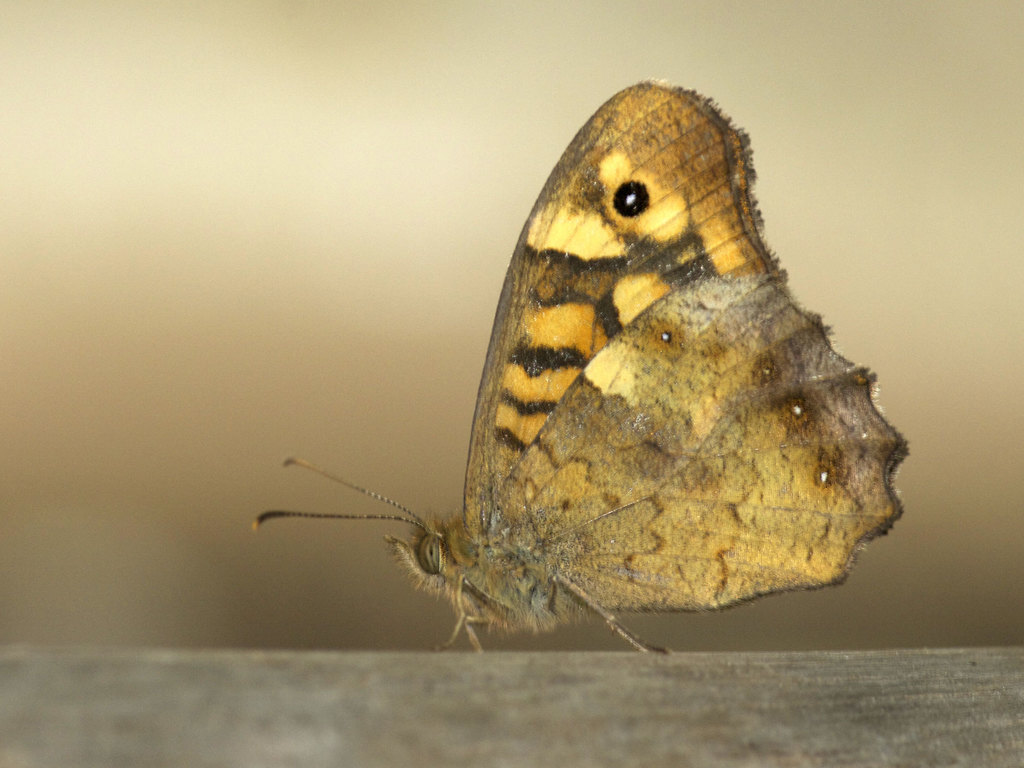
The speckled wood has a wingspan of about 5 cm, with males a bit smaller than females. It lives in many grassy and flowery spots in forests, meadows, urban parks and gardens. Adults feed on various grasses and the species can overwinter as either a pupa or a half-grown larva, leading to several flight periods each year.
Source: Wikipedia
How to recognize it
The wings are brown to orange with pale yellow, white, cream or tawny orange spots. Females show brighter and more distinct markings than males.
Source: Wikipedia
Size
Both sexes average a 5.1 cm (2 in) wingspan, with males slightly smaller.
Source: Wikipedia
Where it lives
It occupies grassy, flowery habitats in forests, meadows, woods and glades. It also occurs in urban areas near hedges, in wooded parks and sometimes in gardens.
Source: Wikipedia
What it eats
Adults feed on a variety of grass species.
Source: Wikipedia
Life cycle
Eggs are laid on many grass host plants. It can overwinter either as a pupa or as a half-grown larva.
Source: Wikipedia
When you see it
This dual overwintering creates several adult flight periods each year. The proportion of the two phenotypes varies with location and time of year.
Source: Wikipedia
Where it comes from
The species is found throughout much of the Palearctic woodland region.
Source: Wikipedia
Where it is found in the US
Recorded in 1 of 51 states and DC. Most records: Florida.
Darker = more records. Counts are museum and citizen-science records, not population size.
Source: GBIF
More photos


Same family (Nymphalidae)





Sources
- Wikipedia: https://en.wikipedia.org/wiki/Speckled_wood_%28butterfly%29
Look it up elsewhere: GBIF · iNaturalist · BugGuide · Wikipedia
Text written 2026-10-22 from the sources above and checked sentence by sentence against them. Data fetched 2026-10-22.