 Bug FAQ
White-tipped Ash Blue
Eicochrysops hippocrates · Order: Lepidoptera · Family: Lycaenidae
Also called: White-tipped Blue

Males have a wingspan of about 18 to 23 mm and females 20 to 24 mm. It lives in sub-Saharan Africa, including Madagascar. The species produces two generations each year, with adults flying from September to November and again from January to June.
Source: Wikipedia
How to recognize it
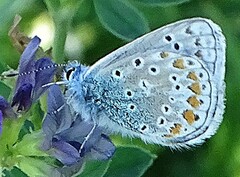
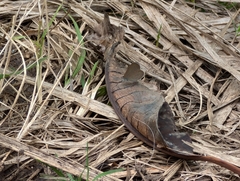
The white-tipped ash blue is a butterfly in the Lycaenidae family.
Source: Wikipedia
Size
Males measure 18 to 23 mm across the wings, while females are slightly larger at 20 to 24 mm.
Source: Wikipedia
Where it lives
It is found throughout Africa south of the Sahara and on Madagascar.
Source: Wikipedia
What it eats
Caterpillars feed on plants in the Polygonum and Rumex genera.
Source: Wikipedia
Life cycle
The butterfly has two generations per year.
Source: Wikipedia
When you see it
Adults are on the wing from September through November and again from January to June.
Source: Wikipedia
Where it comes from
Its native range includes sub-Saharan Africa and Madagascar.
Source: Wikipedia
More photos


Questions people ask
How large is the white-tipped ash blue?
Males have a wingspan of 18 to 23 mm and females 20 to 24 mm.
Source: Wikipedia
Same family (Lycaenidae)



Sources
- Wikipedia: https://en.wikipedia.org/wiki/Eicochrysops_hippocrates
Look it up elsewhere: GBIF · iNaturalist · BugGuide · Wikipedia
Text written 2026-10-23 from the sources above and checked sentence by sentence against them. Data fetched 2026-10-23.