 Bug FAQ
White-tailed Dragonlet
Erythrodiplax unimaculata · Order: Odonata · Family: Libellulidae
Also called: One-spotted Dragonlet

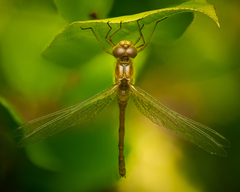
The white-tailed dragonlet has brown-tipped wings; females often show only basal spots, the forewings may have a yellowish shadow, and the hind wings show a diffuse red-yellow area extending to the first antenodal transverse artery. It has been recorded in Brazil, Colombia and Peru, and GBIF data suggest it occurs more widely across northern South America.
Source: Wikipedia
How to recognize it
Wings have brown tips; females often only have basal spots, forewings may show a yellowish shadow, and hind wings have a diffuse red-yellow area reaching the first antenodal transverse artery.
Source: Wikipedia
Where it comes from
Observed in Brazil, Colombia and Peru, with additional records indicating a broader distribution in northern South America.
Source: Wikipedia
More photos


Questions people ask
How can I identify a white-tailed dragonlet?
Look for brown-tipped wings; females often show only basal spots, the forewings may have a yellowish shadow, and the hind wings display a diffuse red-yellow coloration extending toward the first antenodal transverse artery.
Source: Wikipedia
Same family (Libellulidae)


Sources
- Wikipedia: https://en.wikipedia.org/wiki/Erythrodiplax_unimaculata
Look it up elsewhere: GBIF · iNaturalist · BugGuide · ITIS · Wikipedia
Text written 2026-10-23 from the sources above and checked sentence by sentence against them. Data fetched 2026-10-23.