 Bug FAQ
Blue Dasher
Pachydiplax longipennis · Order: Odonata · Family: Libellulidae
Also called: Swift Long-winged Skimmer
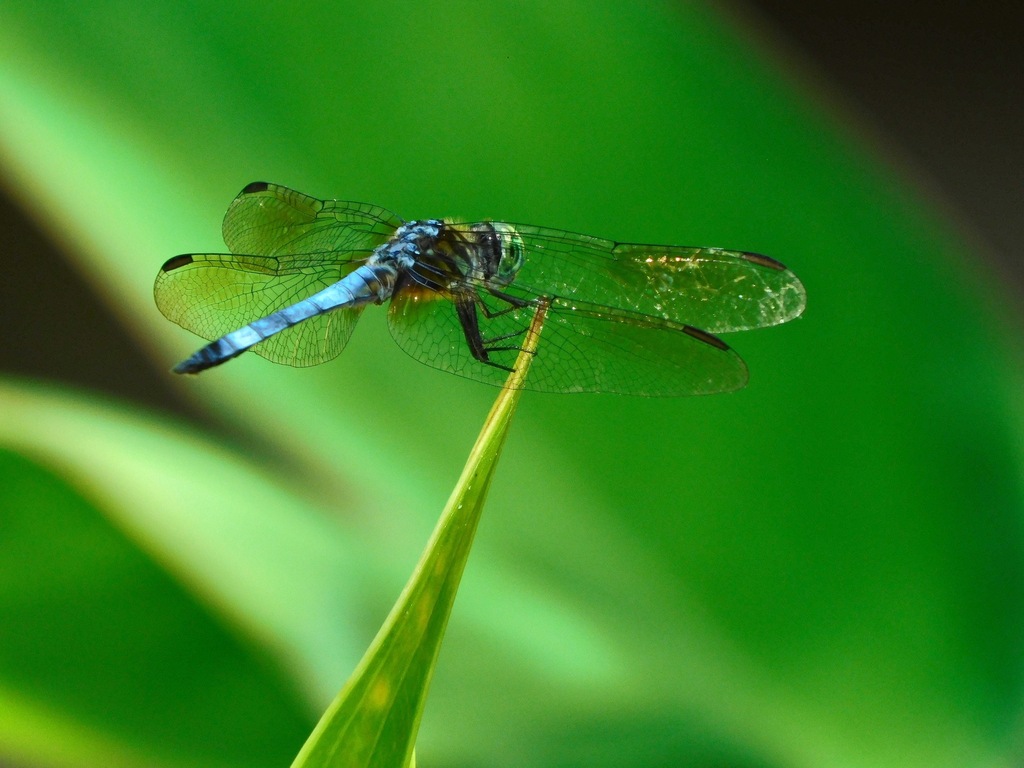
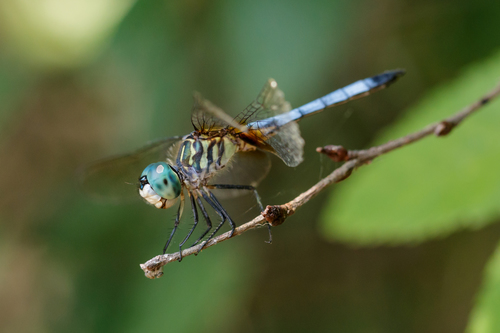
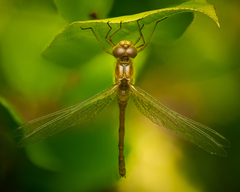
Blue dashers are small dragonflies about 1 to 1.7 inches long and are found near calm water in warm, low-elevation areas of North America and the Bahamas. Males are bright blue with a yellow-striped thorax and metallic green eyes, while females have a yellow-striped thorax, brown-yellow abdominal bands, and red eyes. Both adults and nymphs are carnivorous, eating many insects, mosquito larvae, and aquatic creatures; adults roost in trees at night.
Source: Wikipedia
How to recognize it
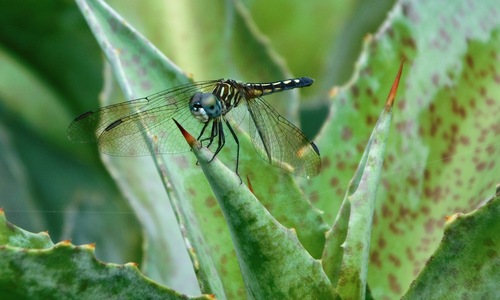
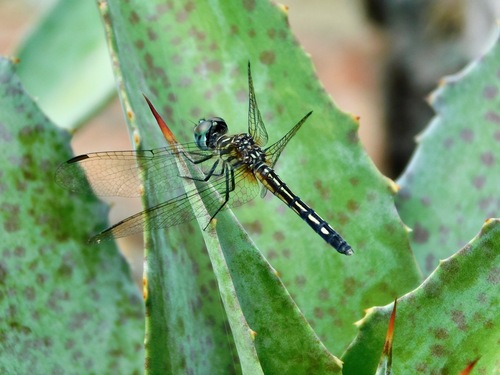
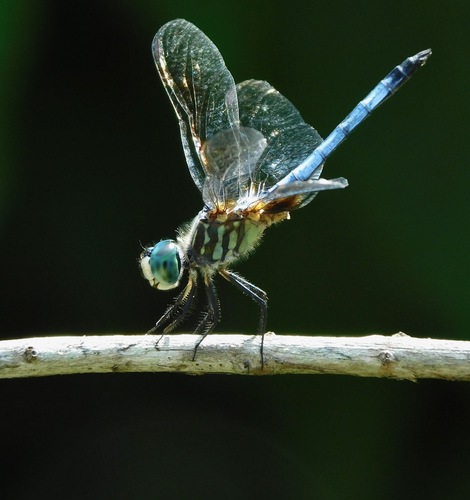
Males are bright blue with a yellow-striped thorax and metallic green eyes. Females have a yellow-striped thorax, brown-yellow abdominal striping, and red eyes.
Source: Wikipedia
Size
They grow to 25 to 43 mm (1.0 to 1.7 in) in length.
Source: Wikipedia
Where it lives
They live near still or slow-moving water such as ponds, marshes, ditches, and low-elevation warm areas. Adults roost in trees at night.
Source: Wikipedia
What it eats
Adults are carnivorous and can eat hundreds of insects daily, including mosquitoes and mayfly larvae. Nymphs eat other aquatic larvae, small fish, and tadpoles.
Source: Wikipedia
Life cycle
Larvae emerge asynchronously, meaning they do not all hatch at the same time.
Source: Wikipedia
When you see it
The species is classified as a summer species based on its emergence time.
Source: Wikipedia
Where it comes from
Their range covers most of North America and extends into the Bahamas.
Source: Wikipedia
Where it is found in the US
Recorded in 48 of 51 states and DC. Most records: Texas, Ohio, Florida, New Jersey, California, Maryland, Virginia, Massachusetts.
Darker = more records. Counts are museum and citizen-science records, not population size.
Source: GBIF
Status: native in North America; native in Canada; native in United States. Source: iNaturalist
Months it is reported in the US
Source: GBIF
More photos
Questions people ask
Where might I find a blue dasher around my house?
Look near calm water like ponds or ditches, and check trees at night for roosting adults.
Source: Wikipedia
Can blue dashers help control mosquitoes?
Adults eat many insects, including mosquito larvae, so they can reduce mosquito numbers.
Source: Wikipedia
Same family (Libellulidae)


Sources
- Wikipedia: https://en.wikipedia.org/wiki/Blue_dasher
Look it up elsewhere: GBIF · iNaturalist · BugGuide · ITIS · Wikipedia
Text written 2026-10-22 from the sources above and checked sentence by sentence against them. Data fetched 2026-10-22.