 Bug FAQ
Eastern Pondhawk
Erythemis simplicicollis · Order: Odonata · Family: Libellulidae
Also called: Common Pondhawk, Green Clearwing
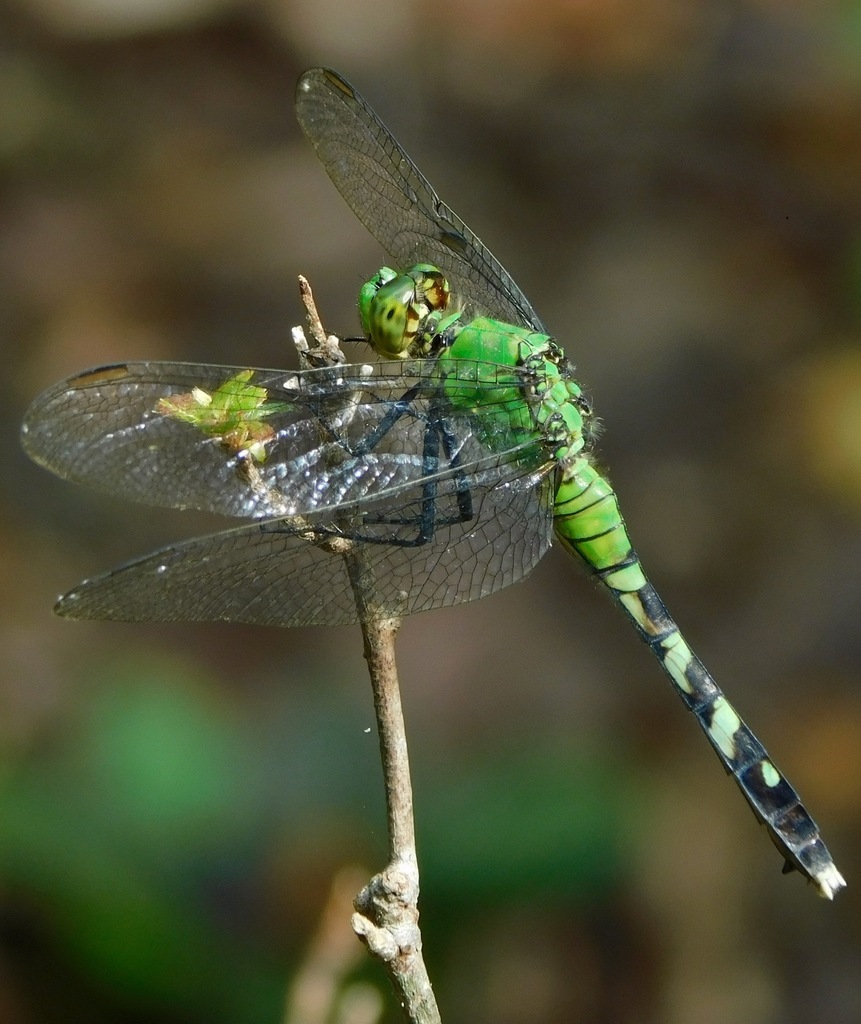
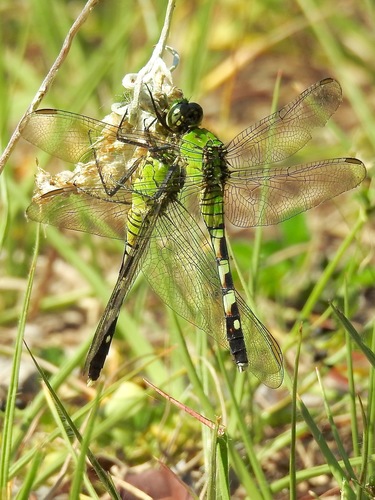
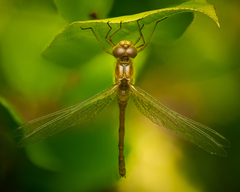
Females are bright green with a banded abdomen, while mature males have a blue abdomen, green face and a thorax that is green and blue; their wings have distinct veins and dark margins near the tips. They are swift aerial predators that catch damselflies and other insects on the wing, resting on vegetation between hunts, and their nymphs have green eyes before emerging as dull olive-green adults that turn bright green within a few hours.
Source: Wikipedia
How to recognize it
Females are bright green with a banded abdomen; mature males have a blue abdomen, green face, and a thorax that shows both green and blue colors. Their wings are heavily veined and have dark edges near the tips.
Source: Wikipedia
Size
Adults measure between 36 and 48 mm in length (about 1.4 to 1.9 in).
Source: Wikipedia
Where it lives
They are found around ponds and other still bodies of water. Newly emerged adults initially hunt away from water and return to ponds after about two weeks.
Source: Wikipedia
What it eats
They are fast flying predators that catch damselflies and other insects while in flight. Between hunts they perch on vegetation, ready to launch when prey appears.
Source: Wikipedia
Life cycle
Nymphs can be recognized by their green eyes. When they leave the water and molt for the final time, the immature adult is dull olive-green but turns bright green with dark brown banding on the abdomen within a few hours.
Source: Wikipedia
When you see it
In Florida, new adults emerge throughout the summer and live about ten days as reproductive adults. After about two weeks they return to ponds, and males establish territories, driving away rivals.
Source: Wikipedia
Where it is found in the US
Recorded in 47 of 51 states and DC. Most records: Texas, Ohio, Florida, New Jersey, Virginia, Maryland, North Carolina, Louisiana.
Darker = more records. Counts are museum and citizen-science records, not population size.
Source: GBIF
Status: native in North America; native in Canada; native in United States. Source: iNaturalist
Months it is reported in the US
Source: GBIF
More photos
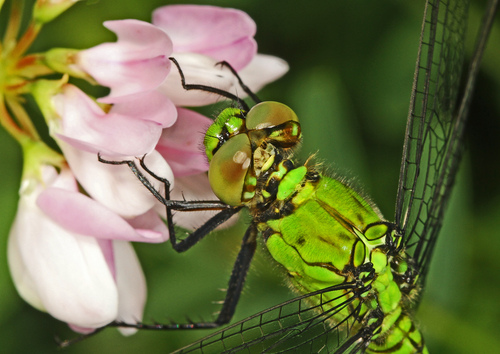
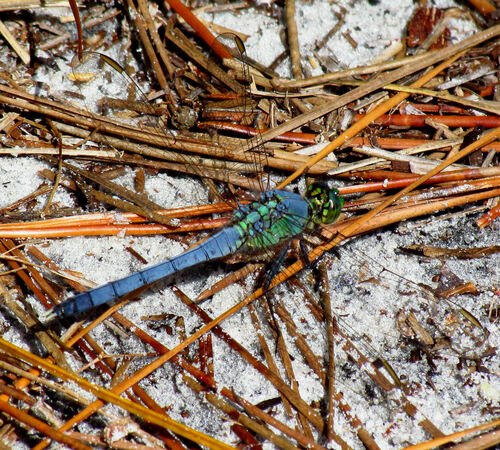
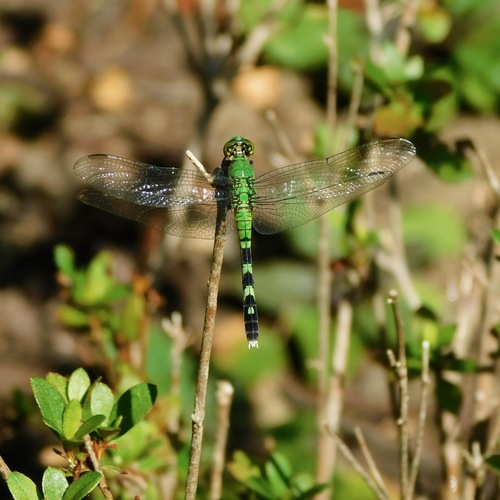
Same family (Libellulidae)


Sources
- Wikipedia: https://en.wikipedia.org/wiki/Erythemis_simplicicollis
Look it up elsewhere: GBIF · iNaturalist · BugGuide · ITIS · Wikipedia
Text written 2026-10-22 from the sources above and checked sentence by sentence against them. Data fetched 2026-10-22.