 Bug FAQ
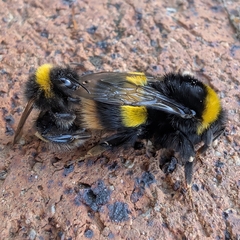
White-tailed Bumble Bee
Bombus lucorum · Order: Hymenoptera · Family: Apidae
Also called: Small Earth Humble-bee, White Tailed Bumblebee
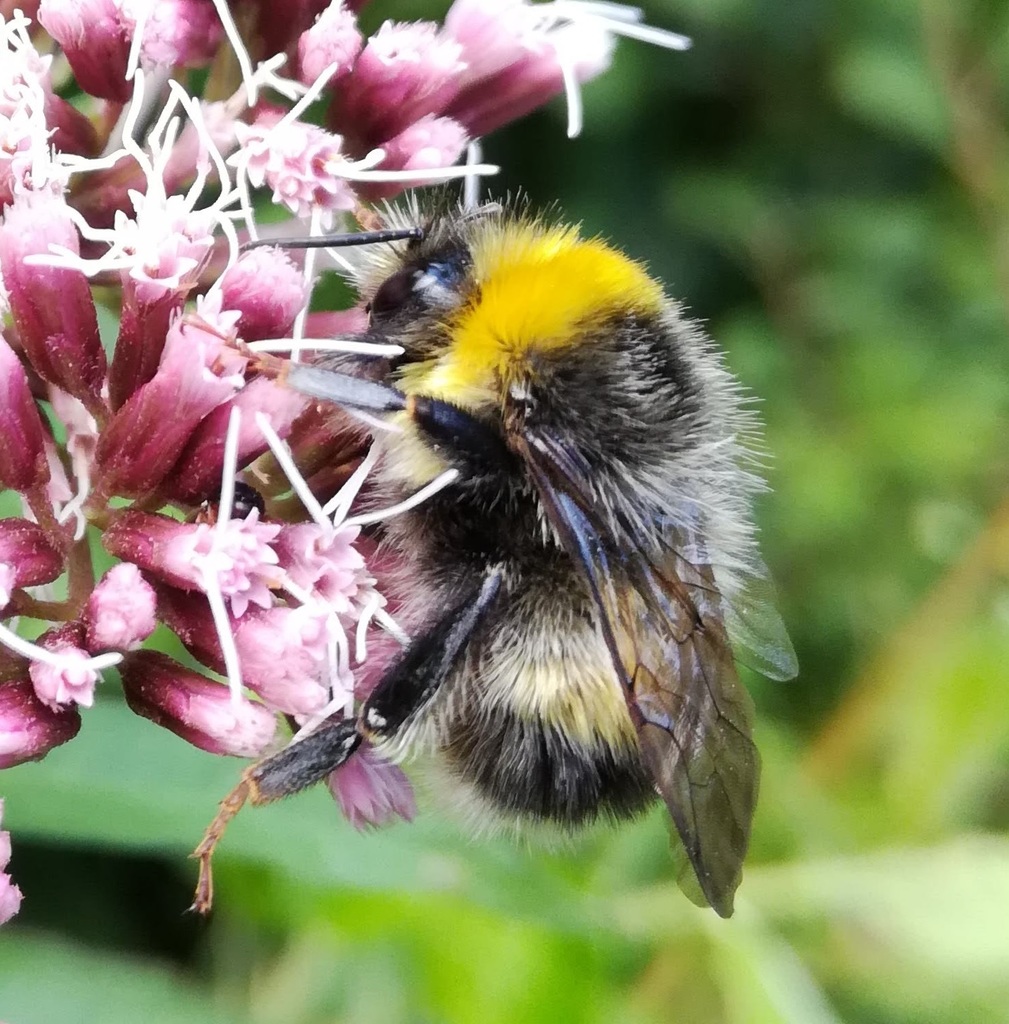
Queens are 18 to 22 mm long and weigh up to 0.7 g; workers are smaller at 12 to 18 mm and weigh up to 0.32 g. It appears early in spring, emerging from hibernation before most other bumblebees and the workers show up from late March to mid-May.
Source: Wikipedia
Size
Queens measure 18 to 22 mm in length, have a wingspan of about 36 mm, and weigh between 0.46 and 0.70 g. Workers are 12 to 18 mm long and weigh from 0.04 to 0.32 g.
Source: Wikipedia
Where it lives
It lives in many places such as coasts, farmland, grasslands, heathlands, towns, gardens, upland areas, and the edges of woods.
Source: Wikipedia
What it eats
Queens that have just emerged feed on flowers like crocus, Erica, Mahonia, deadnettles, Prunus, currants, and bluebells.
Source: Wikipedia
Life cycle
It is one of the first bumblebee species to come out of hibernation each year. Worker bees appear between late March and mid-May.
Source: Wikipedia
When you see it
It emerges early in the spring, before most other bumblebees.
Source: Wikipedia
Where it comes from
Its range covers the Palearctic (including Japan), the Oriental, Arctic, and western Nearctic regions.
Source: Wikipedia
Lookalikes
It belongs to the Bombus lucorum complex, which includes B. lucorum, B. magnus, and B. cryptarum, and they look very similar.
Source: Wikipedia
Where it is found in the US
Recorded in 4 of 51 states and DC. Most records: Alaska, Utah, Ohio, Oregon.
Darker = more records. Counts are museum and citizen-science records, not population size.
Source: GBIF
Months it is reported in the US
Source: GBIF
Questions people ask
When will I see them?
They are among the first bumblebees to appear in spring, with queens emerging from hibernation and workers showing up from late March to mid-May.
Source: Wikipedia
Same family (Apidae)


Sources
- Wikipedia: https://en.wikipedia.org/wiki/Bombus_lucorum
Look it up elsewhere: GBIF · iNaturalist · BugGuide · ITIS · Wikipedia
Text written 2026-10-22 from the sources above and checked sentence by sentence against them. Data fetched 2026-10-22.