 Bug FAQ
White Pine Sawfly
Neodiprion pinetum · Order: Hymenoptera · Family: Diprionidae
Source: Wikipedia
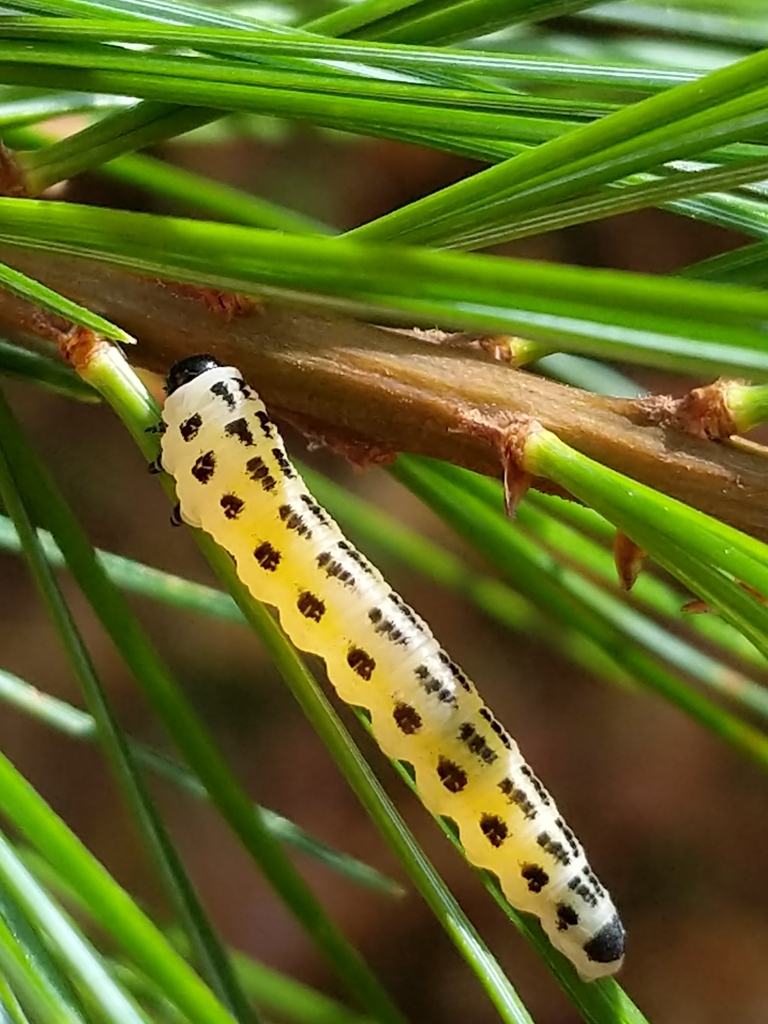
Adults are broad-bodied insects with membranous wings and females have a saw-like ovipositor that is larger than males. Larvae have black heads, creamy or yellow bodies with four rows of black spots and they feed on the needles of several pine species, often stripping trees of foliage. Females lay about one hundred eggs; the larvae later drop to the ground, spin cocoons in leaf litter, overwinter as prepupae and emerge as adults in late spring.
Source: Wikipedia
How to recognize it
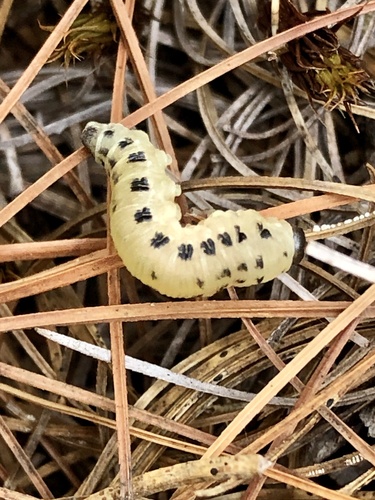
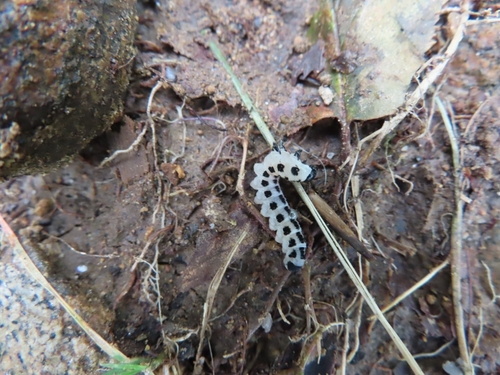
Larvae show black heads and creamy-coloured or yellowish bodies with four longitudinal rows of black spots.
Source: Wikipedia
Size
Adults are broad-bodied and possess membranous wings.
Source: Wikipedia
Is it a pest in the house?
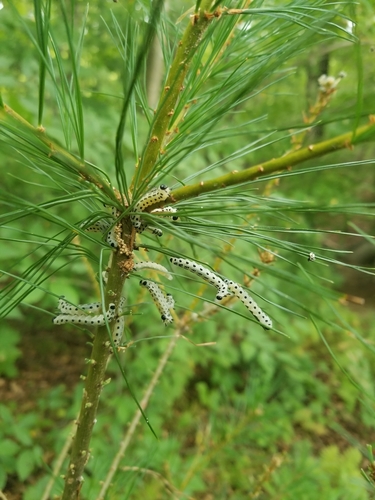
Heavy infestations can severely defoliate trees and may kill isolated white pine clumps.
Source: Wikipedia
How to get rid of it
Parasitic wasps attack the larvae, and the egg parasitoid Closterocerus cinctipennis has been shown to control outbreaks by about 90 %.
Source: Wikipedia
Where it lives
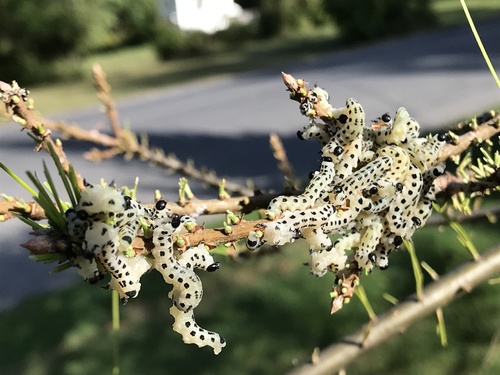
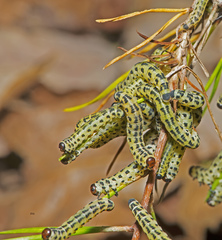
Early-instar larvae feed together on the surface of pine needles, while later instars spread out and consume whole needles.
Source: Wikipedia
What it eats
Both old and young pine needles are eaten by the larvae. Primary host is white pine, but they also feed on pitch pine, short-leaf pine, red pine and Swiss mountain pine.
Source: Wikipedia
Life cycle
Each female lays roughly one hundred eggs over several months. Fully grown larvae descend to the ground, spin cocoons in leaf litter, overwinter as non-feeding prepupae, then pupate in spring and emerge as adults a few weeks later.
Source: Wikipedia
When you see it
Adult sawflies are seen in late spring.
Source: Wikipedia
Where it comes from
The species is native to eastern North America, ranging from the eastern United States into southeastern Canada.
Source: Wikipedia
Lookalikes
The name “white pine sawfly” is also used for Diprion similis because its larvae feed on the same pine species.
Source: Wikipedia
Where it is found in the US
Recorded in 21 of 51 states and DC. Most records: Illinois, New York, Michigan, Massachusetts, Iowa, Maine, Vermont, Virginia.
Darker = more records. Counts are museum and citizen-science records, not population size.
Source: GBIF
Status: native in North America; native in Canada. Source: iNaturalist
Months it is reported in the US
Source: GBIF
More photos
Questions people ask
How many eggs does a female lay?
A female lays about one hundred eggs over a few months.
Source: Wikipedia
What trees are affected by this sawfly?
They feed on white pine and can also damage pitch pine, short-leaf pine, red pine and Swiss mountain pine.
Source: Wikipedia
How can an outbreak be controlled?
Parasitic wasps, especially the egg parasitoid Closterocerus cinctipennis, can greatly reduce larval numbers.
Source: Wikipedia
Same family (Diprionidae)

Sources
- Wikipedia: https://en.wikipedia.org/wiki/Neodiprion_pinetum
Look it up elsewhere: GBIF · iNaturalist · BugGuide · ITIS · Wikipedia
Text written 2026-10-27 from the sources above and checked sentence by sentence against them. Data fetched 2026-10-27.