 Bug FAQ
White-banded Fishing Spider
Dolomedes albineus · Order: Araneae · Family: Pisauridae
Also called: Whitebanded Fishing Spider

The white-banded fishing spider (Dolomedes albineus) lives near streams and ponds and can walk on water thanks to water-repellent hairs and an air bubble on its abdomen. It hunts aquatic prey such as tadpoles and other invertebrates.
Source: Wikipedia
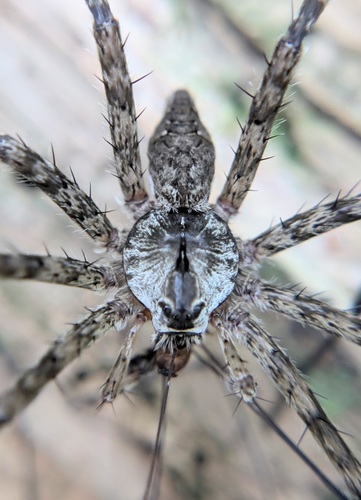
How to recognize it
Dolomedes albineus is the scientific name for the white-banded fishing spider.
Source: Wikipedia
Where it lives
It is typically found at the edges of streams and ponds where it can hunt on the water surface. Special hairs on its body repel water, letting it walk on water and dive to catch prey.
Source: Wikipedia
What it eats
Its diet includes tadpoles and other aquatic invertebrates.
Source: Wikipedia
Where it comes from
This species occurs in the United States.
Source: Wikipedia
Where it is found in the US
Recorded in 31 of 51 states and DC. Most records: North Carolina, Florida, Virginia, Texas, Georgia, Alabama, Tennessee, South Carolina.
Darker = more records. Counts are museum and citizen-science records, not population size.
Source: GBIF
Status: native in North America; native in United States. Source: iNaturalist
Months it is reported in the US
Source: GBIF
More photos



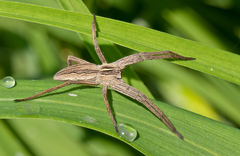
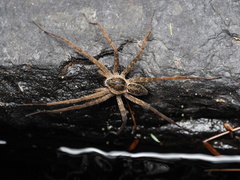
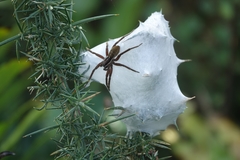
Same family (Pisauridae)



Sources
- Wikipedia: https://en.wikipedia.org/wiki/Dolomedes_albineus
Look it up elsewhere: GBIF · iNaturalist · BugGuide · ITIS · Wikipedia
Text written 2026-10-22 from the sources above and checked sentence by sentence against them. Data fetched 2026-10-22.