 Bug FAQ
New Zealand Nursery Web Spider
Dolomedes minor · Order: Araneae · Family: Pisauridae
Also called: Nurseryweb spider
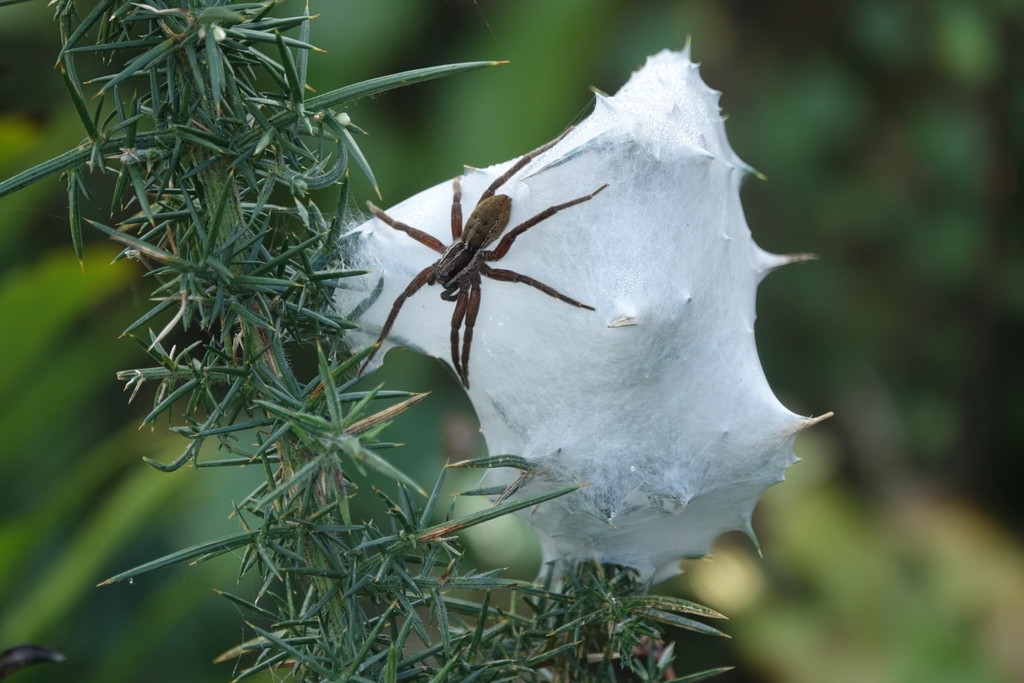
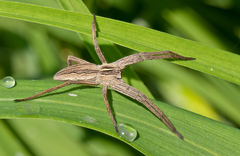
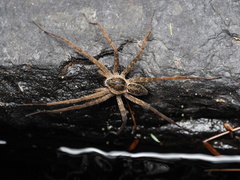
The New Zealand Nursery Web Spider is about 18 mm long, with females nearly twice the size of males. It blends with rocks by being pale brown to grey and has large chelicerae just below its eyes.
Source: Wikipedia
How to recognize it
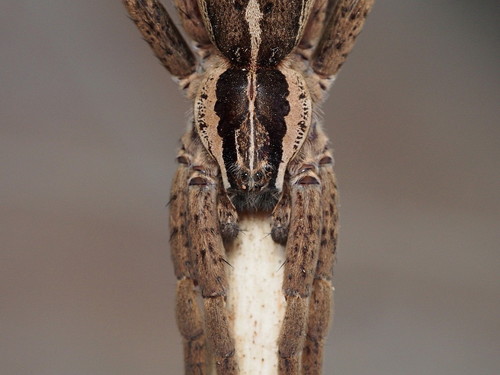
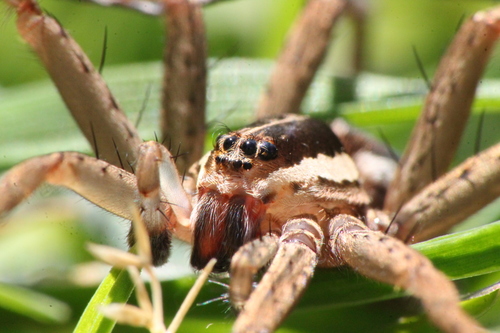
Its colour matches the surrounding rocks, helping it hide from predators. The spider’s chelicerae are large and sit right under the eyes.
Source: Wikipedia
Size
Body length is roughly 18 mm. Females are almost twice as large as males.
Source: Wikipedia
Where it lives
It lives in many New Zealand habitats, from sea level up to sub-alpine zones. Typical sites include gorse and mānuka shrubland, swamps and grasslands.
Source: Wikipedia
What it eats
It catches a range of small animals such as locusts, other spiders, dobsonfly larvae, earthworms and bees. It will also eat dead organisms if found.
Source: Wikipedia
Life cycle
Adults are most often seen from November to May. Females carry egg-sacs under their chelicerae for at least five weeks.
Source: Wikipedia
When you see it
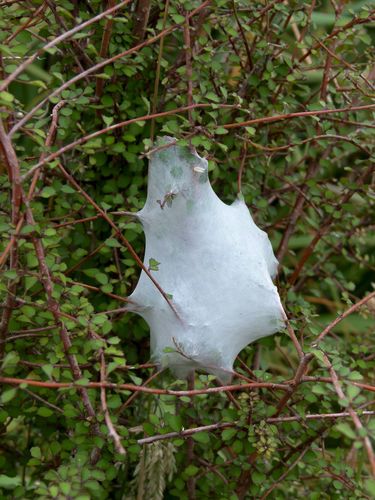
They are most common in the summer months, November through May. At night females guard their web, while by day they move toward the base of vegetation.
Source: Wikipedia
Where it comes from
Dolomedes minor is a semiaquatic spider endemic to New Zealand.
Source: Wikipedia
Lookalikes
Do not confuse this spider with members of the Pisauridae family.
Source: Wikipedia
More photos

Questions people ask
How big is the New Zealand Nursery Web Spider?
Its body is about 18 mm long, and females are nearly twice the size of males.
Source: Wikipedia
Where does Dolomedes minor live?
It inhabits many New Zealand environments, from sea level up to sub-alpine areas, including shrubland, swamps and grasslands.
Source: Wikipedia
What does this spider eat?
It preys on small insects and other arthropods like locusts, spiders, dobsonfly larvae, earthworms and bees, and will also take dead prey.
Source: Wikipedia
When can I expect to see them?
Adults are most often observed from November through May, with females guarding their webs at night.
Source: Wikipedia
Same family (Pisauridae)




Sources
- Wikipedia: https://en.wikipedia.org/wiki/Dolomedes_minor
Look it up elsewhere: GBIF · iNaturalist · BugGuide · ITIS · Wikipedia
Text written 2026-10-22 from the sources above and checked sentence by sentence against them. Data fetched 2026-10-22.