 Bug FAQ
European Nursery Web spider
Pisaura mirabilis · Order: Araneae · Family: Pisauridae
Also called: Nursery Web Spider, Tent Spider
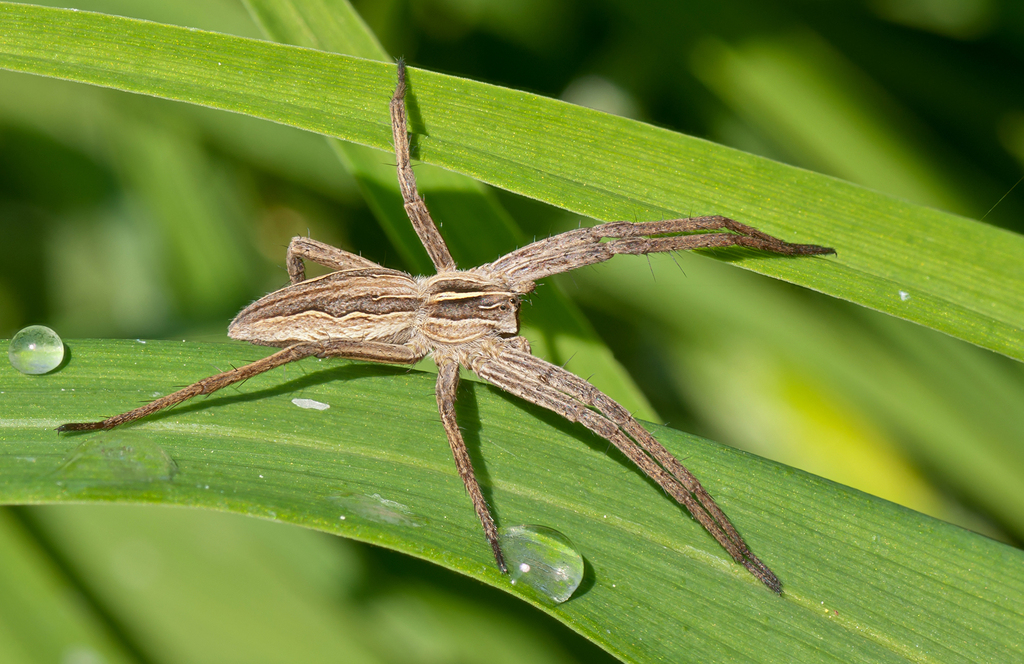
The European Nursery Web spider is 10 to 15 mm long, with males weighing about 54 mg and females about 68 mg. It lives in many wet habitats across Europe and can be found from meadows to forest edges. Adults hunt day and night, while young spiders hang from silk and catch fruit flies.
Source: Wikipedia
How to recognize it
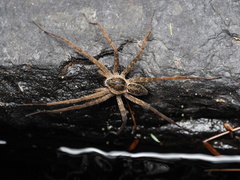
The front body (prosoma) varies from light to reddish-brown or gray-black, with a lighter stripe down the middle.
Source: Wikipedia
Size
Males are 10 to 13 mm long and females 12 to 15 mm. After their final molt, males weigh about 54 mg and females about 68 mg.
Source: Wikipedia
Where it lives
They prefer wet places such as meadows, moors, salt marshes, dunes, forest edges and wet hedges.
Source: Wikipedia
What it eats
Adults hunt both day and night and are active even on warm winter days. Spiderlings suspend themselves on silk and prey on fruit flies.
Source: Wikipedia
Life cycle
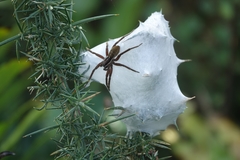
The embryo develops inside a cocoon after the egg is fertilised. The nymphal stage can have up to twelve instars.
Source: Wikipedia
When you see it
In western and central Europe they mature in May; in the north and east they mature in June; in the south they mature in April.
Source: Wikipedia
Where it comes from
The species is widespread throughout Europe and has a Palearctic distribution.
Source: Wikipedia
Lookalikes
Other spiders, including members of the same species, may treat them as prey.
Source: Wikipedia
More photos

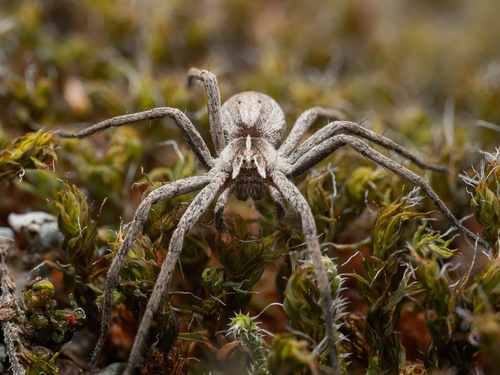
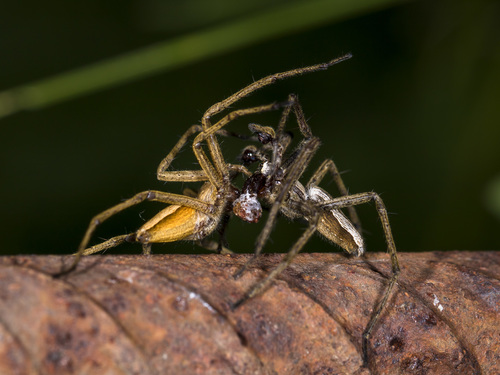
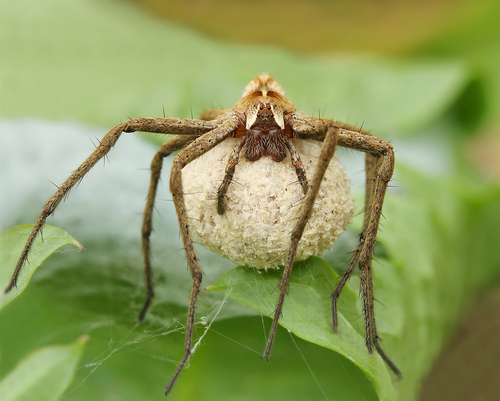
Same family (Pisauridae)



Sources
- Wikipedia: https://en.wikipedia.org/wiki/Pisaura_mirabilis
Look it up elsewhere: GBIF · iNaturalist · BugGuide · ITIS · Wikipedia
Text written 2026-10-22 from the sources above and checked sentence by sentence against them. Data fetched 2026-10-22.