 Bug FAQ
Western Sea Slater
Ligia occidentalis · Order: Isopoda · Family: Ligiidae
Also called: Western Sea Roach
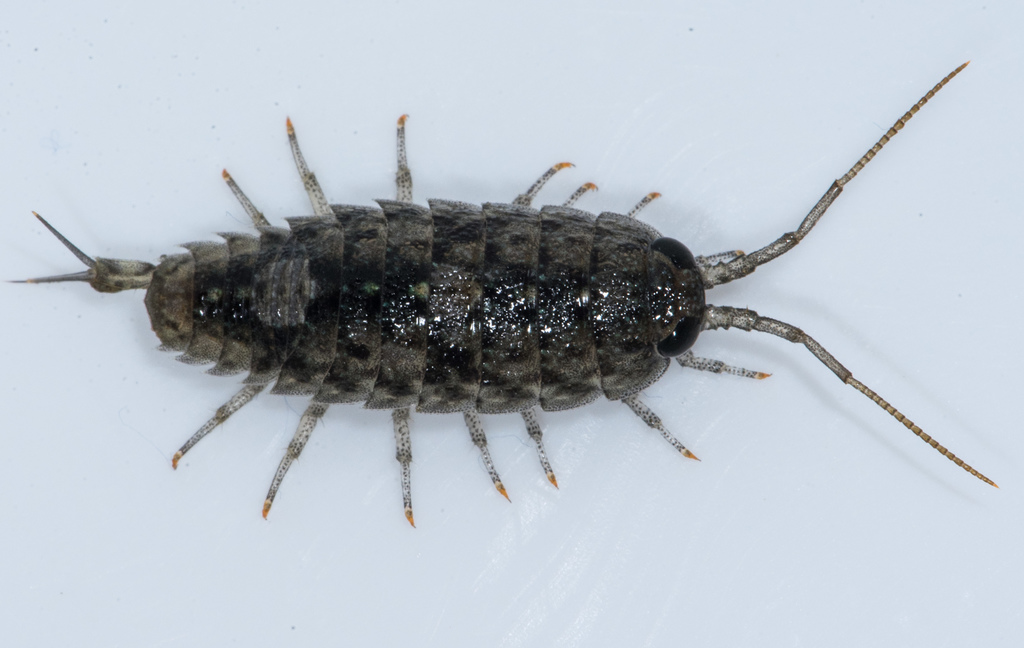
It comes out at night or in cooler weather to eat algae and detritus along beaches and cliffs. When disturbed it tends to bolt away quickly.
Source: Wikipedia
How to recognize it
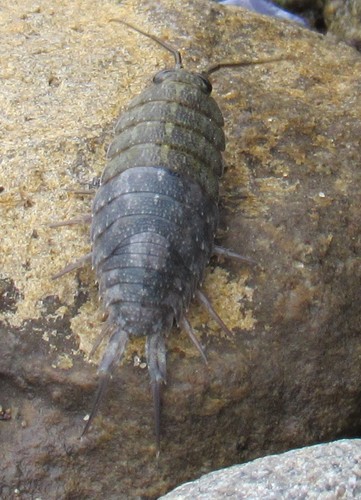
It has much longer uropods, larger eyes set closer together, and a sleeker body than similar species.
Source: Wikipedia
Where it lives
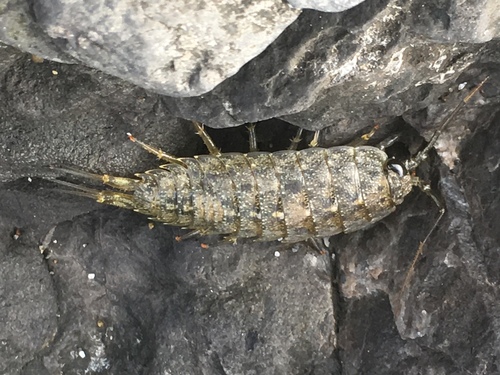
It is a habitat generalist of rocky shores.
Source: Wikipedia
What it eats
It scavenges for algae and detritus on beaches and rocky cliffs, especially at night or in cooler weather.
Source: Wikipedia
Life cycle
When disturbed it tends to bolt away.
Source: Wikipedia
Lookalikes
It differs from L. pallasii by its longer uropods, larger closely set eyes, and sleeker body.
Source: Wikipedia
Where it is found in the US
Recorded in 4 of 51 states and DC. Most records: California, Oregon, Washington, Maine.
Darker = more records. Counts are museum and citizen-science records, not population size.
Source: GBIF
Status: native in United States. Source: iNaturalist
Months it is reported in the US
Source: GBIF
More photos
Questions people ask
What do western sea slaters eat?
They scavenge algae and detritus on beaches and rocky cliffs, especially at night or in cooler weather.
Source: Wikipedia
Same family (Ligiidae)


Sources
- Wikipedia: https://en.wikipedia.org/wiki/Ligia_occidentalis
Look it up elsewhere: GBIF · iNaturalist · BugGuide · ITIS · Wikipedia
Text written 2026-10-22 from the sources above and checked sentence by sentence against them. Data fetched 2026-10-22.