 Bug FAQ
Western Black Horse Fly
Tabanus punctifer · Order: Diptera · Family: Tabanidae
Source: Wikipedia
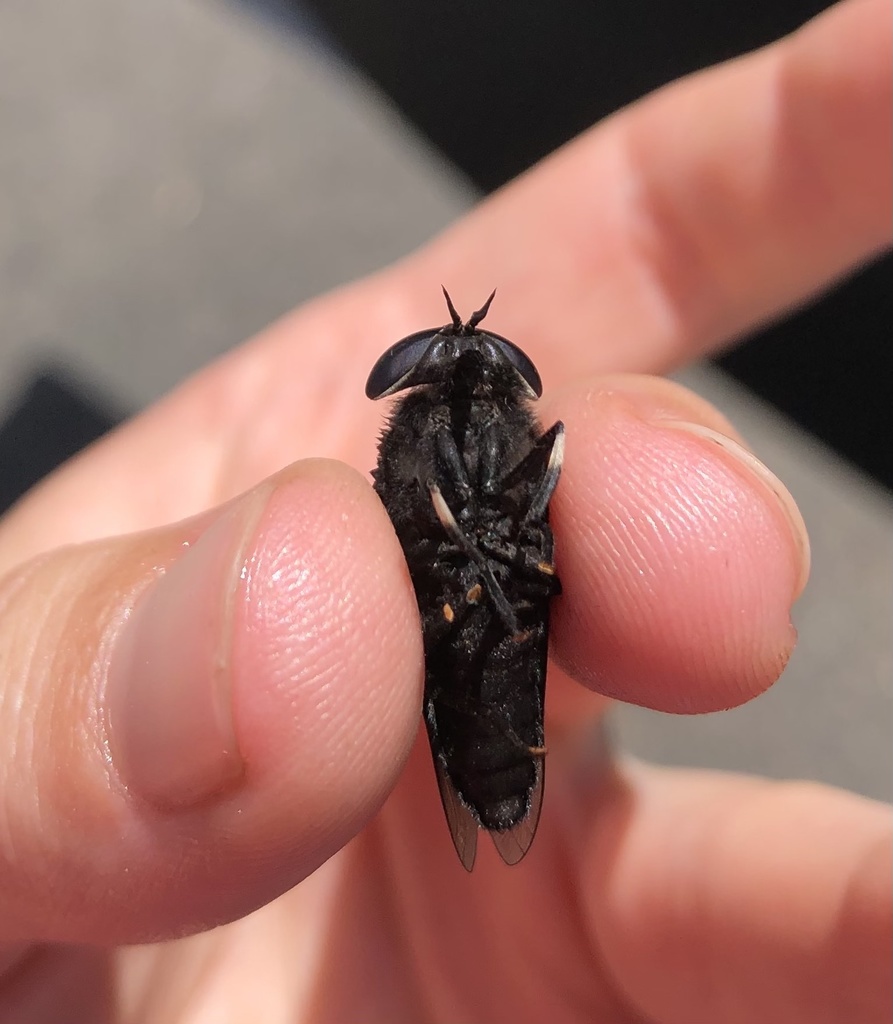
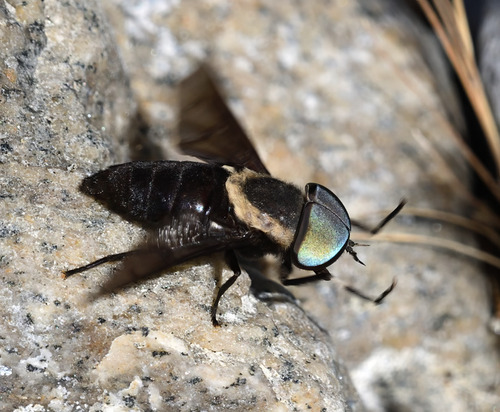
The western black horse fly is about 20 mm long, with a creamy-white hairy thorax and a completely black abdomen. It lives in the southern and western United States, ranging from Utah to Mexico and from California to Texas, and is also native to Canada and Mexico. Females need blood meals from horses, livestock, or humans, and they can transmit disease agents while feeding.
Source: Wikipedia
Size
Adults are roughly 20.5 mm (0.8 in) long.
Source: Wikipedia
Does it bite or sting?
Females bite horses, livestock, and humans, acting as vectors for disease-causing pathogens and parasites.
Source: Wikipedia
Where it lives
Their range extends from Utah down to Mexico and from California across to Texas.
Source: Wikipedia
What it eats
Female western black horse flies require a blood meal to develop eggs.
Source: Wikipedia
Where it comes from
They are native to Canada, the United States, and Mexico.
Source: Wikipedia
Where it is found in the US
Recorded in 17 of 51 states and DC. Most records: California, Arizona, Utah, Idaho, Colorado, Oregon, Nevada, New Mexico.
Darker = more records. Counts are museum and citizen-science records, not population size.
Source: GBIF
Status: native in North America; native in Canada. Source: iNaturalist
Months it is reported in the US
Source: GBIF
More photos

Questions people ask
Do they bite?
Yes, female western black horse flies bite horses, livestock, and humans to obtain blood.
Source: Wikipedia
Same family (Tabanidae)


Sources
- Wikipedia: https://en.wikipedia.org/wiki/Tabanus_punctifer
Look it up elsewhere: GBIF · iNaturalist · BugGuide · ITIS · Wikipedia
Text written 2026-10-23 from the sources above and checked sentence by sentence against them. Data fetched 2026-10-23.