 Bug FAQ
Black Horse Fly
Tabanus atratus · Order: Diptera · Family: Tabanidae
Source: Wikipedia, UF/IFAS, extension.umaine.edu
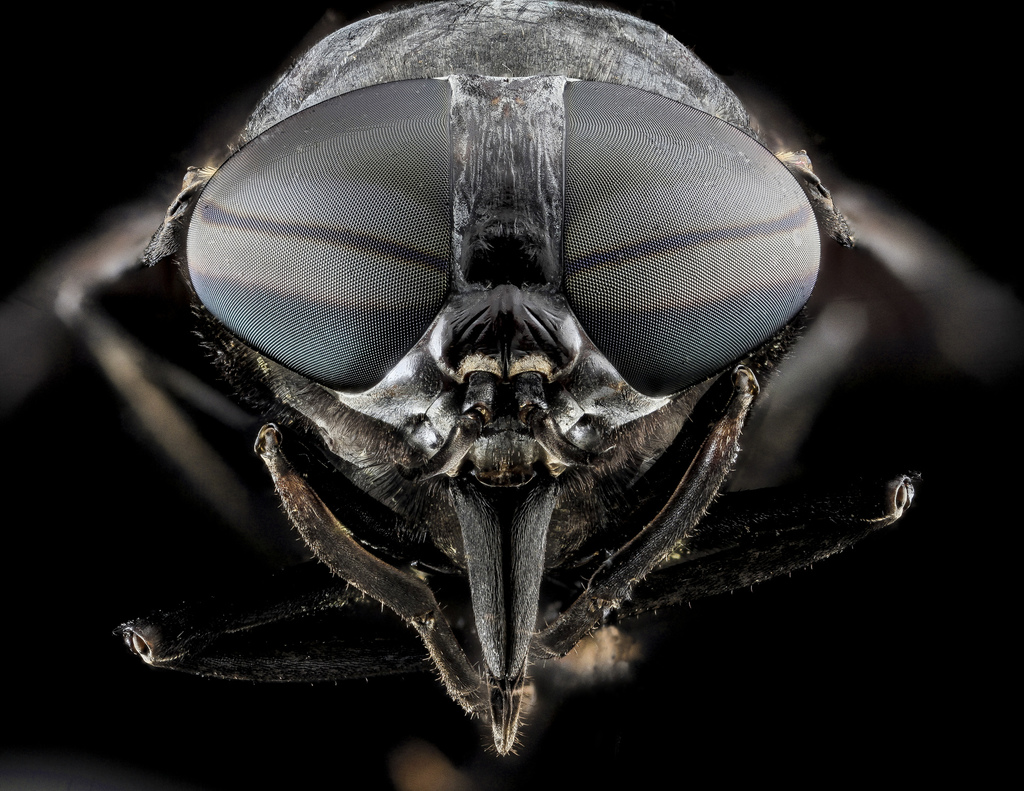
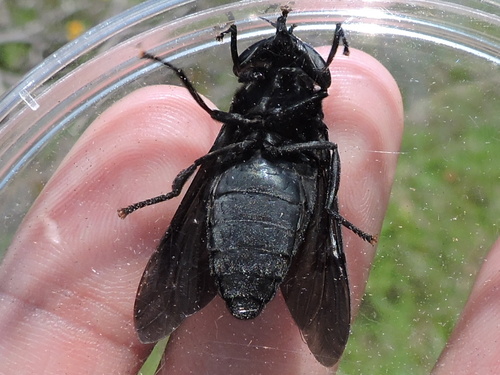
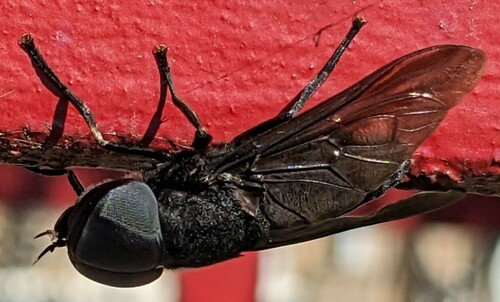
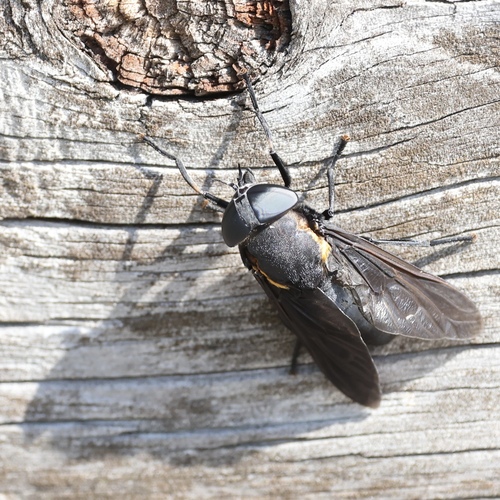
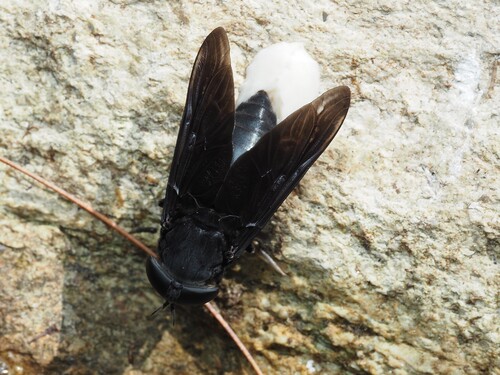
Black horse flies are large, dark insects with patterned eyes and dark-banded wings; females bite to obtain blood while males feed on pollen. They wait in shady spots near livestock, and their bites can reduce milk production and cause painful wounds.
Source: UF/IFAS, extension.umaine.edu, Wikipedia
How to recognize it
Their wings have dark bands across them.
Source: extension.umaine.edu
Size
Horse flies range from about 10 mm to 25 mm in length.
Source: UF/IFAS
Is it a pest in the house?
Their attacks can lower milk production in livestock. They are considered very pesky to cattle, horses, dogs, and other mammals.
Source: UF/IFAS, extension.umaine.edu
Does it bite or sting?
Only females bite, using scissor-like mouthparts to penetrate skin. Their bites cause deep wounds that bleed and can be quite painful, similar to a bee sting.
Source: Wikipedia, UF/IFAS, extension.umaine.edu
How to get rid of it
Blue sticky traps mounted on slow-moving objects or worn on the head can reduce their numbers. Pyrethroid pour-ons provide limited repellent protection for livestock.
Source: UF/IFAS
Where it lives
They belong to the genus Tabanus, a group of biting horseflies in the family Tabanidae. Adults lie in shady areas under bushes and trees waiting for a host.
What it eats
Female horse flies pierce skin with scissor-like mouthparts to drink blood from livestock. Males feed on pollen.
Source: Wikipedia, extension.umaine.edu
Lookalikes
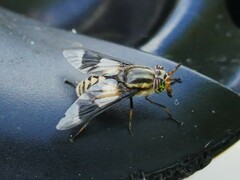
Deer flies are similar but smaller (7 to 10 mm) and have apical spurs on the hind tibiae, which horse flies lack. Male flies have contiguous eyes, while females have widely separated eyes.
Source: UF/IFAS
Where it is found in the US
Recorded in 40 of 51 states and DC. Most records: Texas, Florida, North Carolina, Virginia, Maryland, Illinois, Louisiana, Georgia.
Darker = more records. Counts are museum and citizen-science records, not population size.
Source: GBIF
Status: native in North America; native in Canada. Source: iNaturalist
Months it is reported in the US
Source: GBIF
More photos
Questions people ask
Do black horse flies bite?
Yes, only the females bite, using scissor-like mouthparts to pierce skin and feed on blood.
How can I control black horse flies around my livestock?
Use blue sticky traps on slow-moving objects or on a head cap, and apply pyrethroid pour-ons for limited repellent effect.
Source: UF/IFAS
Same family (Tabanidae)


Sources
- Wikipedia: https://en.wikipedia.org/wiki/Tabanus
- UF/IFAS: https://edis.ifas.ufl.edu/publication/IN155
- extension.umaine.edu: https://extension.umaine.edu/home-and-garden-ipm/common-name-listing/deer-flies/
Look it up elsewhere: GBIF · iNaturalist · BugGuide · ITIS · Wikipedia
Text written 2026-10-22 from the sources above and checked sentence by sentence against them. Data fetched 2026-10-22.