 Bug FAQ
Osca lata
Osca lata · Order: Diptera · Family: Tabanidae
Source: Wikipedia
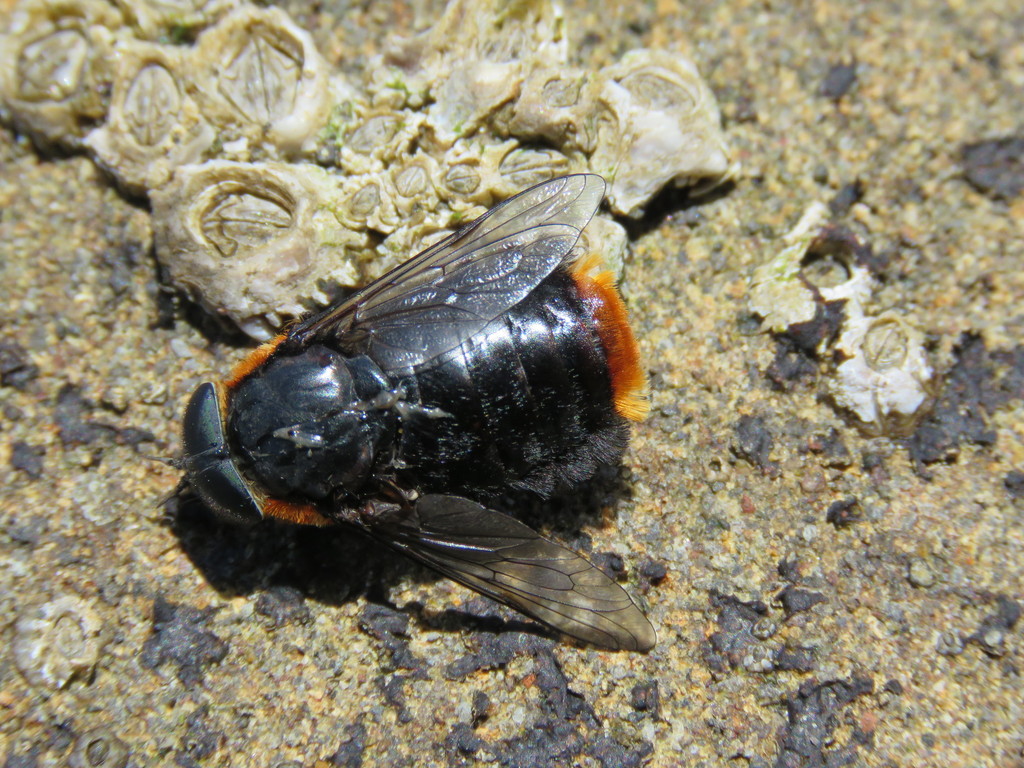
Adults are about 2 cm long and have a bright reddish-orange stripe on the sides of the thorax and abdomen. They are found in southern Chile and southern Argentina.
Source: Wikipedia
Size
Adults are generally around 2 cm in length.
Source: Wikipedia
Does it bite or sting?
Females bite mammals to obtain blood.
Source: Wikipedia
What it eats
Female Osca lata feed on mammalian blood to produce eggs.
Source: Wikipedia
Where it comes from
Their range includes southern Chile and southern Argentina.
Source: Wikipedia
Questions people ask
What do they look like?
They have a bright reddish-orange stripe on the sides of the thorax and abdomen.
Source: Wikipedia
Same family (Tabanidae)

Sources
- Wikipedia: https://en.wikipedia.org/wiki/Osca_lata
Look it up elsewhere: GBIF · iNaturalist · BugGuide · Wikipedia
Text written 2026-10-23 from the sources above and checked sentence by sentence against them. Data fetched 2026-10-23.