 Bug FAQ
West Coast Lady
Vanessa annabella · Order: Lepidoptera · Family: Nymphalidae
Also called: West Coast Lady Butterfly
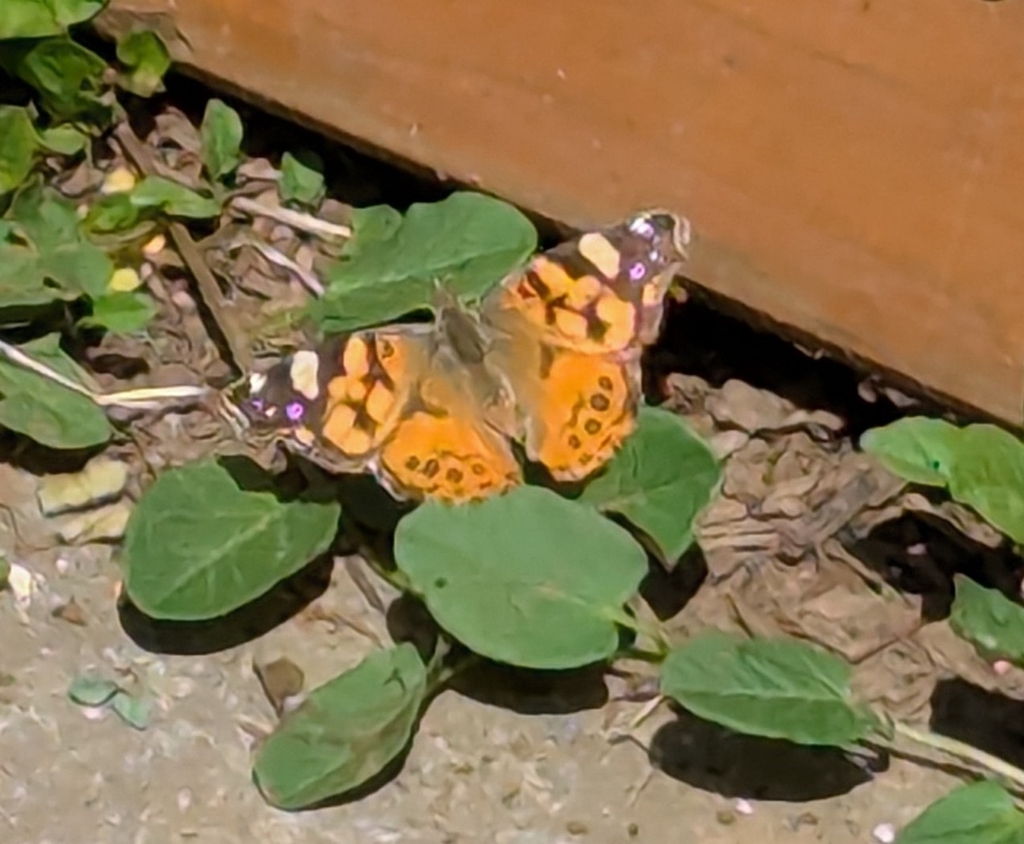
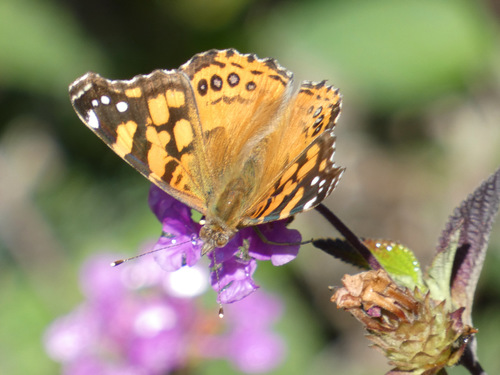
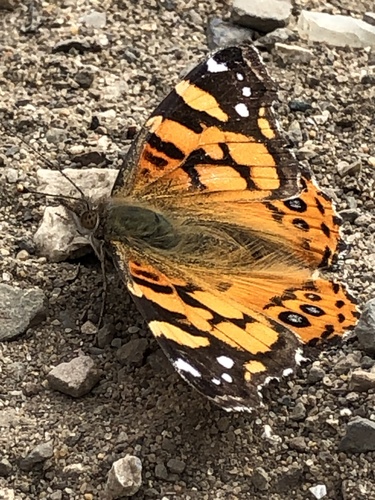
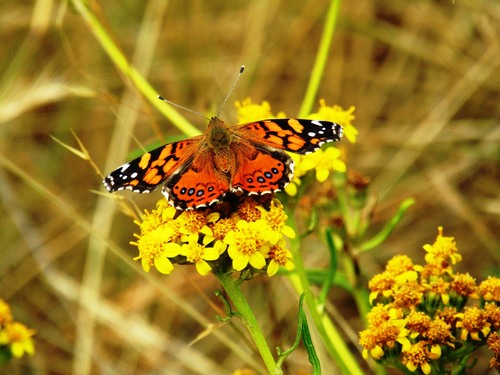
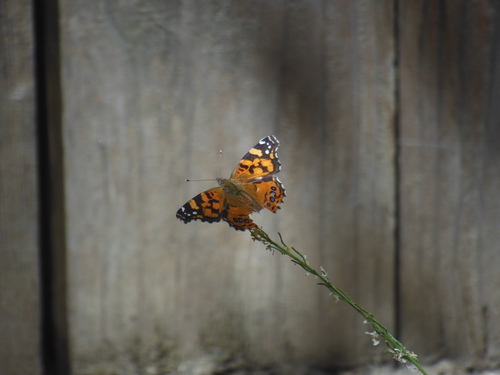
The West Coast Lady is a medium-sized butterfly with a wingspan of about 40 to 48 mm; females are usually larger than males. Its wings are tawny orange with black markings, white spots near the forewing tips, and blue-pupilled eye spots on the hindwings. It lives in open areas from low-elevation sites in Orange County up through higher zones, ranging across the western United States and southwestern Canada.
Source: Wikipedia
Size
The open wing span is typically 40 to 48 mm, with females generally larger than males.
Source: Wikipedia
What it eats
Adults feed on plants in the Malvaceae and Urticaceae families. Common host plants include Urtica holosericea, Sida species, Sphaeralcea ambigua, and Sidalcea malviflora.
Source: Wikipedia
Life cycle
The species goes through eight stages: five larval instars, prepupa, pupa, and adult. Development from egg to adult usually takes 30 to 36 days.
Source: Wikipedia
When you see it
Most records are from April and May, though sightings have been reported from May through December in Huntington Beach.
Source: Wikipedia
Where it comes from
Their range covers much of the western United States and southwestern Canada.
Source: Wikipedia
Lookalikes
It can be confused with the Painted Lady (Vanessa cardui) and the American Painted Lady (Vanessa virginiensis). It has also been treated as a subspecies of Vanessa carye and its name is sometimes misspelled as “anabella”.
Source: Wikipedia
Where it is found in the US
Recorded in 18 of 51 states and DC. Most records: California, Arizona, Oregon, Washington, New Mexico, Nevada, Utah, Idaho.
Darker = more records. Counts are museum and citizen-science records, not population size.
Source: GBIF
Status: native in North America; native in Canada; native in United States. Source: iNaturalist
Months it is reported in the US
Source: GBIF
More photos
Questions people ask
Are they a garden pest?
They feed on certain native plants but there is no information that they cause damage to gardens or crops.
Source: Wikipedia
When can I expect to see them?
They are most commonly seen in April and May, with records extending from May to December in some areas.
Source: Wikipedia
How can I tell them apart from similar butterflies?
Look for the tawny orange wings with black markings, white subapical spots, and blue-pupilled eye spots; other species like Vanessa cardui and Vanessa virginiensis have different patterns.
Source: Wikipedia
Same family (Nymphalidae)






Sources
- Wikipedia: https://en.wikipedia.org/wiki/West_Coast_lady
Look it up elsewhere: GBIF · iNaturalist · BugGuide · ITIS · Wikipedia
Text written 2026-10-22 from the sources above and checked sentence by sentence against them. Data fetched 2026-10-22.