 Bug FAQ
Weaver's Fritillary
Boloria dia · Order: Lepidoptera · Family: Nymphalidae
Also called: Violet Fritillary
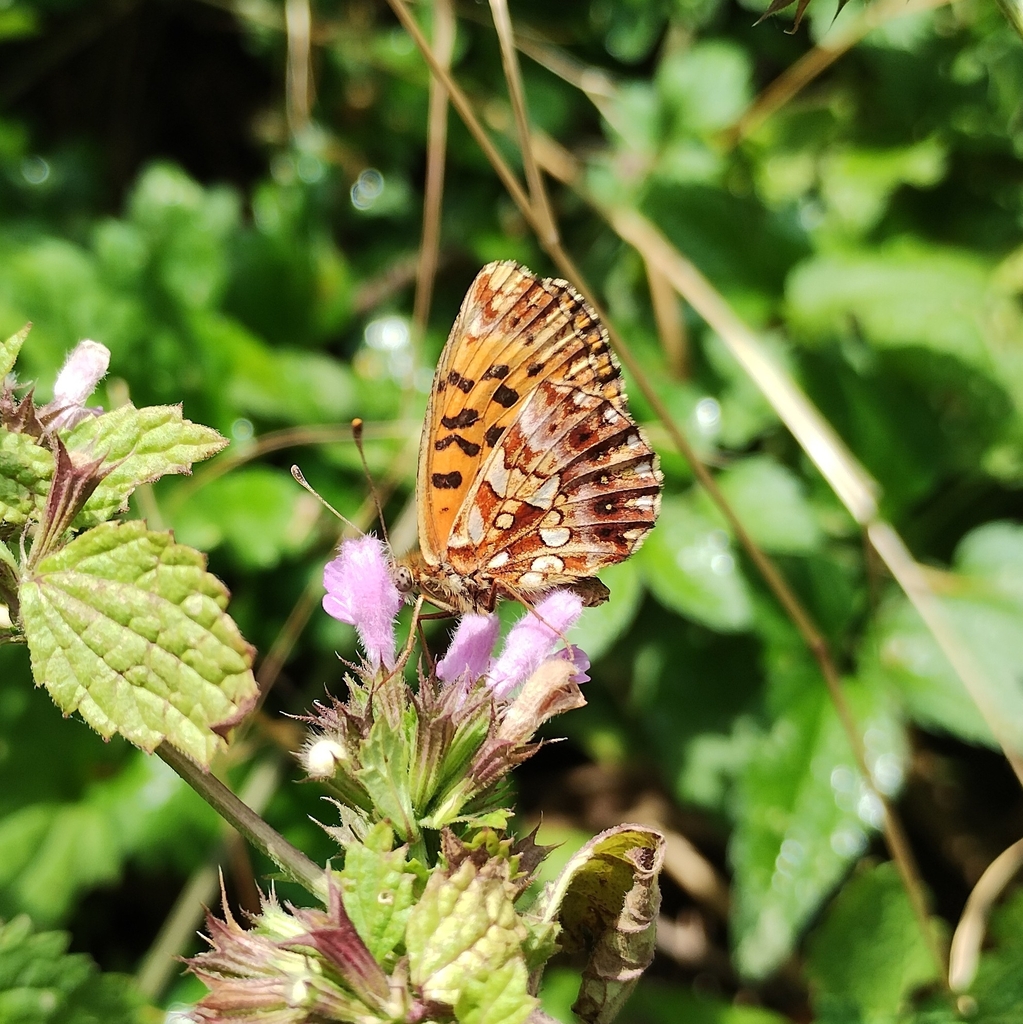
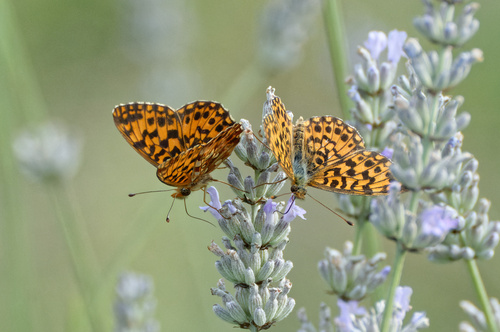
The adult Weaver's fritillary is a small butterfly with orange-brown chequered wings and a row of triangles and dots near the edge. Its hindwing underside shows a distinctive purplish band and the forewing measures about 16 to 17 mm long. It flies in April-May and again from August onward, staying low in open woodland clearings and often visiting flowers.
Source: Wikipedia
How to recognize it
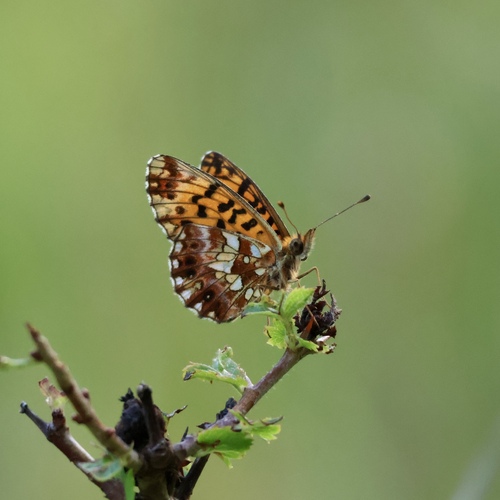
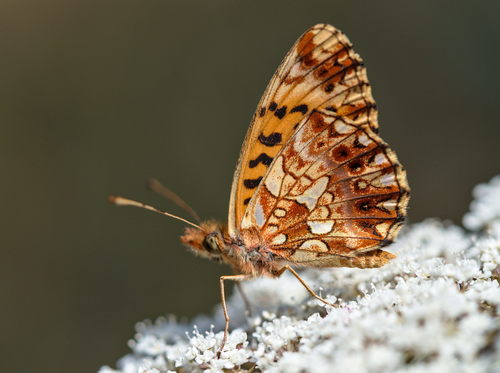
The upperside is chequered orange-brown with a submarginal row of triangles and dots. The underside of the hindwing has a characteristic purplish band.
Source: Wikipedia
Size
The forewing length is 16 to 17 mm.
Source: Wikipedia
Where it lives
It is not considered rare where it occurs and is never seen in large numbers.
Source: Wikipedia
Life cycle
The pupa is brown with rows of small pointed tubercles on the back.
Source: Wikipedia
When you see it
Adults are on the wing in April-May and again from August onward.
Source: Wikipedia
Where it comes from
Its range covers central, northern and eastern Europe and extends eastward across the Palearctic to Mongolia.
Source: Wikipedia
Lookalikes
It differs from the pearl-bordered fritillary by having a sharp angle on the hindwing visible from the underside. Titania's fritillary, which lives at high altitude, has a less sharply-angled hindwing.
Source: Wikipedia
More photos
Questions people ask
How can I tell Weaver's fritillary apart from similar butterflies?
Look for a sharp angle on the hindwing underside and a purplish band on the hindwing underside; other fritillaries lack this combination.
Source: Wikipedia
When am I likely to see this butterfly?
Adults appear in April-May and again from August onward, usually low over open woodland clearings.
Source: Wikipedia
Where does this species live?
It occurs across central, northern and eastern Europe and extends east through the Palearctic to Mongolia.
Source: Wikipedia
Same family (Nymphalidae)






Sources
- Wikipedia: https://en.wikipedia.org/wiki/Boloria_dia
Look it up elsewhere: GBIF · iNaturalist · BugGuide · Wikipedia
Text written 2026-10-22 from the sources above and checked sentence by sentence against them. Data fetched 2026-10-22.