 Bug FAQ
Wavy Flower Weevil
Madarellus undulatus · Order: Coleoptera · Family: Curculionidae
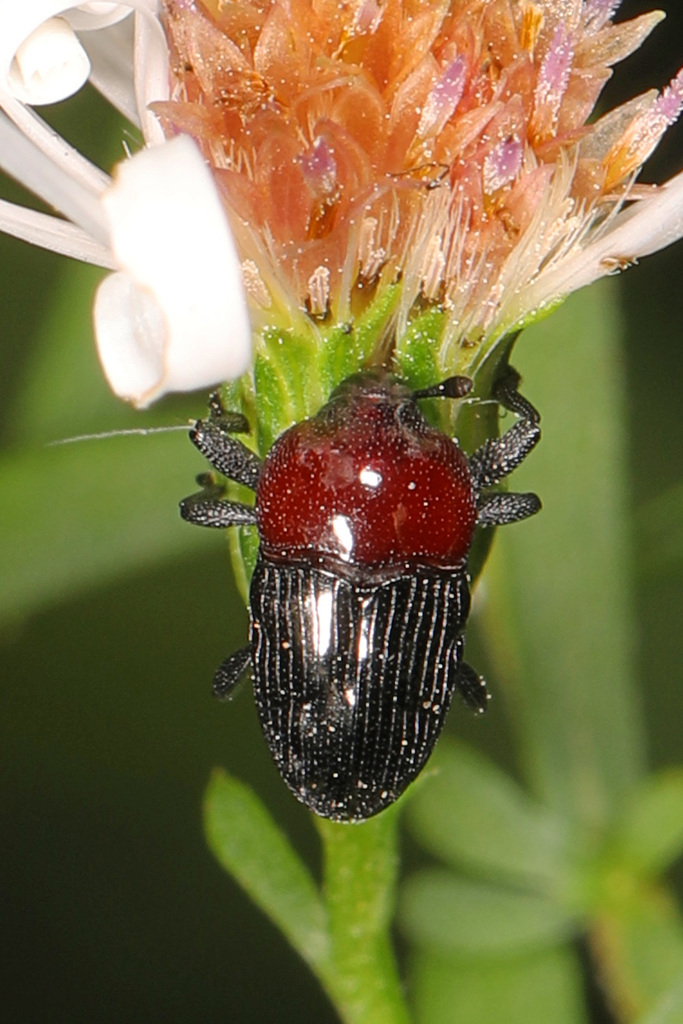
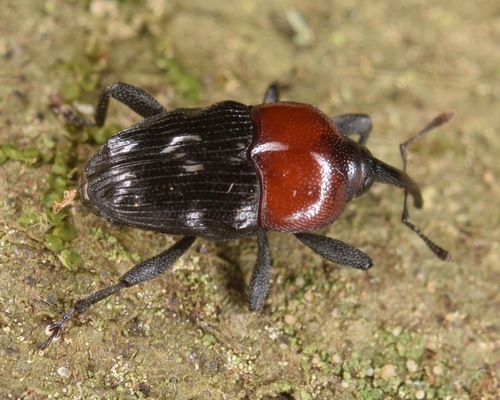
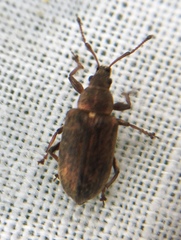
It has a brown head, a black or sometimes reddish body, and a glossy, punctate prothorax with striate elytra. It occurs in Ontario and Quebec in Canada and across the United States, where its larvae feed on poison-ivy and Virginia creeper.
Source: Wikipedia
How to recognize it
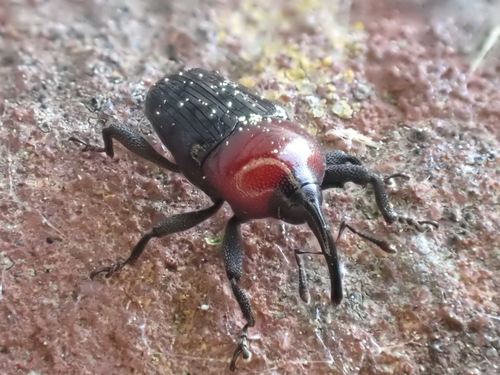
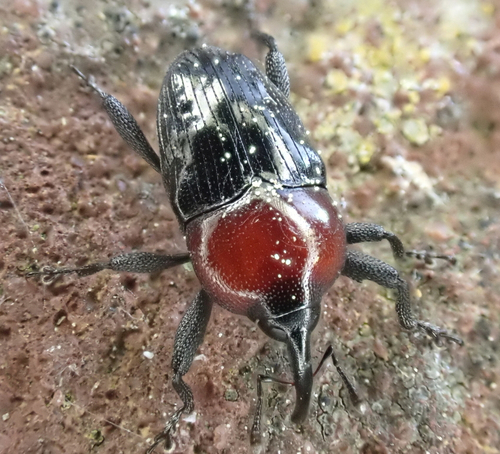
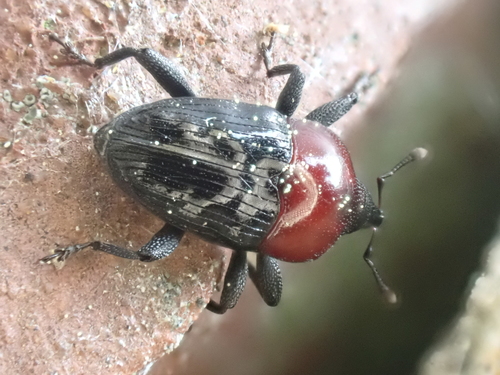
The head is brown and the body is black or occasionally reddish. The prothorax is glossy and somewhat punctate, and the elytra have striae.
Source: Wikipedia
Size
Adults measure between 2.8 and 4.5 mm in length.
Source: Wikipedia
What it eats
The larvae feed on poison ivy and Virginia creeper (Parthenocissus quinquefolia).
Source: Wikipedia
Where it comes from
Its range includes Ontario and Quebec in Canada and the United States.
Source: Wikipedia
Where it is found in the US
Recorded in 40 of 51 states and DC. Most records: Massachusetts, New York, Pennsylvania, Michigan, Tennessee, Louisiana, Maryland, North Carolina.
Darker = more records. Counts are museum and citizen-science records, not population size.
Source: GBIF
Status: native in North America; native in Canada. Source: iNaturalist
Months it is reported in the US
Source: GBIF
More photos
Questions people ask
What do they look like?
They have a brown head, a black or sometimes reddish body, a glossy punctate prothorax, and striate elytra.
Source: Wikipedia
Where are they found?
They occur in Ontario and Quebec in Canada and throughout the United States.
Source: Wikipedia
Same family (Curculionidae)
 Green Immigrant Leaf WeevilPolydrusus formosusDamages trees, gardens or crops
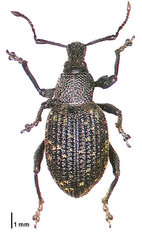 Black Vine WeevilOtiorhynchus sulcatusDamages trees, gardens or crops
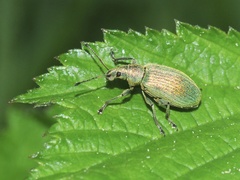 Nettle weevilPhyllobius pomaceusDamages trees, gardens or crops
 Asian Oak WeevilCyrtepistomus castaneusDamages trees, gardens or crops
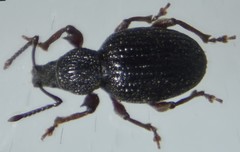 Strawberry Root WeevilOtiorhynchus ovatusDamages trees, gardens or crops
 Common Leaf WeevilPhyllobius pyriDamages trees, gardens or crops
Sources
- Wikipedia: https://en.wikipedia.org/wiki/Madarellus_undulatus
Look it up elsewhere: GBIF · iNaturalist · BugGuide · ITIS · Wikipedia
Text written 2026-10-25 from the sources above and checked sentence by sentence against them. Data fetched 2026-10-25.