 Bug FAQ
Wandering Glider
Pantala flavescens · Order: Odonata · Family: Libellulidae
Also called: Globe Skimmer, Globe Wanderer, Orange Glider Dragonfly
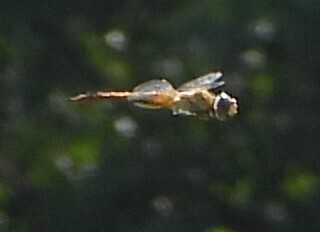
The wandering glider is a large dragonfly with a body up to 4.5 cm long and a wingspan of about 7 to 8 cm. It is found worldwide, often in swarms over open, moist areas and can fly at very high altitudes.
Source: Wikipedia
How to recognize it
The front of the head is yellowish to reddish and the eyes are chestnut-red, covering most of the head. The thorax is yellow to golden with a dark, hairy line, and the abdomen matches this colour. The wings are clear, very broad at the base, and the pterostigma is yellowish.
Source: Wikipedia
Size
Body length reaches up to 4.5 cm and the wingspan ranges from 7.2 cm to 8.4 cm.
Source: Wikipedia
Where it lives
They form conspicuous swarms over paddy fields, playgrounds and other open areas. They favour moist winds and have been recorded flying as high as 6,200 m in the Himalayas.
Source: Wikipedia
What it eats
Like other Libellulidae, it has no distinct courtship ritual. Females may mate many times, usually no more than once per day.
Source: Wikipedia
Life cycle
Larvae develop in 38 to 65 days, allowing reproduction in temporary water bodies or even swimming pools. The overall life expectancy is unknown and hard to determine because of their high mobility.
Source: Wikipedia
When you see it
Large swarms appear especially in autumn. Their arrival in subtropical and tropical regions coincides with the Intertropical Convergence Zone.
Source: Wikipedia
Where it comes from
The species is the most widespread dragonfly, present on every continent except Antarctica.
Source: Wikipedia
Lookalikes
It can be confused with Pantala hymenaea, which has a brown basal fleck on the hindwing and is slightly darker. It may also be mistaken for a Tramea species, which typically shows a distinctive stripe on the hindwing.
Source: Wikipedia
Where it is found in the US
Recorded in 48 of 51 states and DC. Most records: Texas, Ohio, California, Florida, New Jersey, Arizona, Virginia, Illinois.
Darker = more records. Counts are museum and citizen-science records, not population size.
Source: GBIF
Status: native in North America; native in Canada; native in United States. Source: iNaturalist
Months it is reported in the US
Source: GBIF
More photos
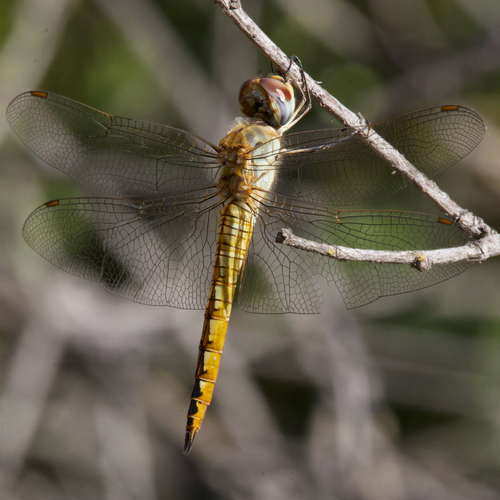
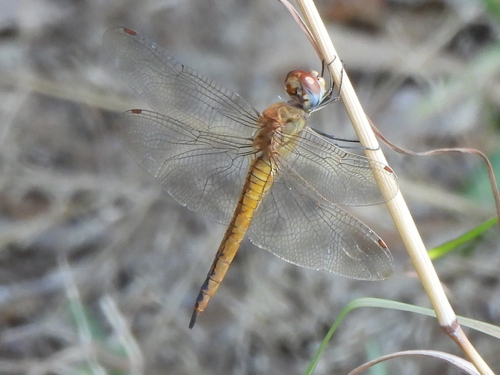
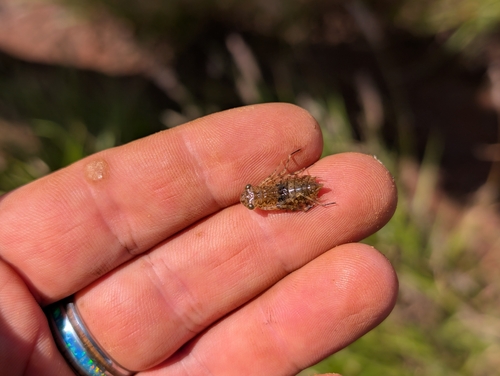
Same family (Libellulidae)
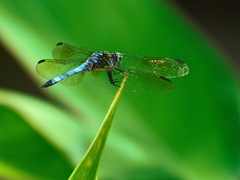
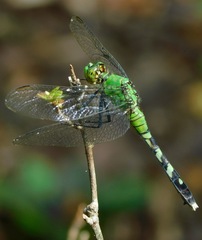
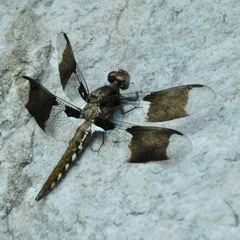

Sources
- Wikipedia: https://en.wikipedia.org/wiki/Pantala_flavescens
Look it up elsewhere: GBIF · iNaturalist · BugGuide · ITIS · Wikipedia
Text written 2026-10-22 from the sources above and checked sentence by sentence against them. Data fetched 2026-10-22.