 Bug FAQ
Walsh's Anthophora
Anthophora walshii · Order: Hymenoptera · Family: Apidae
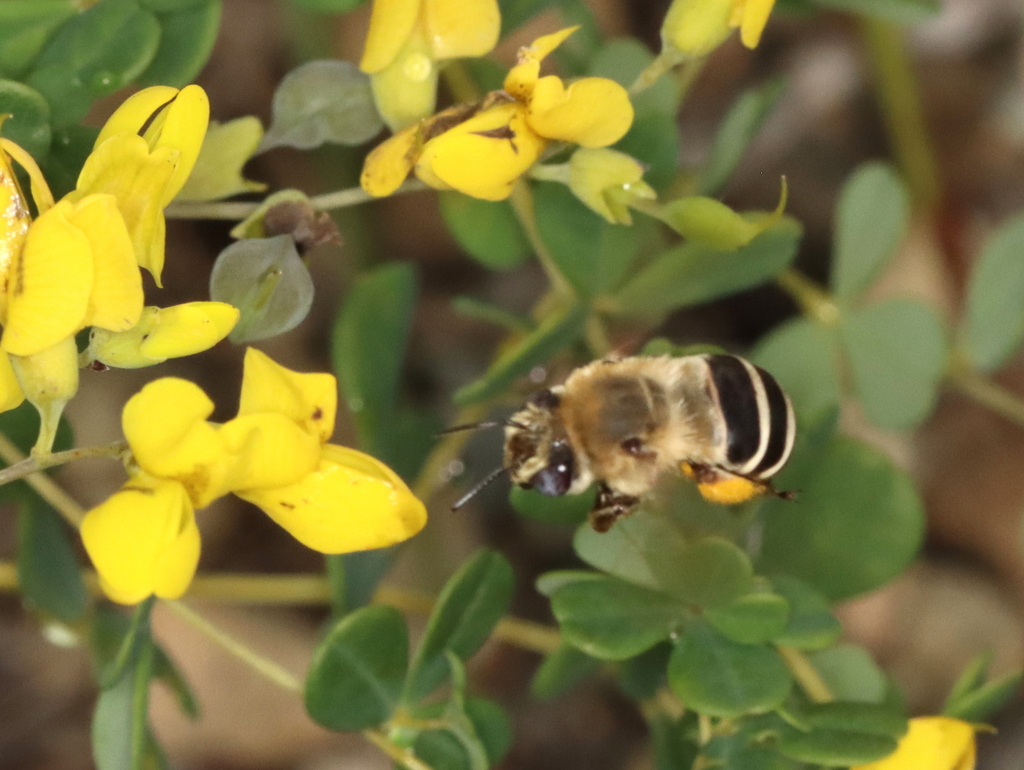
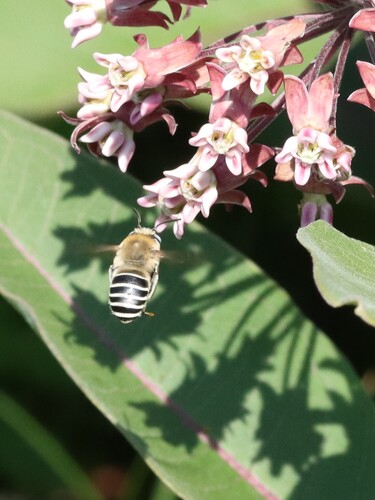
Males reach about 16 mm long with a 6 mm wide abdomen, while females are up to 14 mm long with a 5 mm wide abdomen. It is covered in long pale-yellow hair on the head, thorax and first abdominal segment, looking a lot like a honey bee. The species lives in North America.
Source: Wikipedia
How to recognize it
It has long pale-yellow hair on its head, thorax and the first abdominal segment, similar to a honey bee.
Source: Wikipedia
Size
Males grow up to 16 mm long with a 6 mm wide abdomen, and females up to 14 mm long with a 5 mm wide abdomen.
Source: Wikipedia
Where it lives
It is found in North America.
Source: Wikipedia
Where it comes from
It is native to North America.
Source: Wikipedia
Lookalikes
It is often mistaken for a honey bee because of its similar appearance.
Source: Wikipedia
Where it is found in the US
Recorded in 20 of 51 states and DC. Most records: Colorado, Massachusetts, South Dakota, Nebraska, Arizona, Kansas, Illinois, Minnesota.
Darker = more records. Counts are museum and citizen-science records, not population size.
Source: GBIF
Status: native in North America; native in Canada; native in United States. Source: iNaturalist
Months it is reported in the US
Source: GBIF
More photos
Questions people ask
What does Anthophora walshii look like?
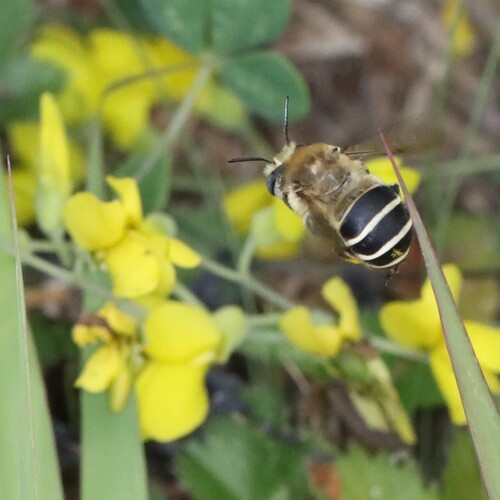
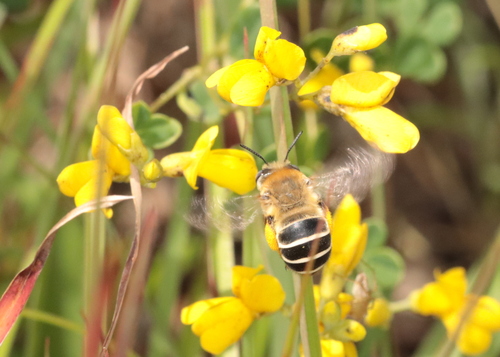
It has long pale-yellow hair on its head, thorax and first abdominal segment, making it resemble a honey bee.
Source: Wikipedia
Same family (Apidae)





Sources
- Wikipedia: https://en.wikipedia.org/wiki/Anthophora_walshii
Look it up elsewhere: GBIF · iNaturalist · BugGuide · ITIS · Wikipedia
Text written 2026-10-24 from the sources above and checked sentence by sentence against them. Data fetched 2026-10-24.