 Bug FAQ
Violet Carpenter Bee
Xylocopa violacea · Order: Hymenoptera · Family: Apidae
Also called: Carpenter bee
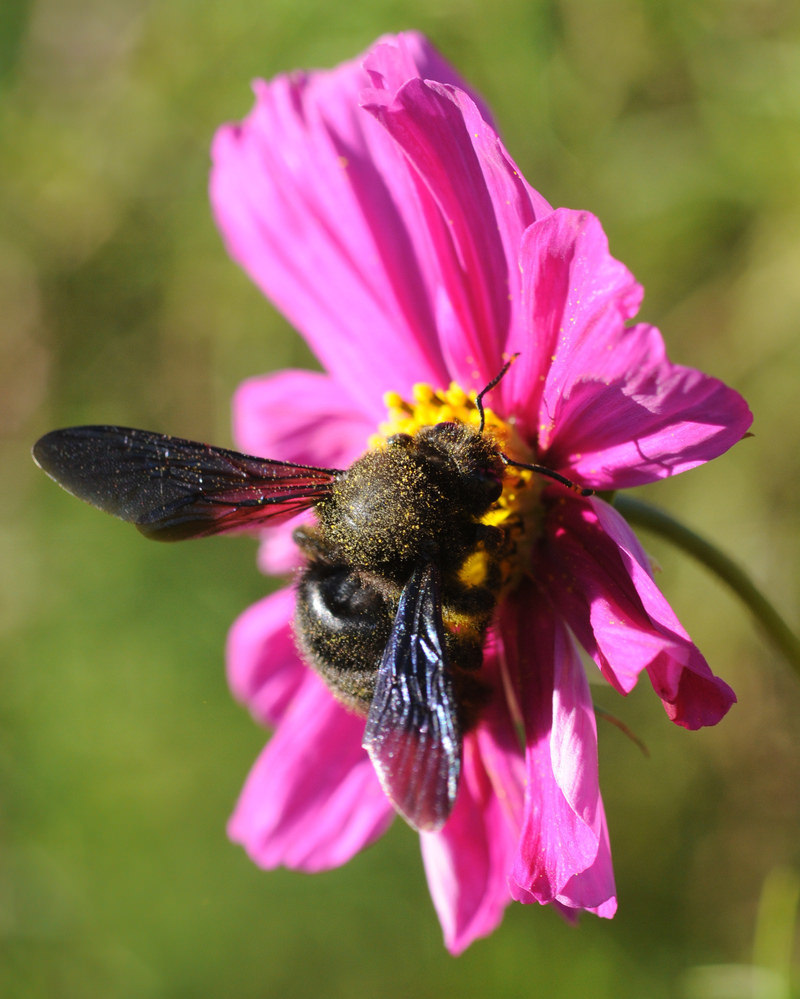
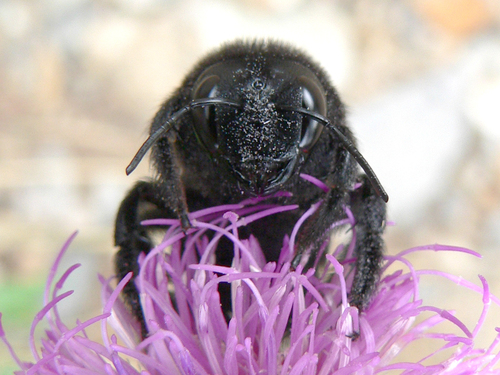
The violet carpenter bee is a large European bee that nests in dead wood and is not aggressive. It lives from Europe across Asia to central China, hibernates in winter and emerges in spring, and the larvae feed on pollen balls. In some regions it is confused with other all-black carpenter bees.
Source: Wikipedia
How to recognize it
It builds its nest by boring into dead wood, like other Xylocopa species.
Source: Wikipedia
Size
It is among the biggest bees found in Europe.
Source: Wikipedia
Does it bite or sting?
They are not particularly aggressive and will only bite or sting if forced.
Source: Wikipedia
Where it lives
Its preferred nesting sites are dead wood.
Source: Wikipedia
What it eats
Female bees lay eggs in cells that contain a pollen ball for the larvae to eat.
Source: Wikipedia
Life cycle
Adults spend the winter hibernating, emerge in spring (April-May), and the new adults appear in late summer before hibernating again.
Source: Wikipedia
When you see it
Bees can be seen flying in late spring or early summer while looking for mates and nesting sites.
Source: Wikipedia
Where it comes from
The species is native to Europe and extends eastward across Asia to central China, staying north of about 30° latitude.
Source: Wikipedia
Lookalikes
In India, any all-black carpenter bee is called “bhanvra,” and many reports actually refer to other species like X. nasalis, X. tenuiscapa, or X. tranquebarorum.
Source: Wikipedia
More photos
Questions people ask
Do violet carpenter bees bite or sting?
They are not aggressive and will only bite or sting if they feel forced.
Source: Wikipedia
Can they damage my house or wooden structures?
There is no source indicating they cause damage to homes or wood.
Source: Wikipedia
When are they active?
They emerge from hibernation in April-May and are most visible in late spring and early summer while searching for mates and nests.
Source: Wikipedia
Same family (Apidae)


Sources
- Wikipedia: https://en.wikipedia.org/wiki/Xylocopa_violacea
Look it up elsewhere: GBIF · iNaturalist · BugGuide · ITIS · Wikipedia
Text written 2026-10-22 from the sources above and checked sentence by sentence against them. Data fetched 2026-10-22.