 Bug FAQ
Vestal Cuckoo Bumble bee
Bombus vestalis · Order: Hymenoptera · Family: Apidae
Also called: Southern Cuckoo Bee, Vestal (Southern) Cuckoo Bee, Vestal Cuckoo Bee
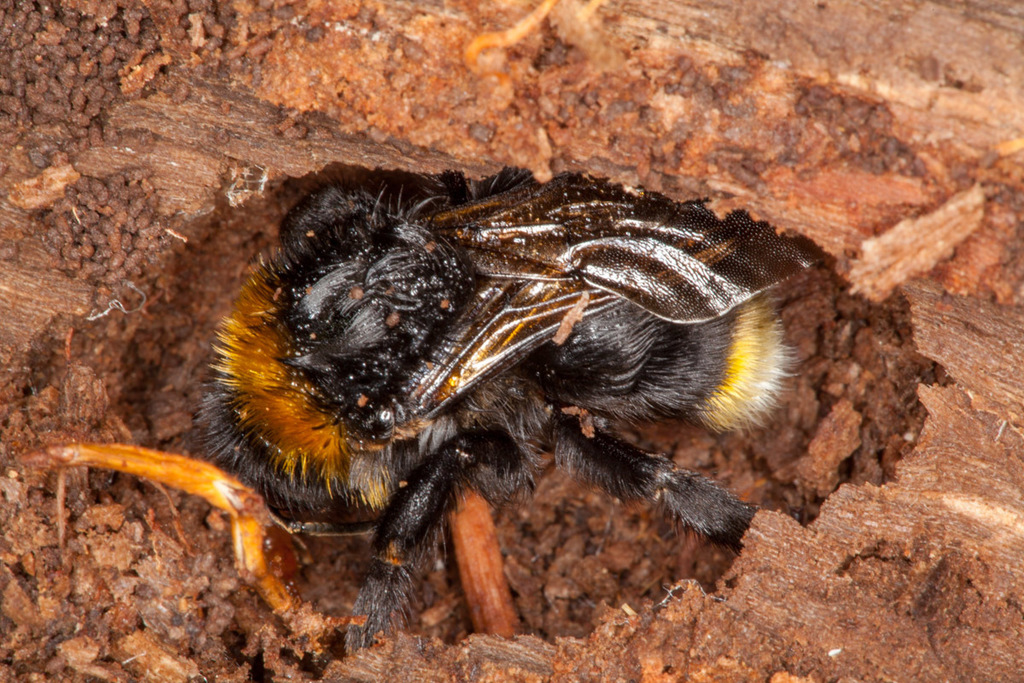
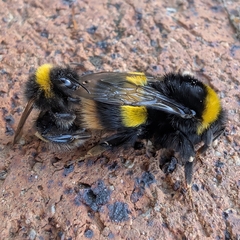
The vestal cuckoo bumblebee is a large black bee with orange collar and distinctive yellow and white hair markings. It lives across most of Europe, North Africa and western Asia and the males often gather in suburban gardens. Queens emerge early in spring and feed on flowers such as clover, deadnettles and dandelions; males visit white clover and other blooms.
Source: Wikipedia
How to recognize it
The bee is mainly black with an orange neck band; the third abdominal segment has a yellow-hair border and the fifth segment is mostly white-haired. Males look like females but are smaller and have longer antennae.
Source: Wikipedia
Size
Queens can reach up to 21 mm in length with a 37 mm wingspan, while males are about 16 mm long.
Source: Wikipedia
Where it lives
Males often gather in suburban garden areas.
Source: Wikipedia
What it eats
Feeds on a variety of flowering plants such as clover, tufted vetch, knapweed and others; queens also visit deadnettles, sallows, blackthorns and dandelions in spring.
Source: Wikipedia
Life cycle
Relies on the host bumblebee B. terrestris; the cuckoo queen invades the host nest, dominates the workers for a few days without killing the host queen, and fully takes over after about a month to raise her own brood.
Source: Wikipedia
When you see it
Queens emerge early in spring; males appear later, from late May to early June.
Source: Wikipedia
Where it comes from
Found throughout most of Europe, from Ireland to northern Iran, and also in North Africa and western Asia.
Source: Wikipedia
Lookalikes
Looks similar to Bombus bohemicus but can be told apart by the length of antennal segments; in B. vestalis the fifth antennal segment equals the combined length of the third and fourth.
Source: Wikipedia
Questions people ask
Are they a garden pest?
They do not feed on crops or cause damage to plants; they mainly visit flowers for nectar.
Source: Wikipedia
How can I tell this bee apart from similar species?
Check the antennae: the fifth segment is as long as the third and fourth together, and compare it to Bombus bohemicus which has different antennal proportions.
Source: Wikipedia
Same family (Apidae)


Sources
- Wikipedia: https://en.wikipedia.org/wiki/Bombus_vestalis
Look it up elsewhere: GBIF · iNaturalist · BugGuide · ITIS · Wikipedia
Text written 2026-10-22 from the sources above and checked sentence by sentence against them. Data fetched 2026-10-22.