 Bug FAQ
Veined Russet
Aloeides pierus · Order: Lepidoptera · Family: Lycaenidae
Also called: Dull Copper
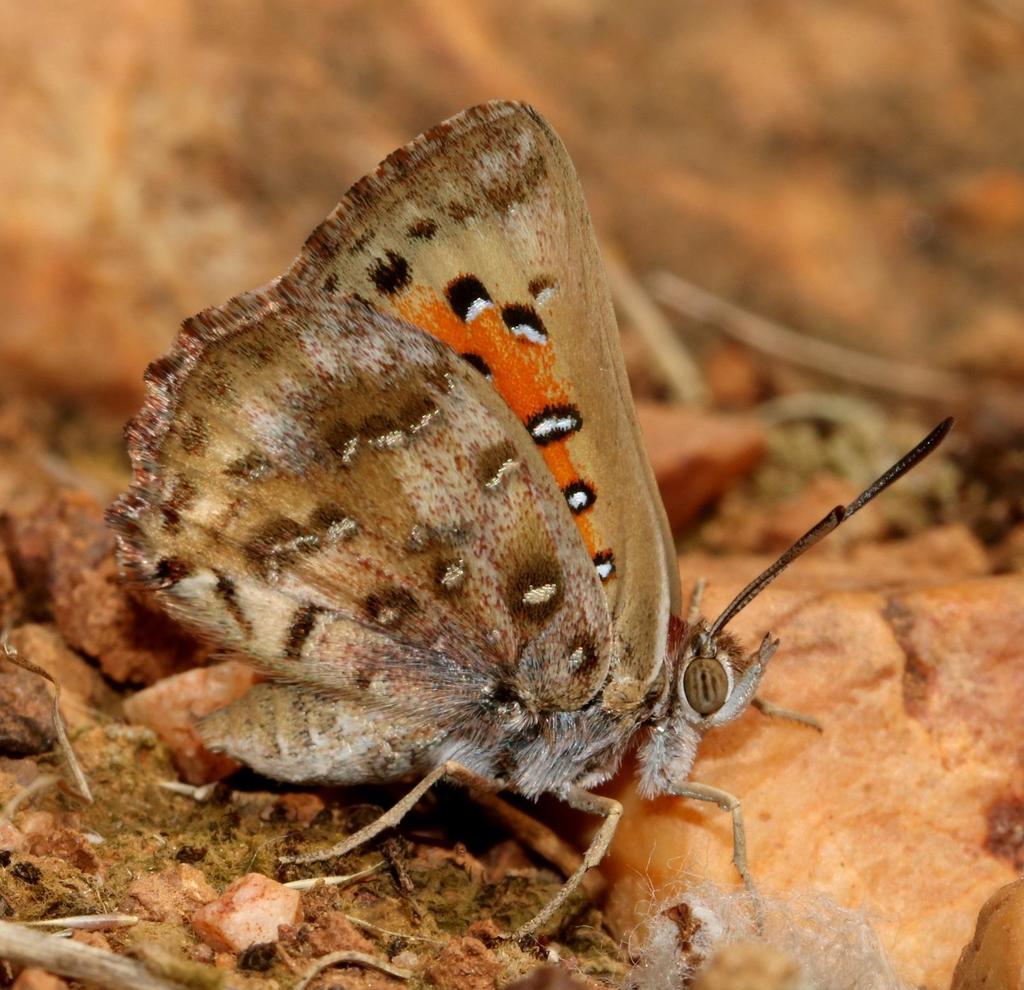
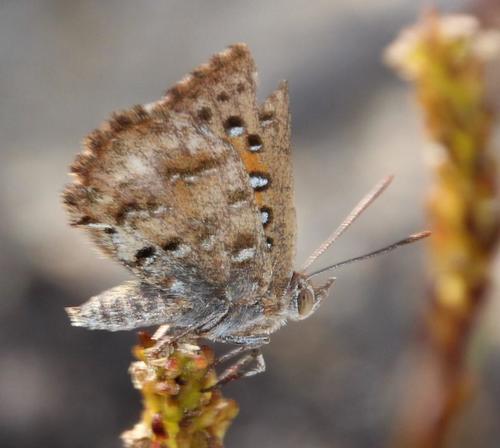
The Veined Russet butterfly has a wingspan of about 25 to 30 mm. Adults fly from September to April, especially in October and February, and there are several generations each year. It lives in South Africa’s Western, Northern and Eastern Cape and the Free State, preferring grassy fynbos and high-veld grasslands.
Source: Wikipedia
How to recognize it
The forewing shows twelve distinct veins and the hindwing lacks a tail.
Source: Wikipedia
Size
Wingspan ranges from 25 to 30 mm (0.98 to 1.18 in).
Source: Wikipedia
What it eats
Larvae feed on plants of the genus Aspalathus.
Source: Wikipedia
Life cycle
The species produces multiple generations each year.
Source: Wikipedia
When you see it
Adults are on the wing from September through April, with activity peaks in October and February.
Source: Wikipedia
Where it comes from
Native to South Africa, occurring in the Western, Northern and Eastern Cape and the Free State.
Source: Wikipedia
Lookalikes
Genitalia are very similar among species in this genus, making them unreliable for identification.
Source: Wikipedia
More photos

Questions people ask
When can I see adult Veined Russet butterflies?
Adults are active from September to April, especially in October and February.
Source: Wikipedia
How many generations does this butterfly have each year?
There are several generations per year.
Source: Wikipedia
Where does this butterfly live?
It is found in South Africa’s Western, Northern and Eastern Cape and the Free State, in grassy fynbos and high-veld grasslands.
Source: Wikipedia
Same family (Lycaenidae)

Sources
- Wikipedia: https://en.wikipedia.org/wiki/Aloeides_pierus
Look it up elsewhere: GBIF · iNaturalist · BugGuide · Wikipedia
Text written 2026-10-23 from the sources above and checked sentence by sentence against them. Data fetched 2026-10-23.