 Bug FAQ
Variegated Paper Wasp
Polistes versicolor · Order: Hymenoptera · Family: Eumenidae
Also called: Neotropical Yellow Paper Wasp
Source: Wikipedia
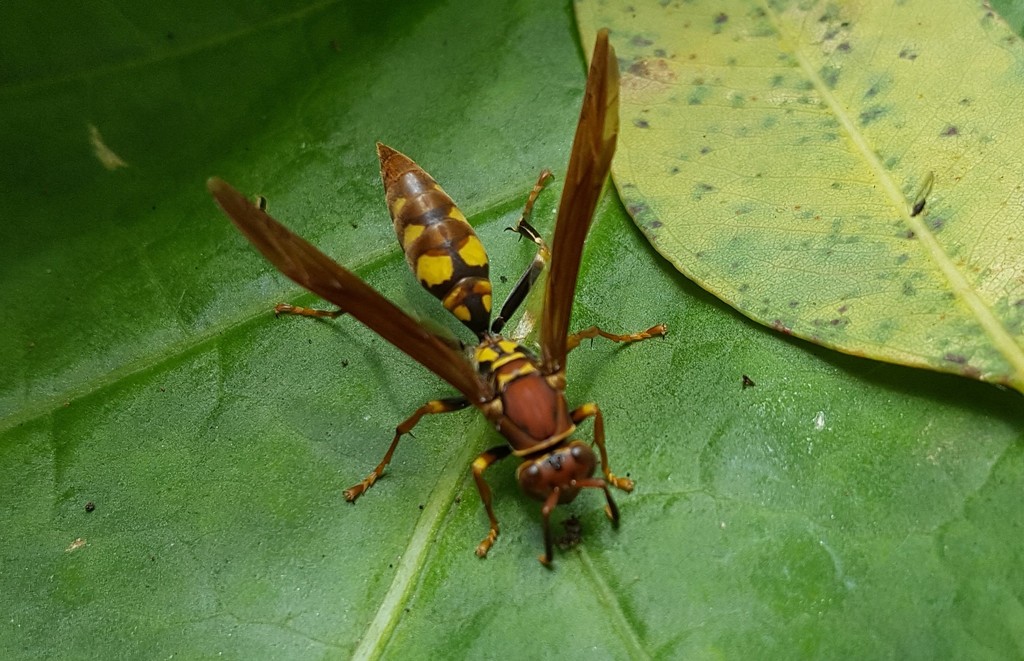
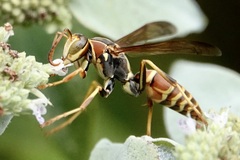
The yellow wasp often builds nests in urban buildings and other structures. Females and males have black bodies with yellow bands and transparent yellow wings.
Source: Wikipedia
How to recognize it
Both sexes have black bodies marked with yellow bands on the thorax and abdomen and transparent yellow wings.
Source: Wikipedia
Is it a pest in the house?
New colonies are often started by groups of females inside human buildings. They are commonly found in urban settings.
Source: Wikipedia
Does it bite or sting?
When a female challenges the founder, aggression can include biting and stinging, which can be fatal.
Source: Wikipedia
Where it lives
They are frequently seen in urban areas. Nests are also found on leaves, branches, roots, stones, and abandoned nests of other wasps.
Source: Wikipedia
What it eats
They mainly hunt insects but also feed on pollen and nectar.
Source: Wikipedia
Life cycle
Colonies last from three to ten months, without a clear link to the season.
Source: Wikipedia
When you see it
Young queens may hibernate during winter, sometimes forming winter groups.
Source: Wikipedia
Where it comes from
They are widely distributed from Costa Rica to Argentina, especially common in southeastern Brazil.
Source: Wikipedia
Questions people ask
Where are they most likely to be found?
They are common in urban areas and also nest on natural substrates like leaves and branches.
Source: Wikipedia
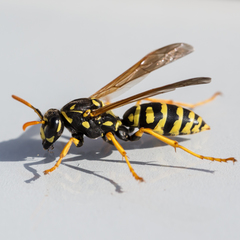
Same family (Eumenidae)

Sources
- Wikipedia: https://en.wikipedia.org/wiki/Polistes_versicolor
Look it up elsewhere: GBIF · iNaturalist · BugGuide · Wikipedia
Text written 2026-10-23 from the sources above and checked sentence by sentence against them. Data fetched 2026-10-22.