 Bug FAQ
Metric Paper Wasp
Polistes metricus · Order: Hymenoptera · Family: Eumenidae
Also called: Redcoat Paper Wasp
Source: UC IPM
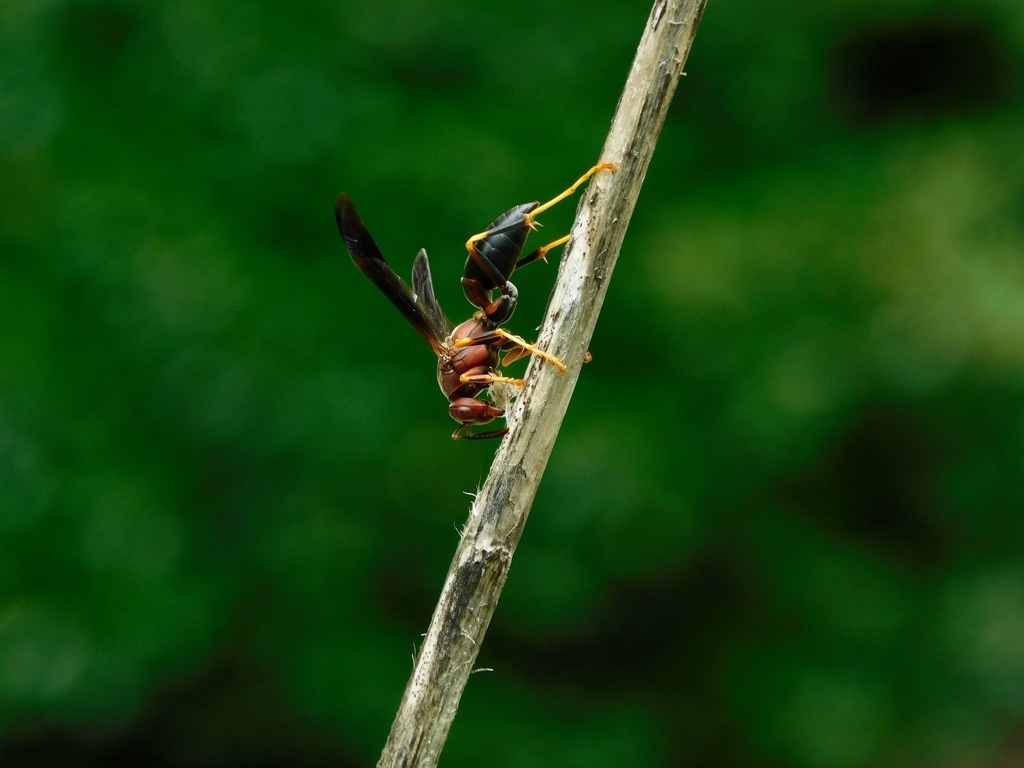
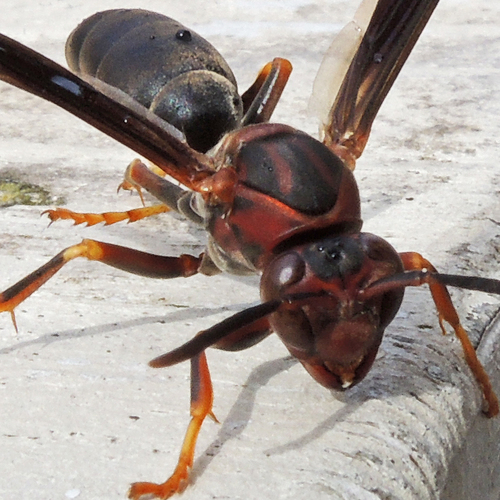
Metric paper wasps are rusty-colored with black thorax markings, black tibiae and yellow tarsi. They build paper nests on buildings, trees or shrubs near water sources and are not aggressive, though they may sting if provoked.
How to recognize it
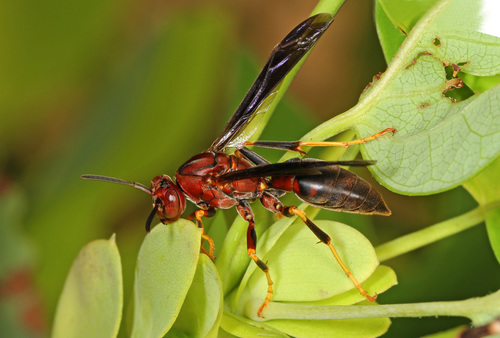
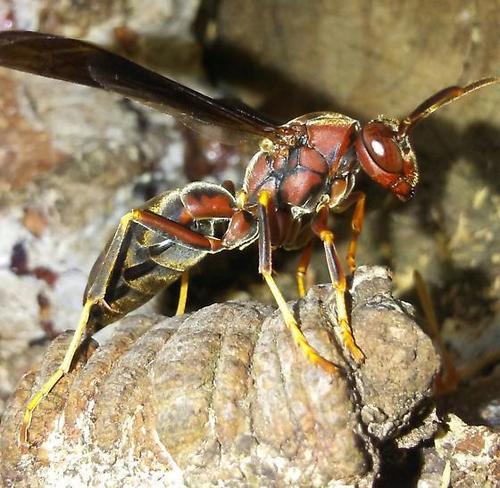
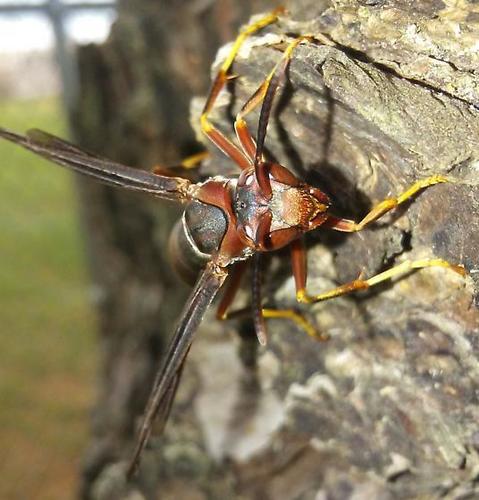
The wasp is rust-colored with black markings on the thorax and a mostly black abdomen. Its legs have black tibiae and yellow tarsi. Western species often show golden-brown or darker backgrounds with large yellow or red patches.
Is it a pest in the house?
They choose nest sites based on shelter, size, light, and water sources. Paper wasps are generally not defensive and rarely sting humans. Problems arise when nests block doorways or are near fruit trees used by people.
Does it bite or sting?
Stings cause pain and short-term injury; some people may have severe allergic reactions.
Source: UC IPM
How to get rid of it
Knocking down new nests early in the season forces the founding female to relocate or join another nest. Aerosol insecticides labeled for wasp and hornet nests can work but must be used with extreme caution.
Source: UC IPM
Where it lives
Nests are attached to the sides of buildings, trees, or shrubbery. They like to locate near large bodies of water such as ponds for drinking.
Source: Wikipedia
What it eats
Adults feed soft-bodied prey, especially caterpillars, to their larvae. Males also help feed the larvae.
Source: Wikipedia
Life cycle
Adult females (gynes) and males leave the nest to mate. Later the foundress loosens control and workers lay sterile male eggs.
Source: Wikipedia
When you see it
A female was recorded in Dryden, Maine, showing the species occurs in the eastern United States. The nesting period ends in the late season.
Source: Wikipedia
Where it comes from
Metric paper wasps are native to North America and are mostly found there.
Source: Wikipedia
Lookalikes
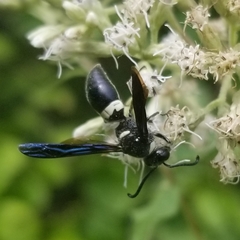
Their nests are often found mixed with those of Polistes fuscatus. Mud daubers are dark, thread-waisted, build hard mud nests and rarely sting. Honey bees have less bright striping, more hair, and are not usually attracted to food.
Where it is found in the US
Recorded in 37 of 51 states and DC. Most records: Texas, Florida, North Carolina, Virginia, Maryland, Georgia, Louisiana, Ohio.
Darker = more records. Counts are museum and citizen-science records, not population size.
Source: GBIF
Status: native in North America; native in Canada; native in United States. Source: iNaturalist
Months it is reported in the US
Source: GBIF
More photos
Questions people ask
Where do they build their nests?
They attach paper nests to the sides of buildings, trees, or shrubs, often near water sources.
Source: Wikipedia
How can I get rid of a paper wasp nest?
Early in the season, knock down the new nest; if needed, use a labeled aerosol insecticide carefully.
Source: UC IPM
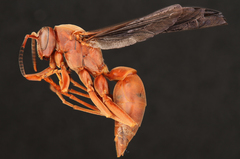
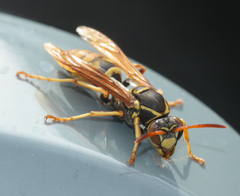
Same family (Eumenidae)

Sources
- UC IPM: https://ipm.ucanr.edu/PMG/PESTNOTES/pn7450.html
- Wikipedia: https://en.wikipedia.org/wiki/Polistes_metricus
Look it up elsewhere: GBIF · iNaturalist · BugGuide · Wikipedia
Text written 2026-10-22 from the sources above and checked sentence by sentence against them. Data fetched 2026-10-22.