 Bug FAQ
Variegated Fruit Bug
Codophila varia · Order: Hemiptera · Family: Miridae
Also called: Kalm's plant bug
Source: Wikipedia
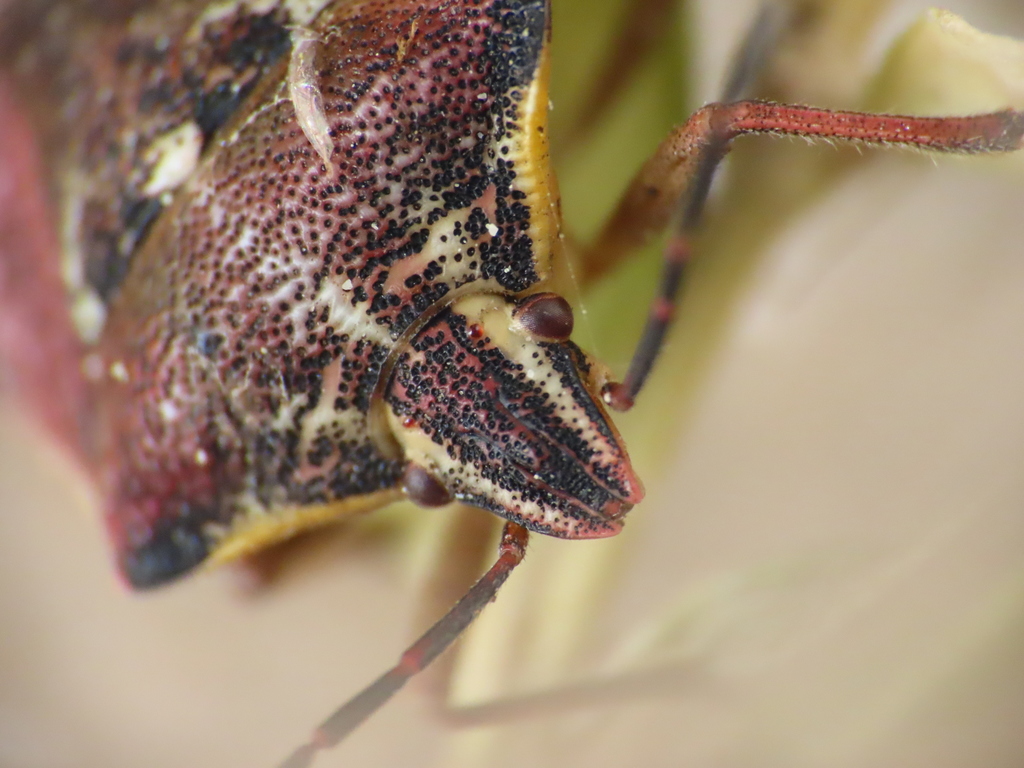
Adults are small, measuring about 9 to 14 mm long. They are most often seen from June through August. They feed mainly on members of the aster and carrot families.
Source: Wikipedia
How to recognize it
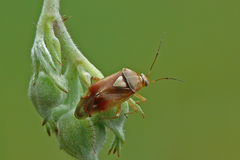
The head shows three bright longitudinal stripes. The scutellum is brightly colored with a distinct black pattern. The edge of the abdomen (connexivum) is bright with black spots. The first three antennal segments are usually red, while the two outer ones are black.
Source: Wikipedia
Where it lives
They are encountered mainly between June and August.
Source: Wikipedia
What it eats
They are polyphagous but prefer plants in the Asteraceae (especially Echinops spinosus) and Apiaceae families.
Source: Wikipedia
Life cycle
Adults are most commonly seen from June to August.
Source: Wikipedia
When you see it
Their activity peaks in the summer months of June through August.
Source: Wikipedia
Where it comes from
They occur throughout most of Europe, including France, Italy, Spain, Greece and many other countries.
Source: Wikipedia
Lookalikes
It looks very similar to Carpocoris pudicus.
Source: Wikipedia
Questions people ask
What plants does the variegated fruit bug feed on?
It mainly feeds on aster family plants like thistles and on carrot family plants such as parsley.
Source: Wikipedia
When can I expect to see these bugs?
They are most commonly observed from June through August.
Source: Wikipedia
How can I tell this bug apart from similar species?
Look for three bright stripes on the head, a brightly colored scutellum with a black drawing, and a bright connexivum with black spots; it is often confused with Carpocoris pudicus.
Source: Wikipedia
Same family (Miridae)
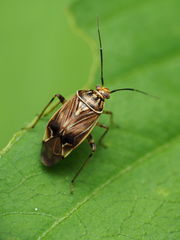 North American Tarnished Plant BugLygus lineolarisDamages trees, gardens or crops
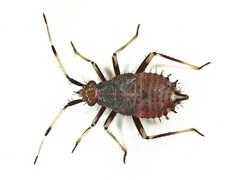 Red-spotted Plant BugDeraeocoris ruber
 Alfalfa Plant BugAdelphocoris lineolatusDamages trees, gardens or crops
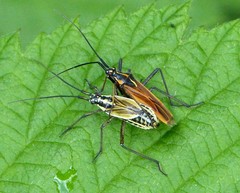 Meadow Plant BugLeptopterna dolabrataDamages trees, gardens or crops
 Four-lined Plant BugPoecilocapsus lineatusDamages trees, gardens or crops
 Lygus pratensisLygus pratensisDamages trees, gardens or crops
Sources
- Wikipedia: https://en.wikipedia.org/wiki/Codophila_varia
Look it up elsewhere: GBIF · iNaturalist · BugGuide · ITIS · Wikipedia
Text written 2026-10-23 from the sources above and checked sentence by sentence against them. Data fetched 2026-10-22.