 Bug FAQ
North American Tarnished Plant Bug
Lygus lineolaris · Order: Hemiptera · Family: Miridae
Also called: tarnished plant bug
Source: Wikipedia

Adults are up to 6.5 mm long and live across North America, mainly in the east. They feed on a wide range of crops, favoring young apples and weeds, and are controlled with several insecticide sprays and weed-herbicide management.
Source: Wikipedia
Size
Adults grow to about 6.5 mm in length.
Source: Wikipedia
How to get rid of it
Growers typically apply insecticides three to five times per year to manage this bug. Since the insects rely on weeds for overwintering, herbicide treatment of those weeds can also reduce their populations.
Source: Wikipedia
Where it lives
They are found from northern Canada to southern Mexico.
Source: Wikipedia
What it eats
They particularly like young apples and weeds.
Source: Wikipedia
When you see it
In mid-June, adult numbers drop in vineyards as apples decline and flowers appear.
Source: Wikipedia
Where it comes from
They are most common in the eastern half of North America.
Source: Wikipedia
Where it is found in the US
Recorded in 49 of 51 states and DC. Most records: Mississippi, Illinois, New York, Massachusetts, Texas, Arkansas, Pennsylvania, Ohio.
Darker = more records. Counts are museum and citizen-science records, not population size.
Source: GBIF
Status: native in North America; native in Canada; native in United States. Source: iNaturalist
Months it is reported in the US
Source: GBIF
More photos
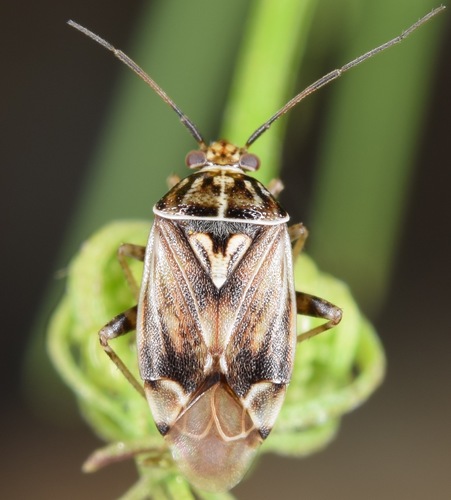
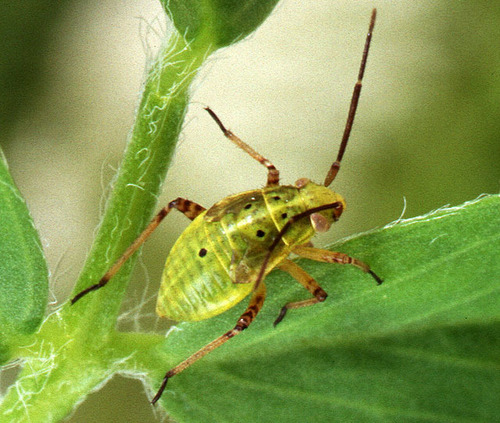
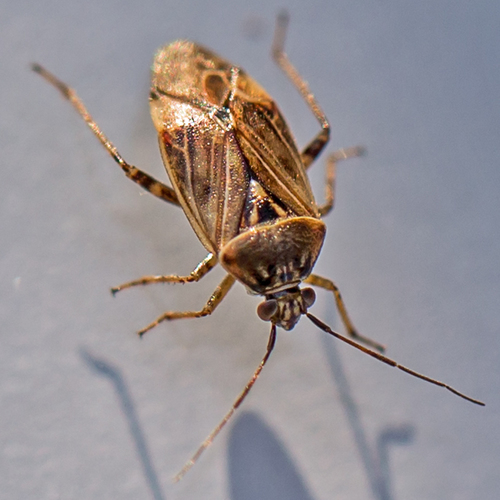
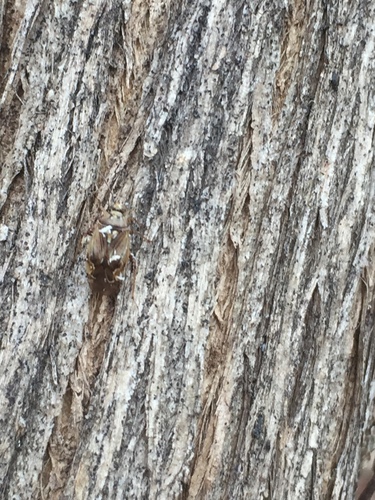
Same family (Miridae)
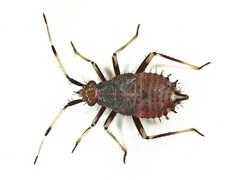 Red-spotted Plant BugDeraeocoris ruber
 Alfalfa Plant BugAdelphocoris lineolatusDamages trees, gardens or crops
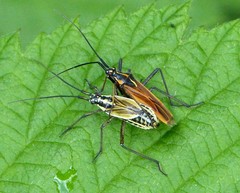 Meadow Plant BugLeptopterna dolabrataDamages trees, gardens or crops
 Four-lined Plant BugPoecilocapsus lineatusDamages trees, gardens or crops
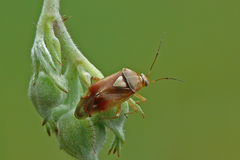 Lygus pratensisLygus pratensisDamages trees, gardens or crops
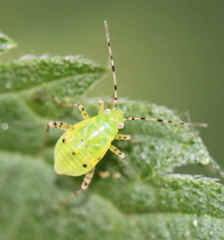 Three Spotted Nettle BugLiocoris tripustulatus
Sources
- Wikipedia: https://en.wikipedia.org/wiki/Tarnished_plant_bug
Look it up elsewhere: GBIF · iNaturalist · BugGuide · ITIS · Wikipedia
Text written 2026-10-22 from the sources above and checked sentence by sentence against them. Data fetched 2026-10-22.