 Bug FAQ
Alfalfa Plant Bug
Adelphocoris lineolatus · Order: Hemiptera · Family: Miridae
Also called: Lucerne Bug
Source: Wikipedia

The alfalfa plant bug (Adelphocoris lineolatus) belongs to the Miridae family and is also called the Lucerne bug. Adults and nymphs feed on alfalfa and cotton plants, and adults appear from late June to October.
Source: Wikipedia
How to recognize it
Adelphocoris lineolatus is known as the Lucerne bug or alfalfa plant bug and is in the Miridae family.
Source: Wikipedia
Where it lives
It prefers humid, cool environments and can be found in both dry and damp fields or grasslands.
Source: Wikipedia
What it eats
Both adults and nymphs eat the reproductive and vegetative parts of alfalfa and cotton plants.
Source: Wikipedia
Life cycle
Eggs develop in 8 to 12 days, with some overwintering, and the bug goes through five nymphal stages.
Source: Wikipedia
When you see it
Females start laying eggs at the end of July, and adults are seen from late June through October.
Source: Wikipedia
Lookalikes
It is also called the Lucerne bug or alfalfa plant bug and belongs to the Miridae family.
Source: Wikipedia
Where it is found in the US
Recorded in 38 of 51 states and DC. Most records: New York, Illinois, Wisconsin, Minnesota, Massachusetts, Pennsylvania, Michigan, Ohio.
Darker = more records. Counts are museum and citizen-science records, not population size.
Source: GBIF
Status: introduced in United States. Source: iNaturalist
Months it is reported in the US
Source: GBIF
More photos


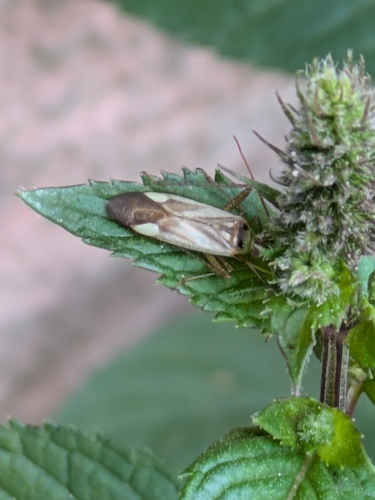
Questions people ask
Does the alfalfa plant bug damage crops?
Yes, it feeds on alfalfa and cotton, harming those crops.
Source: Wikipedia
When can I expect to see adult alfalfa plant bugs?
Adults are present from late June through October.
Source: Wikipedia
Same family (Miridae)
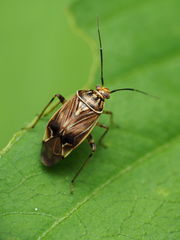 North American Tarnished Plant BugLygus lineolarisDamages trees, gardens or crops
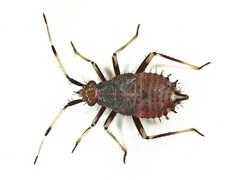 Red-spotted Plant BugDeraeocoris ruber
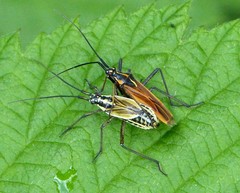 Meadow Plant BugLeptopterna dolabrataDamages trees, gardens or crops
 Four-lined Plant BugPoecilocapsus lineatusDamages trees, gardens or crops
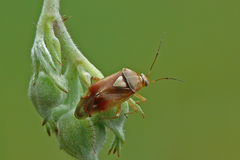 Lygus pratensisLygus pratensisDamages trees, gardens or crops
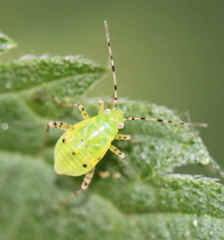 Three Spotted Nettle BugLiocoris tripustulatus
Sources
- Wikipedia: https://en.wikipedia.org/wiki/Adelphocoris_lineolatus
Look it up elsewhere: GBIF · iNaturalist · BugGuide · ITIS · Wikipedia
Text written 2026-10-22 from the sources above and checked sentence by sentence against them. Data fetched 2026-10-22.