 Bug FAQ
Variegated Fritillary
Euptoieta claudia · Order: Lepidoptera · Family: Nymphalidae
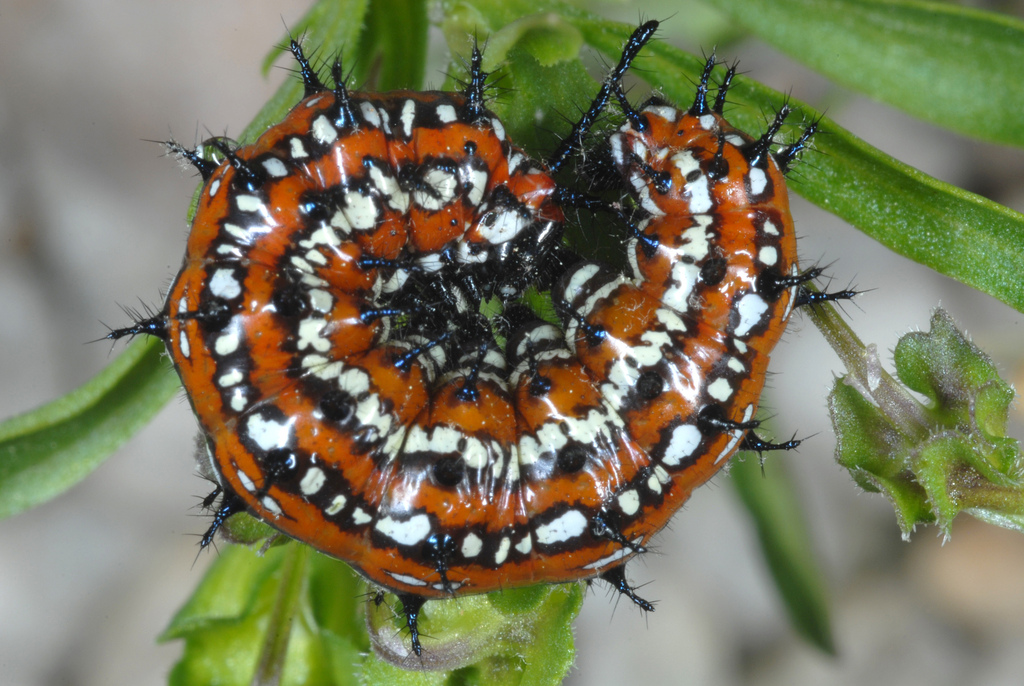
It lives in open, disturbed places like fields, pastures, roadsides and mountain meadows, and can be seen from spring through fall depending on latitude.
Source: Wikipedia
How to recognize it
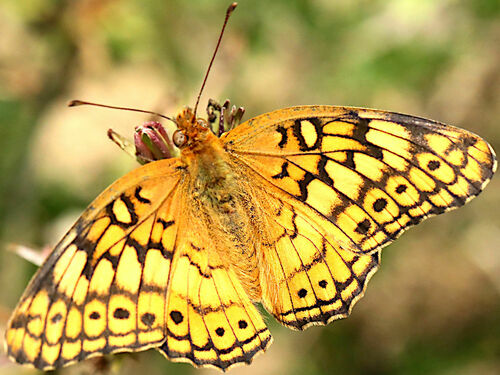
The upper side of its wings shows a checkered orange and black pattern with a row of black spots near the edge and black lines across the middle.
Source: Wikipedia
Size
Wingspan ranges from 44 mm to 57 mm (about 1.75 to 2.25 inches).
Source: Wikipedia
What it eats
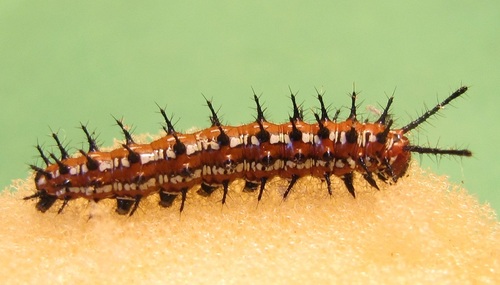
Caterpillars feed on the leaves, flowers, and stems of their host plants.
Source: Wikipedia
Life cycle
Adults spend the winter in the south and move north each spring and summer, producing two to three generations per year.
Source: Wikipedia
When you see it
In southern areas they fly from April to October; farther north they appear in summer and early fall.
Source: Wikipedia
Where it comes from
It is native to North and South America and belongs to the Nymphalidae family.
Source: Wikipedia
Lookalikes
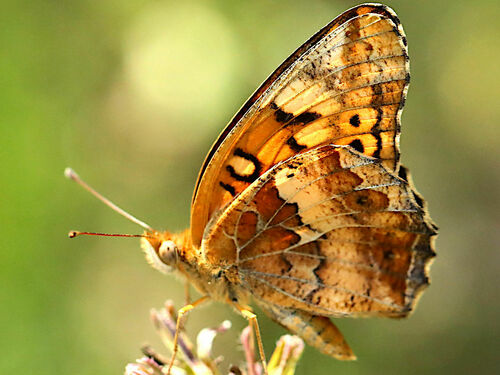
The only similar species in its range is the Mexican fritillary, which is brighter orange, lacks markings on the basal hindwing upperside, and has a plainer underside without submarginal spots or median lines.
Source: Wikipedia
Where it is found in the US
Recorded in 48 of 51 states and DC. Most records: Texas, Virginia, Maryland, North Carolina, Arizona, Oklahoma, Tennessee, Colorado.
Darker = more records. Counts are museum and citizen-science records, not population size.
Source: GBIF
Status: native in North America; native in United States; native in Canada. Source: iNaturalist
Months it is reported in the US
Source: GBIF
More photos
Same family (Nymphalidae)






Sources
- Wikipedia: https://en.wikipedia.org/wiki/Euptoieta_claudia
Look it up elsewhere: GBIF · iNaturalist · BugGuide · ITIS · Wikipedia
Text written 2026-10-22 from the sources above and checked sentence by sentence against them. Data fetched 2026-10-22.