 Bug FAQ
Variable Cracker
Hamadryas feronia · Order: Lepidoptera · Family: Nymphalidae
Also called: Cracker
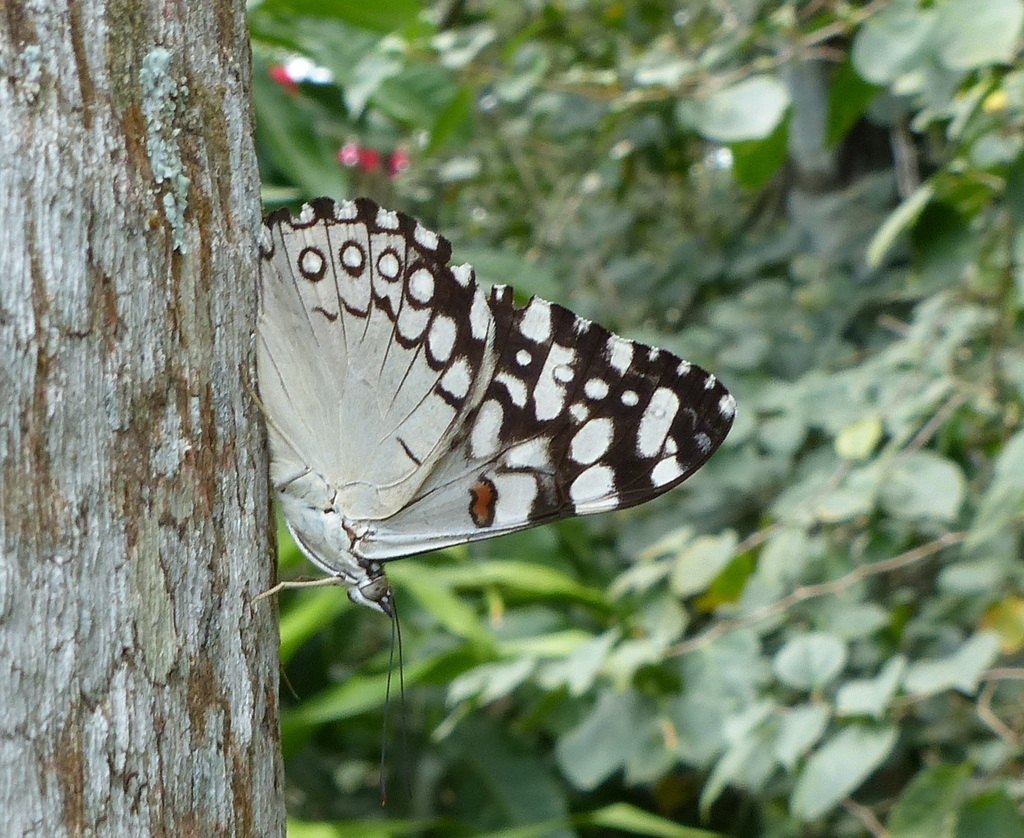
Variable Cracker butterflies have distinctive wing patterns with eyespots and a red bar. They live in open, treed areas across southern North and South America, and their larvae feed on Euphorbiaceae vines while adults eat rotting fruit.
Source: Wikipedia
How to recognize it
The underside of the forewing is whitish with dark markings, a red bar and a black submarginal eyespot; the hind wing underside is also whitish with dark marks and blue rings that contain larger eyespots near the edge.
Source: Wikipedia
Where it lives
It prefers open spaces that have trees.
Source: Wikipedia
What it eats
Caterpillars eat vines in the Euphorbiaceae family, especially Dalechampia triphylla in South America. Adult butterflies feed on fermenting fruit.
Source: Wikipedia
Life cycle
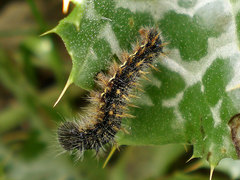
Larvae occur in two colour forms: one bluish-black with speckles and reddish side spots, the other grey-green with a pale longitudinal side line. The pupa has two long projections on its front end.
Source: Wikipedia
When you see it
In Mexico adults can be seen year-round, but are most common from June to September.
Source: Wikipedia
Where it comes from
Its range includes the southern parts of North America, much of South America, and extends southward into Brazil.
Source: Wikipedia
Lookalikes
It looks similar to Hamadryas guatemalena and Hamadryas iphthime.
Source: Wikipedia
Where it is found in the US
Recorded in 3 of 51 states and DC. Most records: Texas, Kansas, North Carolina.
Darker = more records. Counts are museum and citizen-science records, not population size.
Source: GBIF
Questions people ask
Are they a garden pest?
Their larvae feed on certain Euphorbiaceae vines, not on typical garden crops.
Source: Wikipedia
Same family (Nymphalidae)





Sources
- Wikipedia: https://en.wikipedia.org/wiki/Hamadryas_feronia
Look it up elsewhere: GBIF · iNaturalist · BugGuide · ITIS · Wikipedia
Text written 2026-10-22 from the sources above and checked sentence by sentence against them. Data fetched 2026-10-22.