 Bug FAQ
Vancouver Bumble Bee
Bombus vancouverensis · Order: Hymenoptera · Family: Apidae

Vancouver bumble bees are small to medium sized insects, with workers 8 to 14 mm long and queens 15 to 19 mm long, covered in short hair that may be yellow, white, or black on the face and thorax. They live in open grassy areas, parks, prairies, shrubs, and mountainous regions of western North America, nesting underground or on the ground surface. Colonies are founded each spring by a single queen, grow through a worker phase, then produce new queens and males that mate and overwinter.
Source: Wikipedia
How to recognize it
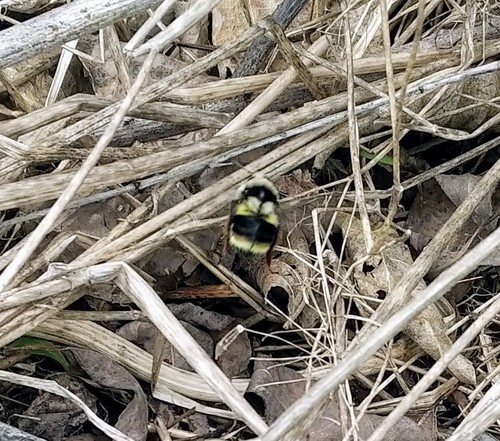
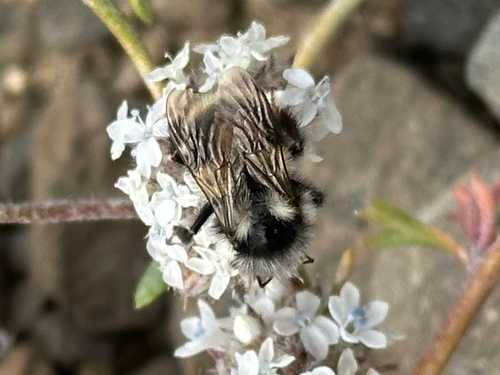
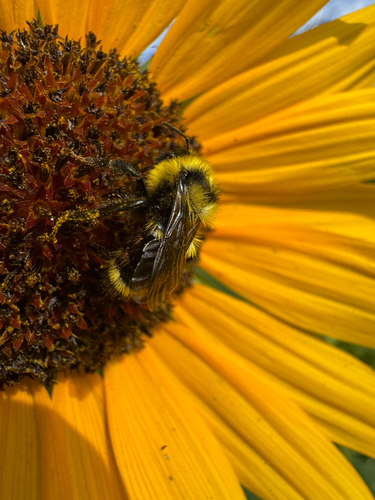
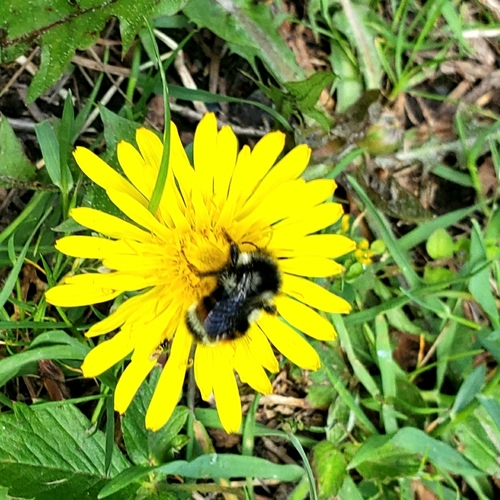
The bee’s face hair is usually yellow or white, sometimes with black on the top of the head, and the lower third of the thorax is also black.
Source: Wikipedia
Size
Workers measure 8 to 14 mm and queens 15 to 19 mm in length.
Source: Wikipedia
Where it lives
Nests are built underground or on the ground surface.
Source: Wikipedia
What it eats
Forages for pollen and nectar from a wide range of plants such as asters, lupines, goldenrods, and many others. During buzz pollination it vibrates flower anthers to release pollen into its pollen sacs.
Source: Wikipedia
Life cycle
Each year a new queen emerges from hibernation to start a colony. The queen first raises workers, then the colony expands rapidly during the eusocial phase.
Source: Wikipedia
When you see it
Later the colony produces sexual offspring that leave to mate, and newly inseminated queens hibernate until the next spring.
Source: Wikipedia
Where it comes from
Found across mountainous western North America, including many U.S. states and Canadian provinces and territories.
Source: Wikipedia
Lookalikes
It was long considered the same species as Bombus bifarius, and literature on bifarius actually refers to this bee. Another similar species in the region is Bombus frigidus.
Source: Wikipedia
Where it is found in the US
Recorded in 12 of 51 states and DC. Most records: Oregon, Alaska, Washington, Montana, Idaho, California, Wyoming, Utah.
Darker = more records. Counts are museum and citizen-science records, not population size.
Source: GBIF
Status: native in North America; native in United States; native in Canada. Source: iNaturalist
Months it is reported in the US
Source: GBIF
More photos
Same family (Apidae)


Sources
- Wikipedia: https://en.wikipedia.org/wiki/Bombus_vancouverensis
Look it up elsewhere: GBIF · iNaturalist · BugGuide · ITIS · Wikipedia
Text written 2026-10-22 from the sources above and checked sentence by sentence against them. Data fetched 2026-10-22.