 Bug FAQ
Vaejovis deboerae
Vaejovis deboerae · Order: Scorpiones · Family: Vaejovidae
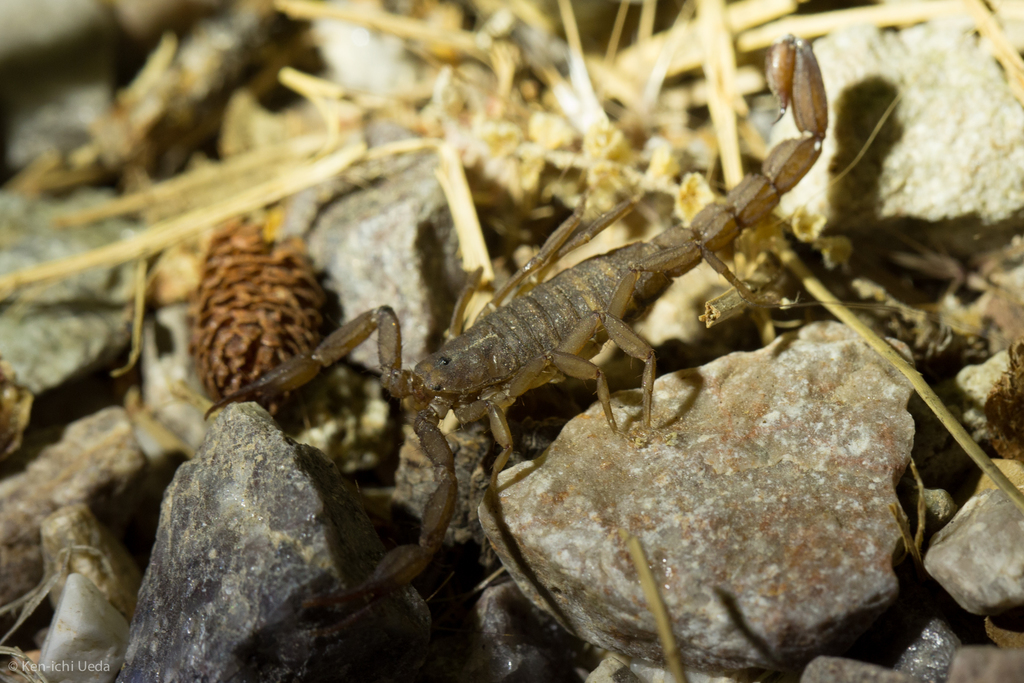
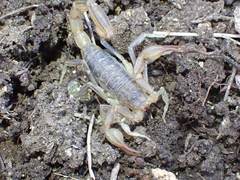
Female Vaejovis deboerae measure about 27.5 mm in length (≈1 inch). The species was first found in the Santa Catalina Mountains near Tucson, Arizona, and belongs to a group that lives in the Sonoran-type Southwest region of the United States and Mexico.
Source: Wikipedia
How to recognize it
It is related to other Vaejovis and Hoffmannius species such as V. janssi, H. spinigerus and H. coahuilae.
Source: Wikipedia
Size
Females are roughly 27.5 mm long, about one inch.
Source: Wikipedia
Where it lives
Members of its family inhabit the Southwest, especially southern Arizona, parts of Texas, New Mexico and the Sonoran region. Vaejovis deboerae itself was discovered in the Santa Catalina Mountains near Tucson, Arizona.
Source: Wikipedia
Where it comes from
Its range includes the southern Southwest of the United States and northern Mexico. Specifically, it was found in Arizona’s Santa Catalina Mountains.
Source: Wikipedia
Lookalikes
It may be confused with Vaejovis janssi, Hoffmannius spinigerus and H. coahuilae, which are close relatives.
Source: Wikipedia
Where it is found in the US
Recorded in 1 of 51 states and DC. Most records: Arizona.
Darker = more records. Counts are museum and citizen-science records, not population size.
Source: GBIF
Months it is reported in the US
Source: GBIF
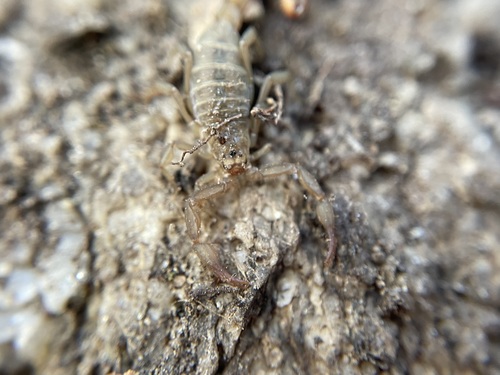
More photos
Questions people ask
Where is Vaejovis deboerae found?
It was discovered in the Santa Catalina Mountains near Tucson, Arizona, and its family lives throughout the Southwest, including southern Arizona, parts of Texas, New Mexico and the Sonoran region.
Source: Wikipedia
How big is a female Vaejovis deboerae?
A female measures about 27.5 mm (roughly one inch) in length.
Source: Wikipedia
What other scorpions look like Vaejovis deboerae?
It is closely related to Vaejovis janssi and the Hoffmannius species spinigerus and coahuilae, which can look similar.
Source: Wikipedia
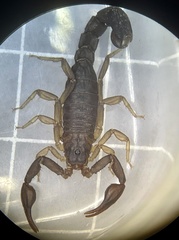
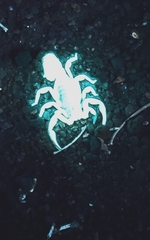
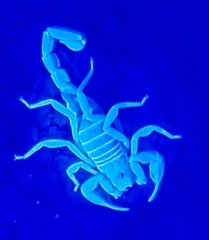
Same family (Vaejovidae)
Sources
- Wikipedia: https://en.wikipedia.org/wiki/Vaejovis_brysoni
Look it up elsewhere: GBIF · iNaturalist · BugGuide · Wikipedia
Text written 2026-10-29 from the sources above and checked sentence by sentence against them. Data fetched 2026-10-29.