 Bug FAQ
Northern Scorpion
Paruroctonus boreus · Order: Scorpiones · Family: Vaejovidae
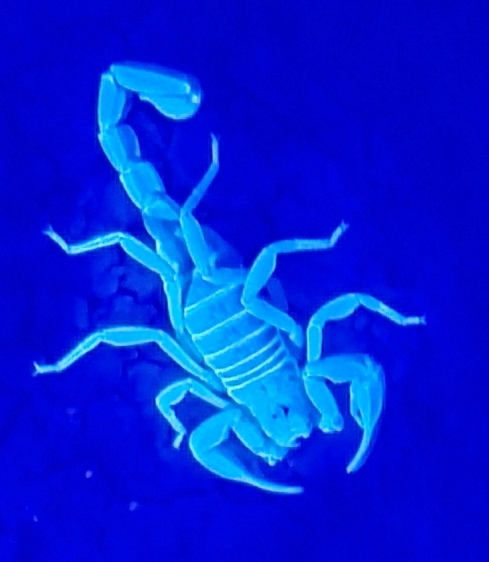
Females are about 39 mm long and males about 36 mm. They live in northern low-elevation areas, often among sagebrush. Their diet includes grasshoppers, stink bugs, spiders and even other scorpions.
Source: Wikipedia
How to recognize it
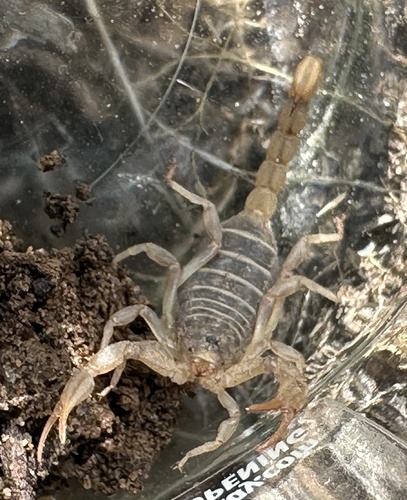
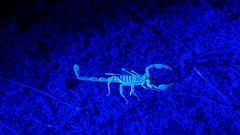
They are light yellow with a black V-shaped mark over the median eyes and faint streaks on the pre-abdomen.
Source: Wikipedia
Size
Females average 38.9 mm total length, males about 35.5 mm.
Source: Wikipedia
Does it bite or sting?
Younger individuals are more likely to use their stingers for defense or offense. Stinging behavior changes with age and the type of target.
Source: Wikipedia
Where it lives
Found on varied terrain near mountains or low valleys. In the north they prefer sagebrush and similar low-elevation habitats around 200 m above sea level.
Source: Wikipedia
What it eats
They prey on grasshoppers, pentatomid bugs, spiders and other scorpions. They eat the head of their prey first and discard the exoskeleton.
Source: Wikipedia
Life cycle
During birth the female lifts her rear legs into a stilting pose. The newborns, 10 to 40 per litter, emerge covered in a translucent membrane.
Source: Wikipedia
When you see it
They are almost entirely nocturnal, moving and hunting at night. Activity peaks in the first two hours after dark and then declines.
Source: Wikipedia
Where it comes from
It is the northernmost scorpion species, the only one recorded in Canada, and has a broad North American distribution.
Source: Wikipedia
Where it is found in the US
Recorded in 13 of 51 states and DC. Most records: Utah, Nevada, Oregon, California, Washington, Colorado, Wyoming, Idaho.
Darker = more records. Counts are museum and citizen-science records, not population size.
Source: GBIF
Status: native in North America; native in United States; native in Canada. Source: iNaturalist
Months it is reported in the US
Source: GBIF
More photos
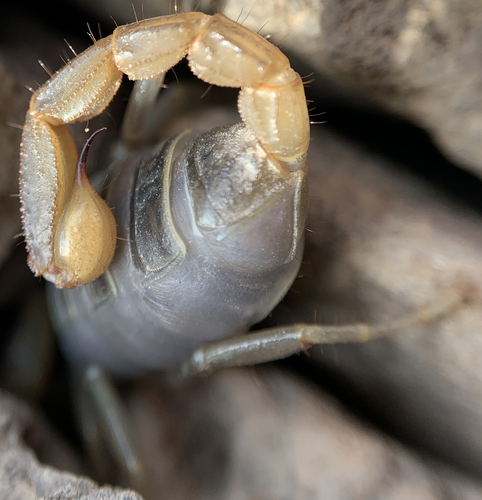
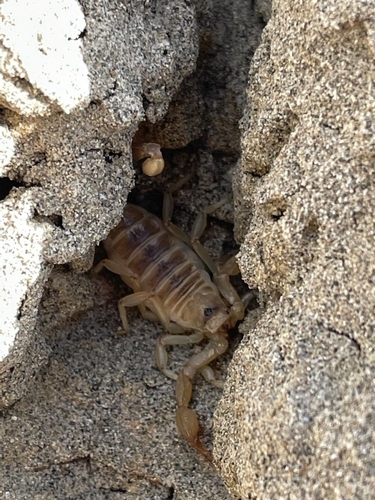
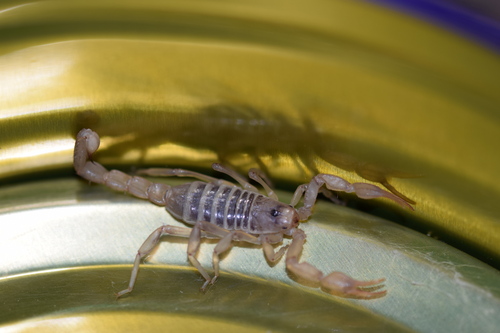
Questions people ask
Do they sting people?
Younger scorpions are more prone to use their stingers, but the sources do not describe any effect on people.
Source: Wikipedia
When are they active?
They are active at night, especially during the first two hours after sunset, then become less active.
Source: Wikipedia
What do they look like?
They are light yellow with a black V-shaped mark over the median eyes and faint streaks on the pre-abdomen.
Source: Wikipedia
Where are they found?
They live in northern low-elevation areas, often among sagebrush, and are the only scorpion species recorded in Canada.
Source: Wikipedia
Same family (Vaejovidae)
Sources
- Wikipedia: https://en.wikipedia.org/wiki/Paruroctonus_boreus
Look it up elsewhere: GBIF · iNaturalist · BugGuide · Wikipedia
Text written 2026-10-23 from the sources above and checked sentence by sentence against them. Data fetched 2026-10-22.